Guinea Pig Hay Rack Setup: Cleaner Hay Without Blocking All-Day Access
ProtocolQuick picks
Wide-opening guinea pig hay feeder
★ Top pick Best rack style to consider- Less tugging than narrow racks
- Keeps some hay off bedding
- Easy refill visibility
- Still needs floor hay
- Must avoid head-sized gaps
Paper bedding hay tray
Best floor-hay backup- Encourages natural foraging
- Easy to dump daily
- Works for older pigs
- More hay waste
- Needs frequent cleaning
A guinea pig hay rack is useful only if it keeps hay cleaner without making hay harder to eat. Guinea pigs are grazing animals, and hay is not a treat or a twice-daily serving. It is the core of the enclosure, the dental wear system, and the gut-motility safety net.
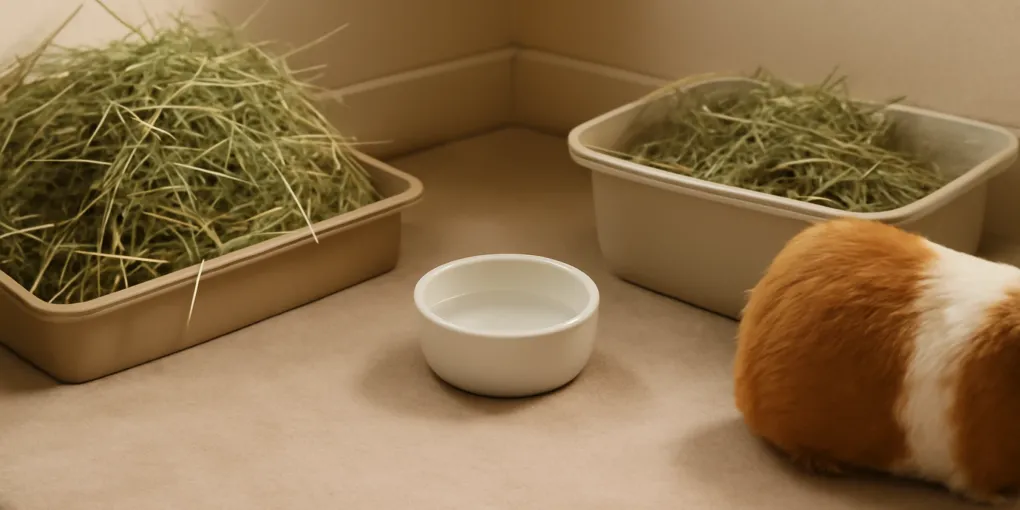
The best setup usually combines a wide, low-stress feeder with a loose hay area. The rack holds a clean reserve. The floor tray lets the guinea pigs forage naturally. If you try to eliminate every strand of wasted hay, you often end up restricting access or creating a frustrating feeding station.
The welfare rule: hay access wins
Before buying any rack, use this rule: a guinea pig should be able to pull hay without climbing, twisting, hanging by the teeth, or pushing its head through a narrow gap. If the rack makes hay tidier but the pig eats less, it is the wrong rack.
The RSPCA’s guinea pig diet guidance emphasizes that guinea pigs need constant access to good-quality feeding hay or grass, along with fresh vegetables and vitamin C support (RSPCA guinea pig diet guidance). That means your feeder design has to support all-day use.
Quick picks
Start with two zones:
- Wide-opening hay feeder: mounted low enough that the pig eats with a neutral neck. Search Amazon for wide guinea pig hay feeders.
- Floor hay tray: a shallow tray with paper bedding or washable liner under loose hay. Search Amazon for hay trays.
Skip hanging wire balls, tight V-racks with head-sized openings, and feeders that require the pig to stand upright for long periods. Also avoid racks with sharp wire ends or spaces where a leg can slip through during a startled jump.
Setup height
Mount the feeder so the lowest hay is at nose to chest height, not above the head. Guinea pigs can stretch, but repeated overhead feeding is unnecessary. Older pigs, pigs with arthritis, and young pigs need especially easy access.
If the rack attaches outside a C&C grid, check the opening size. A pig should not need to push its face through a grid square to reach hay. If you see whiskers bent against the bars or hay pulled one strand at a time with effort, move the hay inside or widen access.
The floor-hay backup
A floor-hay tray looks messy compared with a rack, but it solves three problems:
- It lets pigs forage and choose softer pieces.
- It gives shy pigs access if a cage mate guards the rack.
- It protects intake if the rack empties or jams.
Use a shallow tray in a corner where you already expect droppings. Many guinea pigs toilet while eating hay, so the hay area doubles as a practical cleaning zone. Replace wet hay daily and shake loose bedding or fleece outside the eating surface.
Daily refill routine
Morning:
- remove wet or flattened hay from the tray
- refill the rack loosely, not packed tight
- add a fresh handful to the floor tray
- check water bottles or bowls before adding vegetables
Evening:
- check whether the rack jammed
- add more hay before the overnight period
- remove any strands caught around clips or sharp edges
Do not pack hay so tightly that it comes out in clumps. A compressed rack looks full while making the pigs tug too hard.
Cleaning schedule
Dump the floor-hay tray daily. Wash the tray every few days or immediately if it smells of urine. Wipe the rack weekly and remove dust from corners. If you use fleece under the hay zone, change it more often than the rest of the enclosure.
Hay dust can irritate both humans and pets. Choose hay that smells fresh and grassy, not musty. VCA’s guinea pig feeding guidance notes that grass hay should be available continuously for fiber and tooth wear, while richer alfalfa hay is usually limited to specific life stages or veterinary direction (VCA guinea pig feeding guidance).
Signs the rack is not working
Change the setup if you notice:
- less hay disappearing than usual
- pigs chewing bars near the feeder
- one pig blocking the only hay source
- hay pulled out and ignored because the best pieces are unreachable
- a pig standing awkwardly to eat
- damp hay trapped in the bottom of the feeder
Hay mess is not the main metric. Intake and relaxed feeding are.
Multi-pig enclosure rules
Use at least two hay access points for bonded pairs or groups. A dominant pig can guard one rack without obvious fighting. Put the second hay pile far enough away that a shy pig can eat without entering the dominant pig’s space.
For three or more pigs, use one large hay area plus a second smaller station. Watch evening feeding, when competition can be more obvious.
If you are deciding whether the rack itself is the right product, see our best guinea pig hay racks for less waste guide for rack styles that keep hay accessible without creating a head-trap.
Guinea pig hay rack FAQ
Should guinea pigs have hay on the floor or in a rack?
They need constant hay access either way. A rack can reduce waste, but it should be low, open, and paired with a small floor pile so timid pigs and short pigs are not forced to stretch or compete.
How high should a guinea pig hay rack be?
Keep the eating edge close to normal head height. If a pig must stand tall, twist its neck, or push its head into a narrow gap, lower the rack or switch to a safer open feeder.
How often should I clean under the hay rack?
Check it daily. Remove wet hay, droppings, and dust before refilling, then do a fuller wipe-down whenever the rack or corner smells damp or the hay starts compacting.
Reader test: what to do today
Tonight, look at your guinea pigs during hay time for five minutes. If they are tugging through narrow bars, standing up to reach, or waiting behind another pig, add a floor-hay tray and lower or replace the rack. If the enclosure already has loose hay everywhere, keep the floor access but use a wide feeder as a clean reserve rather than trying to force all hay into a tidy dispenser.
Frequently Asked Questions
- Yes. Guinea pigs need constant access to good-quality grass hay. A rack can reduce waste, but it should not ration hay or make the pig work through tiny openings.
- Hanging wire hay balls can create head, tooth, or leg risks and often restrict natural feeding. A wide feeder plus loose hay pile is usually a better setup.
- Some waste is normal because guinea pigs sort, nest, and toilet near hay. The goal is cleaner access, not zero waste.