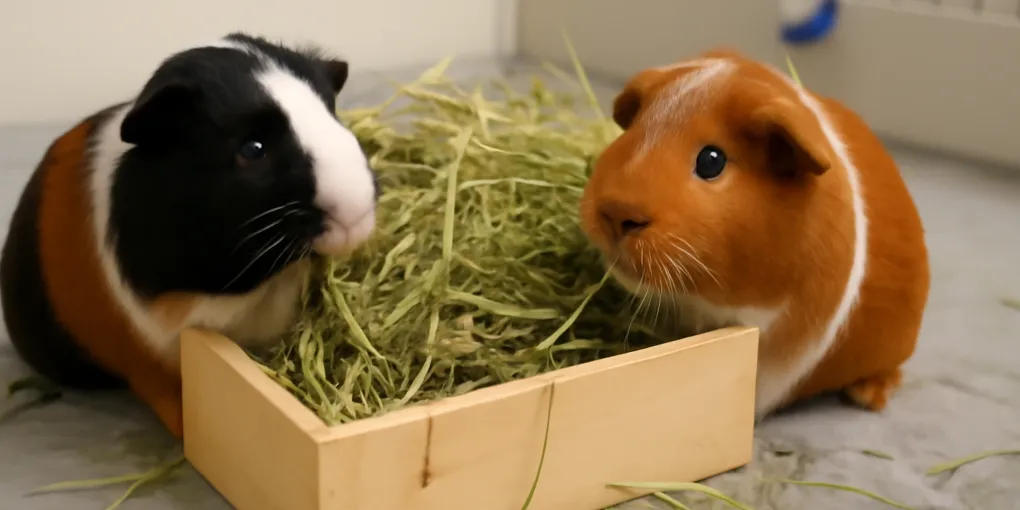
Guinea Pig Hay Station Setup Protocol: Cleaner Fiber Access Without Trapping Heads
ProtocolQuick picks
Open low guinea pig hay rack
★ Top pick Best first station- Why it is included: Keeps hay available without forcing the pig to climb or pull through tiny holes.
Washable guinea pig hay bag with wide slots
Best wall-mounted cleanup helper- Why it is included: Can reduce floor waste when openings are wide and the bag is washed often.
Guinea pigs need hay available all the time. The goal of a hay station is not to make the cage look neat for photos; it is to keep long-stem hay easy to reach, dry, breathable, and safe. A station that saves hay but makes pigs stretch, climb, or pull through tiny openings is a poor trade.
Use this protocol when you are setting up a new enclosure, replacing a messy hay pile, or troubleshooting wasted hay. It pairs well with our guide to rabbit water bowls and bottles if you are comparing small-herbivore hydration setups, but guinea pigs have their own access and vitamin C needs.
Quick picks: hay station choices
- Start with a low open rack when two pigs can reach hay from the floor without squeezing into wire gaps.
- Use a wide-slot washable hay bag when wall mounting helps keep hay above wet bedding and the openings are generous.
- Use a tray hay pile for seniors, timid pigs, respiratory-sensitive pigs, or any pig that struggles with racks.
- Avoid narrow V-shaped wire racks that can trap a head, jaw, or foot while the pig pulls hay.
Step 1: Choose hay access before choosing a rack
Start with the animal’s posture. A guinea pig should be able to stand on the enclosure floor and pull hay with the head in a neutral position. Avoid stations that require climbing, balancing on a ledge, or reaching above shoulder height for every bite.
Good first options are a low open rack, a wide-slot hay bag mounted at nose height, or a hay pile in a washable tray. The cleanest-looking option is not always the safest. If the rack openings are small enough to trap a head, jaw, or foot, do not use it.
Step 2: Pick the hay zone
Place the hay station where droppings are easy to clean and where dust will not blow into a sleeping hide. Many owners put hay beside a litter tray or absorbent washable liner because guinea pigs often eat and eliminate in the same area. Keep it away from water-bottle drips and damp corners.
Ventilation matters. Hay should smell fresh, not musty. If the station sits under a covered shelf with poor airflow, damp hay can accumulate before you notice it.
Step 3: Use two access points for pairs or groups
For two guinea pigs, one narrow hay opening can create guarding. Provide either a wide station that allows both animals to eat at once or two hay areas separated enough that a dominant pig cannot block both. Watch the first evening. If one pig repeatedly displaces the other, the station needs another opening, not a prettier rack.
Step 4: Load hay loosely
Pack hay loosely enough that strands pull out without force. Tight stuffing encourages tugging and can make pigs yank the whole bag or rack. Shake out dusty fines before loading, especially if anyone in the home notices sneezing or if a pig has a respiratory history.
Do not ration hay to reduce mess. Guinea pigs rely on frequent fiber intake for dental wear and gastrointestinal function. If waste is high, improve the station and hay quality rather than limiting access.
Setup options by cage and pig needs
Open low hay rack
A low rack is the best first purchase when the openings are large, smooth, and not head-trapping. It can keep the main hay supply off wet bedding while allowing a natural pulling motion.
- Best for: most indoor C&C or Midwest-style enclosures.
- Caveat: avoid wire grids or V-shaped designs that create narrow pinch spaces.
- Current options: Search Amazon for low guinea pig hay rack
Wide-slot washable hay bag
A hay bag can reduce floor scatter, but only if the slots are generous and the bag is cleaned before urine odor or hay dust builds up. Choose sturdy stitching and avoid dangling straps that pigs can chew.
- Best for: owners who need a wall-mounted station with less floor footprint.
- Caveat: narrow decorative holes are frustrating and can restrict normal eating.
- Current options: Search Amazon for washable guinea pig hay bag with wide slots
Tray hay pile
A hay tray looks less tidy but is often the most pig-friendly option. Use a shallow tray or litter area, add hay generously, and refresh the top layer often. This works especially well for older pigs or pigs that dislike pulling from racks.
- Best for: seniors, timid pigs, and owners prioritizing access over neatness.
- Caveat: requires more frequent spot cleaning.
- Current options: Search Amazon for shallow guinea pig litter tray hay area
Hay-station buying checks
The safest hay station keeps fiber easy to reach without trapping heads or letting one guinea pig block access. Check:
- Opening size: slots should be wide and low enough for comfortable eating, not tight grids.
- Pair access: bonded pairs need two access points or a wide hay area.
- Cleaning: hay holders should dump and wipe clean so stale hay does not collect at the bottom.
Step 5: Daily station check
Once a day, remove wet or trampled hay, shake loose fresh hay into reach, and check for damp fabric, sharp edges, loose clips, or chewing damage. Refill before the station is empty. If your pigs only eat the easiest strands and leave the rest, the hay may be too compressed or the rack too hard to use.
A sudden drop in hay intake is a medical warning. Dental pain, gastrointestinal illness, respiratory disease, and stress can all change eating. Do not wait several days to see whether a guinea pig starts eating normally again.
Step 6: Weekly reset
Wash fabric bags, scrub trays, and wipe racks weekly or sooner if soiled. Let everything dry fully before reloading hay. Rotate hay bags if needed so one can dry while the other is in use.
During the reset, inspect hay quality. Discard hay that smells moldy, feels damp, or has excessive dust. Store fresh hay in a dry breathable container rather than a sealed damp bin.
FAQ
Is a hay rack better than a hay pile for guinea pigs?
Not always. A safe low rack can reduce waste, but a hay pile in a tray may be better for seniors, timid pigs, or pigs that fight over one opening. Constant easy access matters more than tidy presentation.
Can guinea pigs get stuck in hay racks?
Yes, poorly designed racks can create head, jaw, or foot entrapment risks. Avoid narrow wire openings and any design that makes the pig push the head into a tight V-shaped space.
How much hay should be in the station?
Enough that clean hay is always available. Guinea pigs should not run out between feedings. Refill and refresh rather than waiting for every strand to be eaten.
Should hay be next to the water bottle?
Close is convenient, but avoid placing hay where drips make it damp. Damp hay can spoil and should be removed promptly.
Sources
- Merck Veterinary Manual. Guinea pig disorders and husbandry context: https://www.merckvetmanual.com/all-other-pets/guinea-pigs/disorders-and-diseases-of-guinea-pigs
- RSPCA. Guinea pig diet: https://www.rspca.org.uk/adviceandwelfare/pets/rodents/guineapigs/diet
- VCA Animal Hospitals. Guinea pigs: feeding guidance: https://vcahospitals.com/know-your-pet/guinea-pigs-feeding