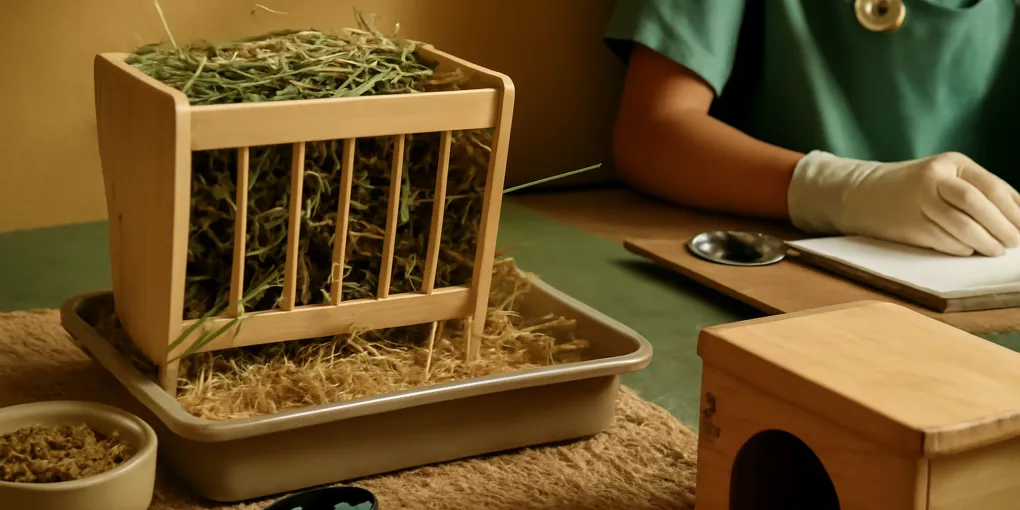
Best Guinea Pig Hay Racks for Less Waste and Safer Daily Feeding
Buyer's GuideLow open guinea pig hay rack
Best everyday optionBest for: Adult guinea pigs in roomy indoor habitats
$12-$30
Quick picks
| Product | Key Specs |
|---|---|
| See price on Amazon |
|
| See price on Amazon |
|
| See price on Amazon |
|
Product availability, certifications, and retailer details can change; check the current Amazon page before buying.
A rack should be judged during a normal messy day, not just after cage cleaning: watch posture, competition, refill frequency, and whether hay remains dry and plentiful by the next check.
Guinea pigs need constant access to grass hay, and the feeder should make that easier rather than tidier for the human at the animal’s expense. The best hay rack keeps hay off wet bedding, lets the guinea pig pull strands naturally, avoids tight openings that can trap a head, and is simple to refill before the rack is empty. A rack that saves a handful of hay but makes the animal stretch, climb, or fight cage mates is not a good trade.
Use this guide for healthy adult guinea pigs in indoor enclosures. If a guinea pig stops eating hay, produces fewer droppings, drools, loses weight, or sits hunched, treat that as urgent medical information. Small herbivores can decline quickly when gut motility slows. Product selection should never delay exotic-animal veterinary care.
For another hay-access comparison, see our rabbit hay rack guide. The same principle applies: access, posture, and stress reduction matter more than tidy-looking gear.
Quick picks for hay access
- Best everyday option: low open wooden or metal hay rack — best when it mounts low, has wide safe openings, and lets pigs eat from normal posture. Usually about $12-$30. Search Amazon for low guinea pig hay rack.
- Best soft-sided option: washable canvas hay bag with large feeding window — best for owners who need easy refills and less scatter, provided seams are monitored for chewing. Usually about $10-$22. Search Amazon for guinea pig hay bag large opening.
- Best floor-based backup: ceramic hay tray or litter-area hay tray — best for seniors, timid pigs, or pairs that argue over a single rack. Usually about $8-$25. Search Amazon for guinea pig hay tray.
- Best bulk supply accessory: covered timothy hay storage bin — best for keeping hay dry and easy to refill daily. Usually about $15-$35. Search Amazon for timothy hay storage bin pet.
PSR Composite Score
Pet Science Review uses a safety-first scoring framework: safety and veterinary alignment 25%, evidence quality 20%, real-world usability 20%, value 20%, and transparency 15%.
| Criterion | Weight | Score | Weighted | Why it matters here |
|---|---|---|---|---|
| Safety and veterinary alignment | 25% | 8.5 | 2.13 | The article separates useful home gear from medical, welfare, or supervision problems that need a veterinarian or species specialist. |
| Evidence quality | 20% | 7.5 | 1.50 | Direct product trials are limited, so recommendations lean on veterinary, welfare, husbandry, and public-safety sources rather than marketing claims. |
| Real-world usability | 20% | 8.5 | 1.70 | The advice accounts for cleaning, sizing, ordinary owner time, and what happens when an animal ignores the setup. |
| Value | 20% | 8.0 | 1.60 | The preferred products are durable, washable, and easy to replace instead of novelty gear with weak welfare value. |
| Transparency | 15% | 8.5 | 1.28 | Limits, red flags, and affiliate incentives are stated clearly. |
| Composite Score | 8.2/10 | Useful when matched to the animal and maintained consistently. |
What makes guinea pig hay feeding different
Guinea pigs are grazing herbivores. Hay is not a snack, a boredom toy, or a decorative cage accessory; it is the foundation of normal chewing and gut function. Constant hay chewing helps wear continuously growing teeth and supplies fiber that supports gut movement. Pellets and vegetables cannot replace that role.
That biology changes how to judge a hay rack. The goal is not to hide hay inside a tiny puzzle. The goal is to keep a generous supply clean while allowing relaxed, repeated visits throughout the day and night. A rack should always look abundant. If the animal can empty it before the next refill, add a second station or a larger feeder.
Low open rack
Best for: most adult guinea pigs in Midwest-style cages, C&C grids, or larger indoor habitats.
Why it helps: a low rack keeps hay reachable from all fours and reduces urine-soaked bedding in the main hay pile. Open bars or slats let animals choose long strands without yanking through pinholes.
Caveat: avoid narrow V-shaped wire designs where a young or small guinea pig could wedge the head. Mount low enough for normal eating but high enough that hay is not constantly soaked. Inspect wooden racks for chewing splinters.
Check current options: Search Amazon for low guinea pig hay rack.
Washable hay bag
Best for: owners trying to reduce scatter in fleece-lined habitats.
Why it helps: a hay bag can hold a fluffy supply while letting the pig pull hay through a broad opening. It is lighter than many racks and easy to move during cage cleaning.
Caveat: fabric is chewable. If a guinea pig gnaws seams, pulls threads, or treats the bag as food, remove it. Wash and fully dry bags so damp hay does not sit against fabric. Prefer one large safe opening over several tiny holes.
Floor hay tray
Best for: seniors, recovering pigs, disabled pigs, or groups where one animal guards a wall-mounted rack.
Why it helps: a shallow tray lets the guinea pig eat without stretching. It can sit near the litter area because many pigs eat and eliminate in the same zone. A heavy ceramic or low plastic tray is easy to dump and scrub.
Caveat: trays waste more hay and need frequent changing. That is acceptable if it preserves access. Replace wet hay promptly and do not let a tidy-rack goal reduce total intake.
Setup protocol
Start with two hay points for any pair or group. Place one primary rack near the litter zone and one backup pile or tray at the opposite side of the habitat. Refill before both are low. Watch each animal, not only the group. A dominant pig can block a rack with body position even when no chasing occurs.
Mount racks so the lower hay opening sits near shoulder height. The guinea pig should not need to stand upright, climb, twist, or push its face between rigid wires. After installation, watch a full feeding session. Normal use looks repetitive and calm: step up, pull hay, chew, leave, return. Poor fit looks like pawing, bar biting, stretching, squealing, or giving up.
Choose long-strand grass hay such as timothy, orchard grass, or meadow hay unless a veterinarian advises otherwise. Alfalfa is usually reserved for young, pregnant, nursing, or specific medical cases because it is richer. Store hay dry, ventilated, and away from strong odors. Moldy or dusty hay should be discarded.
Cleaning and replacement
Shake loose fines out daily, wipe urine marks, and deep-clean racks during cage changes. Fabric bags need laundering; wood racks need inspection because urine and chewing can leave rough surfaces. Metal racks need rust checks. If a rack develops sharp edges, stuck hinges, loose hooks, or warped fabric, replace it.
A hay rack should make the daily routine more reliable. If refilling becomes annoying because the lid jams or hay compresses into a brick, the rack will eventually be underfilled. Pick boring access over clever storage every time.
Buying details that matter more than style
Look for opening size first. A guinea pig should pull strands through without forcing the nose into a rigid slot. Openings that look neat in product photos can become risky when an excited young pig shoves the face forward or when hay compresses into a tight bundle. Wide access also lets owners notice dusty, brown, or moldy pieces before the animal eats them.
Mounting hardware is the second detail. Hooks should sit outside the cage or lock securely so a pig cannot lift the rack and drop it. Zip ties can work temporarily, but cut ends must face away from the animal and should be replaced if chewed. If the habitat uses coroplast walls, confirm the rack does not bow the wall inward or create a climbable ledge.
Capacity is third. A tiny rack that looks tidy after filling may be empty in three hours. For owners away during a workday, a larger low rack plus a floor backup is usually safer than a decorative mini rack. The cage should still contain hay when you return, even if the neatest strands were eaten first.
How to compare hay waste honestly
Some waste is normal and healthy. Guinea pigs sort hay by smell, texture, and strand quality. They may pull out coarse pieces, sit in the pile, or use hay as part of the litter zone. The goal is not zero waste; the goal is plenty of clean edible hay and quick removal of wet leftovers.
For one week, weigh or estimate how much hay you add and how much wet hay you discard. If a new rack reduces soaked waste while droppings stay plentiful and the animals keep eating, it is helping. If waste falls because the pigs cannot reach hay comfortably, the apparent savings are a warning sign. Watch the animals, not the floor alone.
Multi-pig and baby-pig cautions
Pairs and groups need more access points than single pigs. A quiet subordinate animal may wait until the dominant pig leaves, which means hay intake becomes uneven. Add a second rack or tray whenever there is chasing, rumbling at the hay area, or one pig consistently eating less.
Baby guinea pigs and small adults deserve extra caution with wire spacing. If the head could enter but the shoulders cannot follow, choose another feeder. For very young pigs, a low hay pile or broad tray is often safer until body size and habits are predictable.
Evidence notes
- RSPCA guinea pig diet advice explains the importance of constant access to quality feeding hay.
- Merck Veterinary Manual notes that dental disease and reduced appetite in small mammals require prompt evaluation, supporting the red-flag guidance used here.
- VCA Hospitals guinea pig care resources reinforce that hay is central to diet and dental wear.
Guinea pig hay rack FAQ
Should hay be unlimited even if the rack looks messy?
Yes. Healthy adult guinea pigs generally need unlimited grass hay. Tidy presentation is secondary to reliable access. If the rack is always empty by morning, it is too small or refilled too rarely.
Are hay balls safe for guinea pigs?
Use caution. Hanging balls and tight wire spheres can create awkward head and limb positions. A low open rack, broad hay bag, or floor tray is usually easier to assess and safer for daily use in ordinary homes.
Can one rack serve two guinea pigs?
Sometimes, but two hay stations are safer for pairs and groups. Multiple access points reduce blocking and make it easier to notice if one animal stops eating.
Why is my guinea pig pulling hay out and sitting on it?
That is common. Guinea pigs often forage, nest, and eliminate near hay. Use a tray or litter-zone setup rather than trying to force perfectly tidy eating.