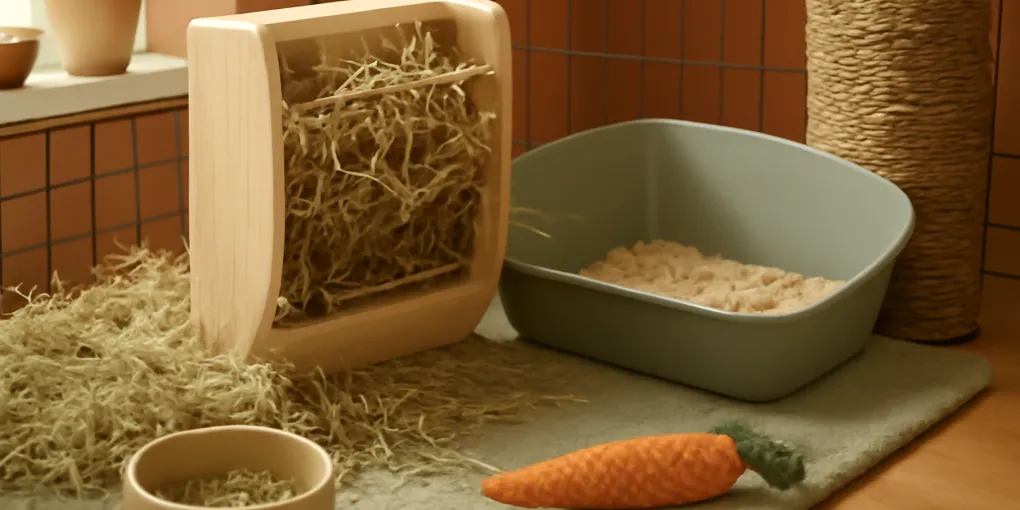
Best Rabbit Hay Racks for Less Waste in 2026: Safe Picks and Setup Rules
Buyer's Guidelow rabbit hay rack metal
Best fitBest for: | Low wall-mounted metal rack | Adult rabbits with stable enclosure walls | Check bar spacing and mounting height |
Varies
Quick picks
| Product | Key Specs |
|---|---|
| See price on Amazon |
|
| See price on Amazon |
|
| See price on Amazon |
|
Product availability, certifications, and retailer details can change; check the current Amazon page before buying.
Quick verdict
A rabbit hay rack should make hay cleaner and easier to manage without limiting the constant access rabbits need. The safest designs keep hay low enough for natural posture, avoid narrow gaps that trap heads or feet, and let caregivers remove dusty or damp hay quickly. Less waste is useful only if the rabbit still eats plenty of hay.
If a rabbit eats less hay, produces fewer or smaller droppings, sits hunched, drools, refuses favorite foods, or seems painful, treat that as urgent health information. Do not wait for a better feeder to solve a possible gastrointestinal or dental problem.
How we evaluated the options
| Factor | Weight | What we looked for | Rabbit-specific takeaway |
|---|---|---|---|
| Research | 30% | Supports unlimited hay access and normal foraging | Waste reduction must never mean rationing hay. |
| Evidence Quality | 25% | Uses husbandry guidance instead of convenience claims | A rack is judged by intake, posture, and cleanliness. |
| Value | 20% | Durable, chew-aware, easy to refill | Cheap racks fail if bars bend or mounting loosens. |
| User Signals | 15% | Repeated reports on mess, chewing, and access | Reviews reveal whether rabbits actually use the design. |
| Transparency | 10% | Clear dimensions, materials, gap size, mounting method | Missing gap and material details are a safety concern. |
Picks and shopping links
| Check price | Rack style | Best for | Watch-outs |
|---|---|---|---|
| Search Amazon | Low wall-mounted metal rack | Adult rabbits with stable enclosure walls | Check bar spacing and mounting height |
| Search Amazon | Hay bag with wide safe openings | Travel pens or soft-sided setups | Fabric chewing and trapped threads require supervision |
| Search Amazon | Litter-box hay feeder combo | Rabbits already eating hay near litter area | Must stay dry and easy to empty |
| Search Amazon | Open hay tray | Seniors, small rabbits, or rabbits with mobility issues | More mess, but easiest access |
Compare current sizing, materials, seller details, and return policies before buying.
Height, posture, and access
Many hay racks are mounted too high because that looks tidy to humans. Rabbits should not have to crane upward for every bite or stand in an unstable posture to reach the best strands. A low rack beside the litter area often works better than a high decorative manger. Watch the rabbit from the side: the head and neck should move naturally, and the rabbit should be able to pull hay without yanking the whole rack loose.
Gap size matters. Openings should be large enough for comfortable hay removal but not shaped in a way that traps a head, jaw, paw, or nail. Avoid spring-loaded designs or narrow wire grids that could catch a struggling rabbit. If you would worry about the rabbit being alone with the mechanism overnight, choose a simpler tray.
Waste reduction without rationing
Some hay waste is normal. Rabbits sort hay, choose fragrant pieces, and may reject dusty stems. The goal is not to make every strand disappear; it is to keep clean hay available while separating it from urine, water spills, and bedding. Refill with smaller, fresher portions if the rack becomes a stale hay archive.
Put rejected hay to work as litter-box topping only if it stays dry and appropriate for your setup. Remove damp hay promptly. Moldy or wet hay is not a bargain, and a rack that hides old hay can create a hygiene problem.
Material and chewing checks
Assume rabbits will investigate with teeth. Smooth metal can be easier to inspect than soft wood or fabric, but mounting hardware, coatings, and edges still matter. Wood may be acceptable if untreated and safe, yet it can absorb urine and become hard to clean. Fabric hay bags should be used only when chewing risk is low and seams are checked often.
Inspect weekly for bent bars, loose screws, splinters, frayed threads, rust, sharp edges, and trapped hay dust. Retire damaged racks. A low price does not justify a design that creates entrapment or ingestion risk.
Setup protocol
Introduce the rack while leaving a familiar hay pile available. Fill the rack loosely so hay comes out easily. If the rabbit ignores it, lower the rack, change the hay angle, or use a tray. Do not restrict the old hay source until intake and droppings remain normal.
Place the rack where the rabbit already eats comfortably, often near the litter area. Keep water nearby but not positioned so spills soak hay. In multi-rabbit households, provide enough hay access points that one rabbit cannot guard the only feeder.
Bottom line
The best rabbit hay rack for less waste is the one that keeps hay clean while preserving abundant, comfortable access. Favor low placement, safe openings, visible materials, easy cleaning, and a backup hay pile during transitions. If waste reduction reduces intake, the rack has failed its most important job.
Daily hay-quality routine
Shake out the portion before loading the rack and discard dusty, damp, or moldy material. Rabbits often prefer fragrant strands with a mix of leaf and stem, and they may reject hay that has been compressed in a rack too long. Refreshing smaller portions can reduce waste better than stuffing the feeder full for several days.
Each day, check droppings and appetite while you clean. A rack that looks tidy but coincides with smaller droppings, less chewing, or less time spent foraging is not working. Hay access should increase confidence, not make intake harder to judge.
Pairing racks with litter habits
Many rabbits eat hay while using the litter area, so a rack mounted beside the box can improve cleanliness and habits at the same time. The rack should not force the rabbit to stand in urine-soaked litter or reach through soiled bedding. If hay falls into the box, remove wet strands promptly and adjust the height or use a tray.
For bonded pairs, provide a wide enough feeding area that both rabbits can eat without one blocking the other. Guarding at the only hay point is a welfare problem even if total hay waste decreases. More than one hay station may look messier but support better intake.
Related Pet Science Review guides
For setup details, see rabbit hay feeder setup and how to set up a rabbit litter box. Those guides cover placement and observation steps that matter as much as the rack itself.
FAQ
Should a hay rack replace loose hay completely?
Not during transition, and not for rabbits that eat less from the rack. Keep loose hay or a tray available until intake and droppings are clearly normal.
What hay rack height is safest?
Low enough for comfortable head and neck posture. If the rabbit stretches upward or yanks hard to remove strands, lower the rack or choose a tray.
Is hay waste always bad?
No. Some sorting is normal. The goal is clean, abundant access, not forcing a rabbit to eat stale or dusty hay.
Small, senior, and dental-risk rabbits
Small rabbits and seniors often do better with lower, more open feeders. A rack that is technically reachable can still be uncomfortable if the rabbit must twist or brace to pull hay. Dental disease can also change how a rabbit selects hay. If a rabbit suddenly favors soft leaves, drops hay, drools, or leaves favorite foods, schedule veterinary care.
For mobility-limited rabbits, an open hay tray may be messier but kinder. Waste reduction should never outrank comfortable access. Place the tray where the rabbit already rests and eats, and refresh it often enough that hay stays inviting.
What we would not buy
We would avoid narrow ball feeders, spring-loaded hay holders, racks with sharp wire ends, painted parts with unclear coatings, and fabric bags for rabbits that chew seams. We would also avoid decorative wall racks mounted so high that the rabbit has to stand for normal meals.
The product should make inspection easy. You should be able to see whether hay is damp, dusty, jammed, or stale. If the rack hides old hay behind fresh hay, it may reduce visible mess while creating a worse hygiene problem.
Cost and replacement planning
A sturdy rack is often cheaper over time than several flimsy holders that bend or rust. Include mounting hardware, spare screws, and cleaning time in the real cost. If the enclosure changes often, a freestanding tray or movable rack may be better than a permanent mount.
Track hay waste for a week before and after the change. Estimate what is discarded because it is soiled, what is rejected because quality is poor, and what is scattered by normal foraging. The answer may show that buying fresher hay or changing portion size helps more than a different rack.
Final pre-purchase checklist
Before buying, write down the animal’s current routine, the problem you are trying to solve, and the maintenance you are willing to do every week. Confirm dimensions, materials, cleaning instructions, return terms, and replacement-part availability from the seller page or manufacturer. Save the manual, inspect the product on arrival, and introduce it while the household is calm.
After seven days, keep the product only if the animal uses it comfortably and the caregiver can maintain it without skipped steps. If the product creates avoidance, chewing, guarding, difficult cleaning, or reduced access to food, water, litter, or hay, the better decision is to return it and use a simpler setup.
Observation log
For the first week, record morning and evening hay level, droppings, water intake impressions, and whether hay is being pulled easily. This simple log makes the decision less emotional. If the rack looks tidy but the rabbit eats less, the tidy appearance is a false win. If the enclosure is slightly messier but the rabbit eats more hay and stays comfortable, that setup is better for welfare.
Review cadence
Recheck the setup after the novelty period ends. Many pet products look successful on day one because the animal is curious and the caregiver is attentive. The more useful test is week three, when the product has been washed several times and the routine has become ordinary. If cleaning is slipping, replacement parts are annoying, or the animal uses the item less than expected, simplify the setup before small problems become normal.
Keep notes short: date, cleaning done, animal response, damage, and any health signs. Those notes help separate product problems from medical or behavior changes that need professional support.
Sources
- American Veterinary Medical Association. Pet care and preventive care resources. https://www.avma.org/resources-tools/pet-owners
- AAHA. Nutrition, pain, senior care, and preventive health guidance. https://www.aaha.org/resources/
- WSAVA Global Nutrition Committee. Nutrition toolkit. https://wsava.org/global-guidelines/global-nutrition-guidelines/
- Cornell Feline Health Center. Cat health and behavior resources. https://www.vet.cornell.edu/departments-centers-and-institutes/cornell-feline-health-center
- AAFP/ISFM. Environmental needs guidelines for cats. https://journals.sagepub.com/doi/10.1177/1098612X13477537
- Merck Veterinary Manual. Rabbit and small mammal care references. https://www.merckvetmanual.com/
- House Rabbit Society. Hay, housing, and health education. https://rabbit.org/