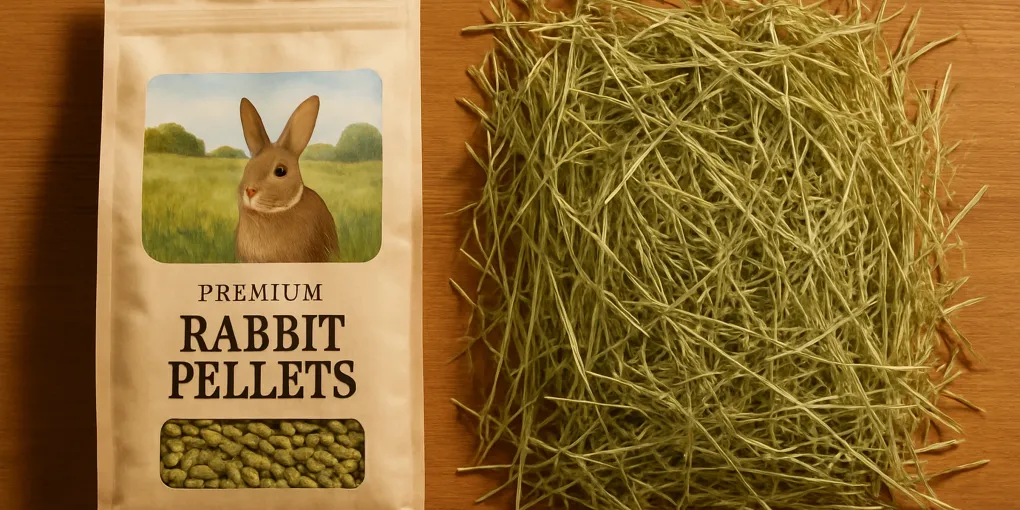
Best Rabbit Food 2026: Safe Rabbit Pellets, Hay-First Diet Picks
Buyer's GuideOxbow Essentials Adult Rabbit Food
Best OverallPrimary ingredient: Timothy grass meal
$12–$20 (5–10 lb bag)
Quick picks
| Product | Key Specs |
|---|---|
| See price on Amazon |
|
| See price on Amazon |
|
| See price on Amazon |
|
| See price on Amazon |
|
Product availability, certifications, and retailer details can change; check the current Amazon page before buying.
Best Rabbit Food 2026: Safe Rabbit Pellets, Hay-First Diet Picks
The best rabbit food pellet for most adult rabbits is Oxbow Essentials Adult Rabbit Food (PSR 4.5/5), built on Timothy grass meal as the primary ingredient, with high fiber (25–29% minimum), no added sugars, and no seeds or treats mixed in — precisely the formulation profile that exotic animal veterinarians and rabbit specialists consistently recommend. The most important thing to avoid: seed mixes, muesli-style foods, and any pellet containing colorful pieces, dried fruit, or mixed grains. These products allow selective feeding and are strongly associated with nutritional imbalance, obesity, and GI disease in adult rabbits.
TL;DR
- Best Overall: Oxbow Essentials Adult Rabbit Food — Timothy grass meal first, 25–29% fiber, no seeds or sugars, widely veterinarian-recommended (PSR 4.5/5)
- Best Premium Option: Small Pet Select Timothy Rabbit Food — small-batch milled, US-made, high-transparency timothy pellets (PSR 4.3/5)
- Best Budget Pick: Kaytee Timothy Complete — timothy hay-based, vitamin-fortified, most economical recommended option (PSR 4.0/5)
- Avoid: Vitakraft VitaSmart — corn and oats primary base, only 8% fiber, mixed colored pieces promote selective feeding (PSR 2.8/5)
- Key Stat: Hay should constitute 80–90% of an adult rabbit’s diet; pellets are a supplement, not a primary food source (Clauss & Hatt, 2017)
Why Diet Is the Most Critical Factor in Rabbit Health
Search interest around best rabbit food is mostly buyer-led: readers want a short list of safe pellet options, but they also need help avoiding colorful seed mixes that look appealing and can undermine a hay-first diet. This refresh keeps the page focused on adult rabbit pellet choices, not a promise that pellets alone create a complete diet. Use these picks as the measured pellet portion alongside unlimited grass hay, fresh water, and veterinarian guidance for young, pregnant, underweight, or medically fragile rabbits.
Quick buying rule: choose plain timothy-based pellets for most adult rabbits, check crude fiber first, and treat fruit/nut/seed blends as occasional treat-style products rather than daily staple food.
Rabbit gastrointestinal physiology is among the most complex and sensitive of any common domestic pet. Unlike dogs and cats, rabbits are obligate hindgut fermenters — their cecum serves as a fermentation chamber for plant fiber, producing cecotropes (soft night feces) that the rabbit re-ingests to extract B vitamins, microbial protein, and volatile fatty acids. This system requires a continuous, high-fiber throughput to function correctly.
Clauss M & Hatt JM (2017) documented in Veterinary Clinics of North America: Exotic Animal Practice that hay should constitute 80–90% of a rabbit’s diet, and that grass hay provides the insoluble fiber essential for maintaining GI motility. Their review identifies lack of fibrous food as the most common cause of GI disorders in domestic rabbits — a finding consistent with decades of exotic animal veterinary practice.
The clinical consequence of low-fiber diets is GI stasis — a potentially fatal slowdown of the rabbit’s digestive tract. Research cited in BSAVA Manual of Rabbit Medicine (PMC7258705) documents that low-fiber diets cause cecocolic hypomotility, prolonging the retention of digesta in the cecum, disrupting normal cecotrophy, and allowing harmful bacterial overgrowth. GI stasis is one of the most common emergency presentations in pet rabbit medicine, and dietary fiber insufficiency is the primary preventable risk factor.
Yang et al. (2019, PMID: 31480158, DOI: 10.5713/ajas.19.0221) published controlled research on Angora rabbits demonstrating that the digestible fiber-to-starch (dF/starch) ratio of pellets has measurable effects on pellet quality, growth performance, and cecal microbiota composition. The optimal dF/starch ratio for combined outcomes was 0.74–1.06. Pellets with higher starch proportions — including those containing seeds, grains, and dried fruit pieces — produce less favorable cecal bacterial profiles and are associated with poorer growth outcomes. This research provides a direct mechanistic basis for choosing high-fiber, low-starch timothy-based pellets over seed mix-style products.
The practical takeaway: unlimited fresh timothy hay always available, pellets rationed to approximately 1/4 cup per 5 lbs body weight daily, and fresh leafy greens in small quantities. Rabbits that eat appropriately portioned pellets alongside unlimited hay will consistently maintain healthier GI function than rabbits on seed mixes or free-choice pellets.
What Makes a Good Rabbit Pellet
Selecting the right rabbit pellet requires understanding a few key criteria that veterinary nutritionists use to distinguish appropriate from inappropriate formulations for adult rabbits.
Fiber content: FEDIAF nutritional guidelines specify that complete rabbit diets should contain 14–25% crude fiber, and that pellet formulations targeting GI health should have a minimum of 18% crude fiber. Both Oxbow (25–29%) and Small Pet Select (25%) substantially exceed this minimum. Kaytee Timothy Complete (20%) meets it comfortably. Vitakraft VitaSmart (8%) falls far below — a meaningful clinical concern given fiber’s central role in GI motility.
Primary ingredient: The first ingredient should be a timothy hay or timothy grass meal source. Timothy hay is lower in calcium and protein than alfalfa, making it appropriate for adult rabbits. Alfalfa-based pellets provide excess calcium for adult rabbits, increasing the risk of hypercalciuria, urinary sludge, and bladder stones over time. Corn, oats, and mixed grain bases provide high starch without adequate fiber — the combination Yang et al. documented as most disruptive to cecal microbiota.
No seed mix-ins: Uniform pellets prevent selective feeding. Rabbits offered muesli-style foods with mixed seeds, dried fruit, and colorful pieces will selectively eat the high-palatability components and leave the nutritious pellet base — creating real-world nutritional imbalance even if the product’s stated nutritional analysis appears adequate. The analysis assumes the rabbit eats the entire mix.
No added sugars, artificial colors, or preservatives: High-sugar dietary components promote cecal dysbiosis and weight gain. Artificial additives are unnecessary in a well-formulated pellet and offer no nutritional benefit.
Timothy vs. alfalfa for different life stages:
- Kits under 7 months, pregnant does, nursing does: Alfalfa-based pellets are appropriate — higher calcium and protein support growth and reproduction
- Adult rabbits (7 months and older): Timothy-based pellets are required — excess calcium from alfalfa-based diets causes urinary problems in adult rabbits
Oxbow Essentials Adult Rabbit Food: Best Overall
Best for: Most healthy adult rabbits whose owners want the veterinarian-recommended standard for rabbit pellet nutrition
Key specifications:
- Primary ingredient: Timothy grass meal (first ingredient)
- Crude fiber: 25–29% minimum
- Crude protein: 14% minimum
- No added sugars, no seeds, no nuts, no colorful treat pieces
- Uniform pellet size and shape — prevents selective feeding
- Manufactured by Oxbow Animal Health (Nebraska, USA)
- Widely stocked at veterinary clinics and specialty pet retailers
Why Oxbow leads the category: Oxbow Essentials Adult Rabbit Food is the most consistently recommended rabbit pellet by exotic animal veterinarians. The formulation is deliberately minimal — no seeds, no dried fruit, no treat pieces — because Oxbow’s nutritional philosophy prioritizes preventing selective feeding over marketing palatability. The high fiber content (25–29% minimum) meaningfully exceeds the FEDIAF minimum for pellet fiber and is well above the threshold associated with healthy cecal fermentation in the literature.
The ingredient list transparency is an additional differentiator: Timothy grass meal leads, followed by vitamins and minerals without a complex ingredient deck of filler carbohydrates. No artificial colors. No artificial preservatives. No added sugars.
PSR Score Breakdown:
| Criterion | Weight | Score | Weighted |
|---|---|---|---|
| Safety & Ingredient Quality | 30% | 4.7 | 1.41 |
| Efficacy & Performance | 25% | 4.5 | 1.13 |
| Real-World Pet Acceptance | 20% | 4.4 | 0.88 |
| Value for Money | 15% | 4.1 | 0.62 |
| Transparency & Brand Trust | 10% | 4.6 | 0.46 |
| PSR Composite | 100% | — | 4.5/5 |
Score notes: Safety earns 4.7 for clean ingredient sourcing, absence of artificial additives, no added sugars, US manufacturing, and Oxbow’s strong recall history. Efficacy earns 4.5 — fiber content of 25–29% substantially exceeds the recommended 18% minimum, uniform pellets prevent selective feeding, and the dF/starch ratio is well-optimized per the Yang et al. framework. Pet Acceptance earns 4.4 — Oxbow is consistently reported as well-accepted by rabbits across owner communities; the plain pellet format is not universally exciting but rabbits adapt readily and maintain consistent consumption. Value earns 4.1 — Oxbow is priced in the mid-range of the category; not the cheapest option but competitive given ingredient quality. Transparency earns 4.6 — Oxbow discloses manufacturing location, provides full nutritional analysis, and is backed by an exotic animal veterinary outreach program.
Pros:
- Timothy grass meal as primary ingredient — optimal for adult rabbits
- 25–29% fiber minimum substantially exceeds FEDIAF recommendations
- No seeds, no sugar, no colorful pieces — eliminates selective feeding risk
- Veterinarian-recommended and widely stocked at exotic animal clinics
- US-manufactured with strong brand quality history
- Plain, uniform pellet format ensures complete nutritional intake
Cons:
- Mid-range pricing — not the most economical option per pound
- Plain format may be less exciting for owners accustomed to colorful mixes (not a nutritional concern, but a perception point)
- Smaller bag sizes available compared to some mass-market competitors
Small Pet Select Timothy Rabbit Food: Best Premium Option
Best for: Owners who prioritize small-batch manufacturing, maximum ingredient transparency, and the highest available fiber content in a premium domestic pellet
Key specifications:
- Primary ingredient: Timothy hay
- Crude fiber: 25% minimum
- Crude protein: 14% minimum
- No artificial preservatives, colors, or flavors
- Small-batch milled in the United States
- No seeds, dried fruit, or mixed-in treat pieces
- Sold primarily direct-to-consumer and through specialty pet retailers
Why Small Pet Select earns the premium spot: Small Pet Select’s brand premise is centered on ingredient quality and small-batch production — a meaningful differentiator in a category where large-scale manufacturing can introduce consistency variability. The timothy hay primary ingredient and 25% fiber minimum align with best-practice guidelines. The company’s US manufacturing and transparency about ingredient sourcing (they also sell loose timothy hay, so hay quality is core to the brand identity) contribute to a higher Transparency score than most competitors.
The premium pricing reflects small-batch production costs. For owners who want the assurance of careful manufacturing and are comfortable paying more per pound, Small Pet Select is the strongest option in that segment.
PSR Score Breakdown:
| Criterion | Weight | Score | Weighted |
|---|---|---|---|
| Safety & Ingredient Quality | 30% | 4.6 | 1.38 |
| Efficacy & Performance | 25% | 4.4 | 1.10 |
| Real-World Pet Acceptance | 20% | 4.2 | 0.84 |
| Value for Money | 15% | 3.5 | 0.53 |
| Transparency & Brand Trust | 10% | 4.5 | 0.45 |
| PSR Composite | 100% | — | 4.3/5 |
Score notes: Safety earns 4.6 for US small-batch manufacturing, clean ingredient profile, no artificial additives, and no added sugars. Efficacy earns 4.4 — fiber content matches or slightly trails Oxbow’s range (25% vs. 25–29%), uniform pellets prevent selective feeding, and the timothy hay base aligns with optimal adult rabbit formulation. Pet Acceptance earns 4.2 — owner reports are generally positive, though some rabbits show a brief adjustment period when transitioning from Oxbow due to slight pellet texture differences. Value earns 3.5 — the premium pricing reduces value per pound compared to Oxbow and Kaytee; this is the most expensive option per pound among the recommended products. Transparency earns 4.5 — Small Pet Select discloses manufacturing location and sourcing philosophy clearly; the brand’s hay business provides context for pellet quality commitment.
Pros:
- Timothy hay as primary ingredient — appropriate for adult rabbits
- Small-batch milled in the USA — higher production consistency assurance
- No artificial additives, seeds, or treat pieces
- Strong brand transparency around ingredient sourcing
- High fiber content (25% min)
- Pellet-only format prevents selective feeding
Cons:
- Highest per-pound cost of reviewed recommended products
- Smaller distribution footprint — less available at local pet stores vs. Oxbow or Kaytee
- Some rabbits require a transition period between formulas
Kaytee Timothy Complete Rabbit Food: Best Budget Pick
Best for: Owners who want a nutritionally appropriate timothy-based pellet at the most accessible price point, available at major retail chains
Key specifications:
- Primary ingredient: Timothy hay (hand-selected)
- Crude fiber: 20% minimum
- Crude protein: 14% minimum
- Fortified with vitamins and minerals
- No mixed seeds or dried fruit pieces
- Widely available at major pet retail chains (PetSmart, Petco) and online
- Manufactured by Kaytee (Central Garden & Pet)
Why Kaytee earns the budget pick designation: Kaytee Timothy Complete meets the core nutritional criteria for an adult rabbit pellet: timothy hay-based, 20% fiber minimum (above the FEDIAF minimum of 18%), 14% protein, no seed mix-ins, and no dried fruit pieces that would allow selective feeding. It is meaningfully cheaper per pound than both Oxbow and Small Pet Select while maintaining a formulation that rabbit veterinarians would consider acceptable.
The tradeoffs relative to Oxbow are real: fiber content is lower (20% vs. 25–29%), the brand’s manufacturing transparency is less detailed, and Kaytee’s broader product portfolio includes some seed-mix rabbit foods that are in the “avoid” category. Owners should verify they are purchasing Timothy Complete specifically, not Kaytee’s other rabbit food formulations.
PSR Score Breakdown:
| Criterion | Weight | Score | Weighted |
|---|---|---|---|
| Safety & Ingredient Quality | 30% | 4.1 | 1.23 |
| Efficacy & Performance | 25% | 4.0 | 1.00 |
| Real-World Pet Acceptance | 20% | 4.2 | 0.84 |
| Value for Money | 15% | 4.6 | 0.69 |
| Transparency & Brand Trust | 10% | 3.8 | 0.38 |
| PSR Composite | 100% | — | 4.1/5 |
Score notes: Safety earns 4.1 — Kaytee’s ingredients are acceptable but manufacturing transparency is lower than Oxbow or Small Pet Select; Kaytee’s broad product portfolio includes less appropriate rabbit food formulations, which introduces a label-reading burden for consumers. Efficacy earns 4.0 — fiber at 20% minimum meets FEDIAF guidelines and is adequate for GI support, but sits closer to the minimum than the higher-performing options; uniform pellet format prevents selective feeding. Pet Acceptance earns 4.2 — Kaytee Timothy Complete is widely accepted by rabbits, with owner reports citing good palatability consistency. Value earns 4.6 — the strongest value score of any reviewed product; significantly cheaper per pound than Oxbow and Small Pet Select while maintaining appropriate nutritional formulation. Transparency earns 3.8 — Kaytee discloses basic nutritional information but provides less detail on manufacturing location and sourcing than either Oxbow or Small Pet Select.
Pros:
- Timothy hay-based — appropriate for adult rabbits
- 20% fiber minimum meets FEDIAF guidelines
- Vitamin and mineral fortification included
- No seeds, dried fruit, or colorful treat pieces
- Lowest price per pound of recommended options
- Widely available at major retail chains — most accessible option
Cons:
- Lower fiber content than Oxbow or Small Pet Select (20% vs. 25–29%)
- Less manufacturing transparency than premium competitors
- Kaytee’s broader line includes seed-mix rabbit foods — purchase Timothy Complete specifically
- Higher starch content relative to fiber compared to top-rated options
Vitakraft VitaSmart Complete Nutrition Rabbit Food: Avoid for Adult Rabbits
Best for: No recommended use case for adult rabbits — included as a cautionary review
Key specifications:
- Primary ingredients: Corn, oats, pellets (mixed muesli format)
- Crude fiber: 8% minimum — significantly below recommended levels
- Crude protein: 14% minimum
- Colorful mixed pieces containing sugars
- Seeds and mixed components present — high selective feeding risk
- Widely available at major retail chains
Why VitaSmart scores poorly: VitaSmart’s fundamental problem is its format and fiber content. At 8% crude fiber minimum, it falls far below the FEDIAF-recommended 18% minimum for rabbit pellets and is well outside the range associated with healthy GI motility in the scientific literature. A rabbit eating VitaSmart as a primary diet would receive approximately one-third the fiber that Kaytee Timothy Complete provides — and less than one-third the fiber of Oxbow.
The muesli-style format compounds the problem. The colorful pieces, seeds, and mixed components are precisely the elements rabbit nutritionists warn against: they allow selective feeding, where the rabbit picks out the high-sugar, high-palatability pieces and leaves the nutritious pellet base. Real-world nutritional intake on a muesli-style diet is therefore substantially worse than the stated nutritional analysis on the label. The colorful pieces contain added sugars, which promote cecal dysbiosis consistent with the unfavorable cecal microbiota shifts documented in high-starch diet research.
VitaSmart is widely available at major retail chains and priced competitively — which makes it a common first purchase for new rabbit owners unfamiliar with species-appropriate nutrition. Its inclusion here is specifically to flag it as a product to avoid.
PSR Score Breakdown:
| Criterion | Weight | Score | Weighted |
|---|---|---|---|
| Safety & Ingredient Quality | 30% | 2.5 | 0.75 |
| Efficacy & Performance | 25% | 2.3 | 0.58 |
| Real-World Pet Acceptance | 20% | 3.5 | 0.70 |
| Value for Money | 15% | 3.8 | 0.57 |
| Transparency & Brand Trust | 10% | 2.2 | 0.22 |
| PSR Composite | 100% | — | 2.8/5 |
Score notes: Safety earns 2.5 — corn and oats as primary ingredients, added sugars in colorful pieces, and the selective feeding mechanism that causes real-world nutritional deficiency make this an inappropriate product for adult rabbits. Efficacy earns 2.3 — 8% fiber is dramatically insufficient; the muesli format actively promotes selective feeding and the nutritional imbalance associated with it. Pet Acceptance earns 3.5 — the colorful pieces and mixed format are highly palatable in the short term, and rabbits will eagerly consume the sugary components; palatability of a harmful food should not be read as nutritional acceptance. Value earns 3.8 — the price per pound is competitive, but the product does not deliver adequate nutritional value for rabbits, making cost-efficiency comparison to appropriate products misleading. Transparency earns 2.2 — the format obscures real-world nutritional delivery by allowing selective feeding; the nutritional analysis does not reflect what an adult rabbit actually consumes when given the product.
Pros:
- Competitively priced and widely available
- Rabbits typically find the colorful pieces highly palatable
Cons:
- 8% crude fiber — far below the recommended 18% minimum for adult rabbit pellets
- Muesli format enables selective feeding of high-sugar, low-nutrition components
- Corn and oats as primary ingredients provide high starch, low fiber
- Added sugars in colored pieces promote cecal dysbiosis
- Not an appropriate primary diet for adult rabbits
What NOT to Feed Your Rabbit
Understanding what to avoid is as important as selecting the right pellet. The following dietary patterns are documented causes of GI disease, obesity, and dental problems in domestic rabbits:
Seed mixes and muesli-style foods: Any rabbit food containing mixed seeds, dried fruit, colored pieces, puffed grains, or other visually varied components allows selective feeding. Rabbits are hardwired to select the highest-calorie, most palatable components — exactly the items that are nutritionally least appropriate. Over time, a rabbit eating only the “good parts” of a muesli mix develops protein deficiency, calcium imbalance, excessive starch intake, and the cecal dysbiosis documented in research on high-starch rabbit diets. Oxbow, Small Pet Select, and Kaytee Timothy Complete all use uniform pellet formats specifically to prevent this.
Alfalfa-based pellets for adult rabbits: Alfalfa is higher in calcium and protein than timothy hay, making it appropriate for young rabbits under 7 months and for pregnant or nursing does. Adult rabbits fed alfalfa-based pellets long-term accumulate excess calcium, which is excreted through the urinary tract. This leads to hypercalciuria — visible as white chalky urine — and progresses to urinary sludge and bladder stones, which can require surgical intervention. Verify that any pellet purchased for an adult rabbit uses timothy hay, orchard grass, or another grass hay (not alfalfa) as the primary ingredient.
Unlimited pellets: Free-choice pellet feeding is one of the most common nutritional mistakes in rabbit care. Rabbits offered unlimited pellets will preferentially eat pellets over hay — reducing the insoluble fiber intake that is essential for GI motility. This is a primary driver of GI stasis in pet rabbits. Ration pellets strictly according to your veterinarian or package guidance; many adult maintenance plans use only a small measured scoop, while unlimited fresh hay should remain available at all times. The rabbit should always consume more hay than pellets, measured by weight.
Treats and high-sugar foods as dietary staples: Fruits, vegetables high in sugar (carrots, corn), and commercial rabbit treats are appropriate only in very small quantities and should not constitute a meaningful fraction of the diet. A small piece of fruit a few times per week is not harmful to most rabbits. Daily fruit, unlimited carrots, or commercial treat sticks as routine diet components promote weight gain, cecal dysbiosis, and GI disorders over time.
Rabbits with existing GI conditions, dental disease, or weight concerns should have their diet reviewed by a veterinarian experienced in exotic animal medicine. Species-specific rabbit veterinary guidance is always recommended for any rabbit with chronic health concerns.
Rabbit diet and habitat links
Rabbit pellets should support a hay-first diet and a clean enclosure routine. After choosing food, review our rabbit hay rack guide, smart rabbit feeder guide, and rabbit litter training protocol to keep feeding and cleanup consistent.
Frequently Asked Questions
What should rabbits eat every day?
Adult rabbits should eat primarily unlimited fresh timothy hay (80–90% of diet), supplemented with a small measured serving of high-fiber pellets and fresh leafy greens. Veterinary nutritionists universally agree that hay is the dietary foundation — it provides the insoluble fiber that maintains GI motility and prevents GI stasis, the most common and potentially fatal digestive emergency in rabbits. Treats, fruits, and sugary foods should be limited to very small amounts and are not appropriate daily foods for adult rabbits.
Are seed mixes good for rabbits?
No — seed mixes and muesli-style rabbit foods are not recommended by rabbit veterinarians. These mixes allow selective feeding, where rabbits pick out the high-sugar, high-starch pieces (seeds, dried fruit, colored shapes) and leave the nutritious pellets. Selective feeding leads to nutritional imbalance, obesity, and dental disease over time. A plain, uniform-pelleted diet without colorful pieces, seeds, or dried fruit prevents selective feeding and ensures consistent nutritional intake. Oxbow, Small Pet Select, and Kaytee Timothy Complete are examples of appropriate uniform pellet diets.
What is the difference between timothy hay pellets and alfalfa pellets for rabbits?
Alfalfa-based pellets are appropriate for young rabbits (under 7 months) and pregnant or nursing does because alfalfa is higher in calcium and protein, supporting growth and reproduction. Adult rabbits should eat timothy hay-based pellets. Adult rabbits fed alfalfa long-term are at risk for hypercalciuria (excessive calcium excretion), which can cause urinary sludge and bladder stones. Timothy-based pellets provide adequate protein without the excess calcium. Both Oxbow Essentials Adult Rabbit Food and Kaytee Timothy Complete use timothy as the primary ingredient for this reason.
How many pellets should I feed my rabbit per day?
For a healthy adult rabbit, veterinary guidelines recommend approximately 1/4 cup of pellets per 5 pounds of body weight per day. For a 4-pound rabbit, that’s roughly 1/5 cup; for an 8-pound rabbit, about 2/5 cup. Pellets should be rationed, not offered free-choice, to prevent obesity and encourage hay consumption. Rabbits given unlimited pellets will often eat pellets preferentially over hay, reducing the insoluble fiber intake that keeps the GI tract motile. Overweight rabbits or those with GI issues may need pellet amounts reduced further under veterinary guidance.
Can rabbits eat fruits and vegetables?
Leafy greens (romaine lettuce, kale, cilantro, parsley) are appropriate in small daily quantities — typically about 1 cup of mixed greens per 2 lbs of body weight. Fruits should be treated as occasional treats only due to their high sugar content: a small piece of apple (no seeds), strawberry, or banana a few times per week at most. High-sugar foods promote cecal dysbiosis and weight gain. Vegetables like carrots are often perceived as rabbit staples but are high in sugar and should be given sparingly. Always introduce new foods gradually to prevent GI upset.
Bottom Line: Best Rabbit Food
Oxbow Essentials Adult Rabbit Food (PSR 4.5/5) is the best rabbit food pellet for most adult rabbits — a veterinarian-aligned formulation with Timothy grass meal as the primary ingredient, 25–29% fiber, and no seeds or sugars to create selective feeding risk. Small Pet Select Timothy Rabbit Food (PSR 4.3/5) is the right choice for owners who prioritize small-batch manufacturing and maximum sourcing transparency at a premium price. Kaytee Timothy Complete (PSR 4.0/5) delivers appropriate nutrition at the lowest cost among recommended options and is the most accessible at major retail stores.
Whatever pellet is selected, the most important nutritional decision for any rabbit owner is ensuring unlimited fresh timothy hay is always available. Pellets are a supplement — hay is the foundation. Rabbits on appropriate high-hay, rationed-pellet diets consistently maintain better GI health than those fed free-choice pellets or muesli-style foods, and the difference is clinically significant over the rabbit’s lifespan. Consult a veterinarian experienced in exotic animal medicine for any rabbit with existing health concerns or questions about individual dietary needs.