Best Rabbit Water Bowls and Bottles: Hydration Gear That Fits the Hutch
Buyer's GuideKaytee Paw-Print PetWare Bowl
Best heavy crockBest for: Indoor rabbits that need open water and a tip-resistant dish
$8–$18
Quick picks
| Product | Key Specs |
|---|---|
| See price on Amazon |
|
| See price on Amazon |
|
| See price on Amazon |
|
Product availability, certifications, and retailer details can change; check the current Amazon page before buying.
Best Rabbit Water Bowls and Bottles: Hydration Gear That Fits the Hutch
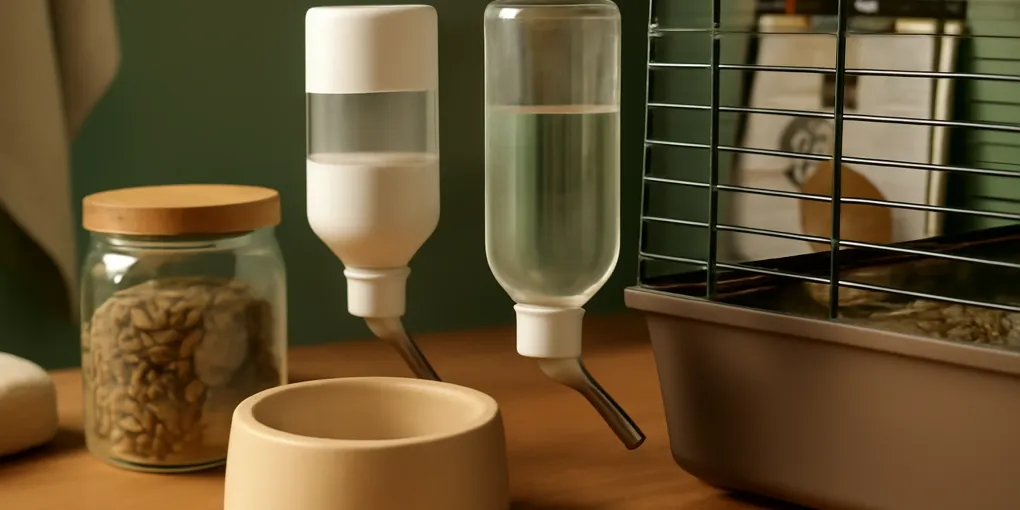
Most healthy rabbits should have easy access to clean water from an open bowl, with a bottle used as backup only when it solves a specific mess or travel problem. Bowls let rabbits drink in a more natural head position and usually deliver water faster. Bottles keep water away from bedding, but the nozzle can clog, leak, or make a rabbit work harder for each sip.
The best setup for many indoor rabbits is a heavy ceramic or stainless bowl placed away from the litter corner, plus a checked bottle when the owner will be gone longer than usual. If your rabbit is eating less hay, producing smaller droppings, or acting painful, do not solve that by buying a new bottle. Call an exotics veterinarian.
Quick picks
- Search Amazon for Kaytee Paw Print PetWare rabbit bowl if you want a heavy, simple crock that is hard to toss.
- Search Amazon for Lixit glass rabbit water bottle if you need a bottle backup and want easier visual cleaning than opaque plastic.
- Search Amazon for stainless steel mounted rabbit water bowl if floor bowls keep getting flipped or filled with bedding.
For a cleaner feeding zone, combine the water station with the placement advice in our rabbit hay rack guide and the litter-area layout in our rabbit litter training protocol.
Bowl versus bottle: the practical answer
A bowl wins on drinking posture and flow rate. A rabbit can lower its head, lap freely, and take a larger drink quickly. That matters because rabbits depend on steady hay intake and gut movement, and water access supports normal eating and fecal output. Heavy ceramic, stainless steel, or mounted crock styles are better than light plastic bowls that slide or get chewed.
A bottle wins when contamination is the bigger daily problem. Some rabbits drag hay into every bowl, sit in the water zone, or live temporarily in a travel enclosure. A bottle can keep water available when a bowl is dirty. The tradeoff is reliability: the owner must tap the nozzle, check for bubbles, confirm flow, and clean the tube.
PSR G6 Composite Score for rabbit water gear
| Factor | Weight | Score | Weighted contribution |
|---|---|---|---|
| Research fit | 30% | 4.2 | 1.26 |
| Evidence quality | 25% | 3.9 | 0.98 |
| Value | 20% | 4.5 | 0.90 |
| User signals | 15% | 4.1 | 0.62 |
| Transparency | 10% | 4.4 | 0.44 |
| Composite | 100% | 4.2/5 |
The score favors water gear that supports natural access, daily cleaning, and easy failure detection. A low-cost bowl can score higher than a clever bottle if the rabbit drinks more easily from it.
What to buy for an indoor rabbit
Choose a bowl that is heavy enough to resist nudging and wide enough for whisker clearance. Ceramic crocks are stable and easy to see when dirty. Stainless bowls are lighter but less porous and durable if they mount securely. Avoid narrow novelty dishes, rough glazed interiors, and bowls with painted surfaces where chewing could expose unknown coatings.
Place the bowl on a washable mat outside the litter box but near the hay zone. Rabbits often eat hay and drink in the same routine. If the bowl sits under a hay rack, it may fill with stems; if it sits in the litter corner, it may become unsafe quickly. Move the bowl until you see regular drinking without constant debris.
For a single indoor rabbit, a crock that holds roughly one to two cups is usually easier to manage than a tiny dish that empties quickly or a huge bowl that encourages stale water. The bowl should be low enough for easy access but not so shallow that the rabbit steps into it. If you use an exercise pen, place the water where the rabbit already pauses to eat hay rather than across a slippery floor.
For outdoor hutches or garage setups, hydration gear has to account for temperature. Water can freeze, overheat, or grow algae faster than owners expect. Outdoor rabbits also need predator-safe housing, ventilation, and daily welfare checks; a bigger bottle does not make an unsuitable hutch safe. In hot or cold weather, use multiple water checks per day and bring the rabbit into a safer environment when conditions are outside its normal comfort range.
What to avoid
Avoid novelty bottles that make it hard to see the water line, tiny hamster-style bottles for adult rabbits, and bowls that are narrow enough to pinch whiskers. Avoid suction-cup mounts in active pens because they can fail and leave the rabbit without water. Also avoid placing water directly beside pellets if the rabbit dumps pellets into the bowl; swollen pellets can sour quickly.
Do not add vitamins, flavor drops, or sugary liquids to routine water unless a veterinarian directs it. Additives can reduce intake, grow residue, and hide whether the rabbit is drinking normally. Clean water and high-fiber hay are the foundation.
When a mounted bowl is worth it
A mounted bowl solves two problems: flipping and bedding contamination. It should attach firmly to the pen or enclosure, sit low enough for a neutral neck position, and remove easily for washing. Do not mount it so high that the rabbit stretches upward like it is using a bottle. The point is still bowl-style drinking.
Check the bracket for rust, trapped slime, and sharp edges. Many owners wash the cup but ignore the clamp. The clamp is exactly where wet hay and fur can collect.
Choose a cup that lifts out for daily scrubbing while its bracket stays locked to the pen. A twist-in cup may resist tossing better than a loose drop-in ring, but test it with a full bowl before relying on it. The mount should not leave projecting bolts or a narrow gap where a paw, jaw, or collar could catch. Recheck clamp tension after pen panels are moved or folded.
Mounted bowls are most useful for rabbits that repeatedly tip a correctly sized heavy crock, bonded pairs that need a second water station, or pens where floor-level litter constantly contaminates the water. They are not a reason to use a smaller cup: the rabbit still needs enough open surface to drink freely and enough capacity to last between checks.
How to use a bottle safely
If you use a bottle, treat it as a device that can fail silently. Fill it, attach it, tap the ball bearing, and watch that water comes out. Check it again after the rabbit uses it because vacuum lock and angle issues can stop flow. Glass bottles are easier to inspect, while plastic bottles are lighter but scratch more easily.
Use a bottle brush daily or at least every refill cycle, and scrub the sipper tube. Algae and biofilm are not just cosmetic. If the rabbit pushes the tube aggressively, chews the nozzle, or drinks much less than expected, provide a bowl and reassess the setup.
Two-water-source setup for travel days
When you will be out longer than normal, provide two independent water sources: a bowl and a bottle, or two bowls in separate locations. This does not replace pet-sitter checks. It reduces the chance that one tipped bowl or blocked nozzle leaves the rabbit without water.
For bonded pairs, use multiple stations. One rabbit can block access, especially in a compact pen. Watch actual drinking behavior rather than assuming two animals share politely.
Cleaning schedule
Dump, rinse, and refill bowls at least daily, and more often if hay, cecotropes, pellets, or litter get inside. Scrub slime rings rather than just topping off. Wash travel bottles and backup bottles even when they look unused; standing water still grows residue.
During warm weather, clean more often and keep water out of direct sun. If water intake changes suddenly, look for environmental causes such as heat, new bottle placement, or dirty bowls, but also consider pain, dental disease, and gastrointestinal disease.
Track normal intake by learning your rabbit’s ordinary refill pattern rather than chasing a universal number. A rabbit eating very wet greens may drink less from the bowl than a rabbit eating mostly hay and pellets, but droppings should remain abundant and well formed. Fewer droppings, tiny dry pellets, hunched posture, tooth grinding, or refusing favorite greens should be treated as a health warning, not as proof that a different bottle is needed.
Multi-rabbit households
Bonded rabbits should have more than one water station. Put bowls far enough apart that one rabbit cannot guard both while resting. Watch the quieter rabbit drink at least once after you rearrange the pen. If one rabbit repeatedly tips or fouls the main bowl, add a mounted bowl for redundancy instead of expecting the other rabbit to compete for a dirty source. Recheck the layout after any bonding change.
FAQ
Do rabbits drink more from bowls than bottles?
Many rabbits appear to drink more readily from bowls because the flow is faster and the posture is natural. Individual preference varies, so observe your rabbit’s intake and droppings after any change.
Can a rabbit have only a water bottle?
A bottle can work if it flows reliably and the rabbit uses it well, but a bowl is often a safer default for daily access. If you use only a bottle, check nozzle function multiple times per day.
Where should I put a rabbit water bowl?
Place it near the hay-eating area but outside the litter corner and not directly under loose hay. The goal is convenient drinking without constant contamination.
Sources and veterinary references
- RSPCA: caring for rabbits, including diet and daily welfare checks, https://www.rspca.org.uk/adviceandwelfare/pets/rabbits
- Merck Veterinary Manual: rabbit biology and care context, https://www.merckvetmanual.com/all-other-pets/rabbits/description-and-physical-characteristics-of-rabbits
- VCA Hospitals: feeding your rabbit, https://vcahospitals.com/know-your-pet/feeding-your-rabbit