Hamster Wheel Cleaning Protocol: Odor Control Without Stressing Your Pet
ProtocolQuick picks
| Product | Key Specs |
|---|---|
| See price on Amazon |
|
| See price on Amazon |
|
| See price on Amazon |
|
Product availability, certifications, and retailer details can change; check the current Amazon page before buying.
Direct answer
Clean a hamster wheel often enough that urine, damp bedding, and oily residue do not build up on the running surface, but do not turn every cleaning into a full cage reset. The wheel is exercise equipment and a scent-marked object. A good routine removes waste while preserving the hamster’s nest and hiding areas as much as possible.
The key is using a solid wheel that can actually be cleaned. Wire rung wheels, cracked plastic, sharp seams, and unstable stands are not worth maintaining.
Wheel and cleaning gear to consider
- Search Amazon for solid-surface hamster exercise wheels if the current wheel has rungs, cracks, or a size that curves the back.
- Search Amazon for unscented small pet cage cleaners for occasional accessory cleaning when soap and water need help.
- Search Amazon for small soft cleaning brushes to clean axle seams without using kitchen sponges.
How we score this protocol
| Criterion | Weight | Score | Why it matters here |
|---|---|---|---|
| Research | 30% | 8.0 | Hamster welfare guidance consistently emphasizes exercise access, suitable housing, and stress reduction. |
| Evidence Quality | 25% | 7.5 | Cleaning intervals are husbandry-based, so the protocol avoids fake precision and focuses on visible waste and odor. |
| Value | 20% | 8.5 | A clean solid wheel is inexpensive compared with replacing bedding constantly or tolerating odor. |
| User Signals | 15% | 8.0 | Owners commonly report urine smell, squeaking axles, and bedding stuck to wheel tracks. |
| Transparency | 10% | 9.0 | Replacement advice is tied to observable wheel defects, not brand claims. |
Step 1: Decide whether the wheel is worth keeping
Before cleaning, inspect the wheel. A safe hamster wheel has a solid running surface, stable stand or secure mounting, no exposed wire rungs, no sharp seams, and enough diameter that the hamster’s back does not arch while running. Syrian hamsters usually need larger wheels than dwarf hamsters. Watch the animal running, because package labels can be optimistic.
Replace a wheel if the surface has deep grooves that trap waste, if the axle wobbles, if chewing has made sharp plastic, or if the stand tips during normal running. Cleaning cannot fix a bad fit.
Step 2: Clean at the right time
Hamsters are crepuscular or nocturnal, so daytime cage work can interrupt sleep. If the wheel is dirty but the hamster is sleeping in a separate nest, remove it quietly and avoid digging through the enclosure. If the hamster sleeps in or under the wheel, wait for an awake period unless there is wet waste that needs immediate removal.
Do not replace all bedding just because the wheel smells. First check whether the wheel itself, the sand bath, or a corner toilet area is the source.
Step 3: Wash the wheel without leaving residue
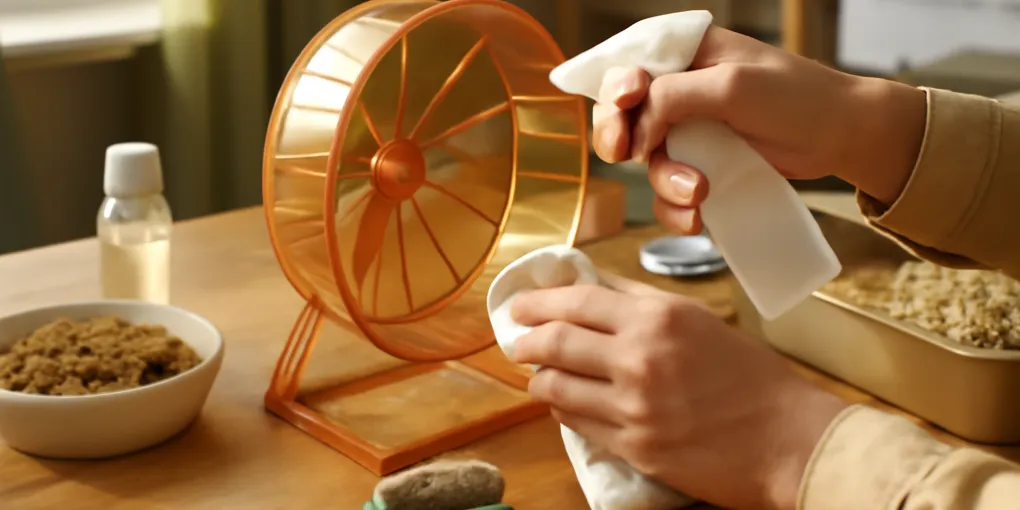
Use warm water and mild unscented dish soap. Scrub the running surface, back rim, stand, and axle area with a pet-only brush. Textured tracks can hold urine salts and bedding dust, so spend extra time there. Rinse thoroughly until the surface does not feel slick.
Avoid bleach, heavy fragrance, essential oils, and household disinfectant sprays for routine cleaning. Hamsters chew, groom, and keep their noses close to surfaces. If illness or parasites require stronger disinfection, ask a veterinarian what to use and how long to rinse and air out the item.
Step 4: Dry before returning
Dry the wheel completely with a clean towel and then air-dry seams if needed. A damp wheel can wet bedding and restart the odor problem. Spin the wheel by hand after cleaning. It should move smoothly without grinding, wobbling, or squeaking loudly.
If the wheel uses a metal axle, check for rust. If it uses a suction cup or clip, confirm the mount still holds. A wheel that falls at night can frighten or injure the hamster.
Step 5: Reduce repeat odor
If the wheel is wet again within a day, look at the habitat layout. Some hamsters urinate while running; others use a nearby corner and kick bedding onto the wheel. A sand bath or toilet corner may help some hamsters choose a cleaner spot, but do not force a toilet setup by removing normal bedding depth.
Keep plenty of safe paper bedding for burrowing. A stressed hamster in a sparse cage may spend more frantic time on the wheel and scent-mark heavily. Cleaning works best when the enclosure also supports hiding, digging, chewing, and predictable darkness.
Common mistakes
Do not soak a wooden wheel unless the manufacturer says it is washable; urine can soak deeper into wood. Do not use scented wipes. Do not put a wet wheel back because the hamster is awake and impatient. Do not scrub with a brush that has been used for bathroom or kitchen chemicals.
Most importantly, do not choose a wheel for quietness alone. A small quiet wheel that bends the spine is the wrong product.
FAQ
How often should I clean a hamster wheel?
Spot clean visible urine or stuck bedding as needed. Do a fuller wash during regular cage maintenance, or more often if the hamster urinates on the wheel. The right interval is based on smell, moisture, and buildup, not a fixed calendar.
Can I use disinfectant on a hamster wheel?
For routine cleaning, use mild unscented soap and water. If illness requires disinfection, follow veterinary guidance and rinse/dry completely before returning the wheel.
Why does my hamster wheel smell so fast?
The hamster may urinate while running, kick soiled bedding onto the track, or have a wheel with seams that trap waste. Check the wheel design, toilet corner, bedding depth, and enclosure stressors.
Related reading
- If wheel size is the problem, read do hamster wheels need 10 to 12 inches?.
- For coat care, pair the wheel routine with our hamster sand bath setup protocol.
Sources
- RSPCA hamster care guidance covers suitable housing, exercise, and low-stress daily care: https://www.rspca.org.uk/adviceandwelfare/pets/rodents/hamsters
- PDSA hamster housing advice explains exercise equipment, cleaning, bedding, and enrichment needs: https://www.pdsa.org.uk/pet-help-and-advice/looking-after-your-pet/small-pets/the-ideal-home-for-your-hamster
- Merck Veterinary Manual overview of hamster care and health supports careful husbandry and prompt attention to illness signs: https://www.merckvetmanual.com/all-other-pets/hamsters/providing-a-home-for-a-hamster
Bottom line
A clean hamster wheel should be solid, correctly sized, dry, and free of urine buildup. Clean the wheel more often than the whole cage, preserve the nest when possible, and replace any wheel that cannot be cleaned or fitted safely.