Parakeet Cage Cleaning Protocol: A Weekly Routine That Protects Food, Feet, and Air Quality
ProtocolQuick picks
| Product | Key Specs |
|---|---|
| See price on Amazon |
|
| See price on Amazon |
|
Product availability, certifications, and retailer details can change; check the current Amazon page before buying.
Parakeet Cage Cleaning Protocol: A Weekly Routine That Protects Food, Feet, and Air Quality
Use this parakeet cage cleaning protocol product comparison as the buying shortlist, then match the sizes, materials, cleaning demands, and pet-safety caveats against the setup described below.
A clean parakeet cage is not about making the cage look unused. Budgies drop seed hulls, feathers, dander, toy pieces, and feces every day. The goal is to remove wet food, soiled surfaces, and dust before they become health or air-quality problems, while keeping enough routine and familiar objects that the birds do not experience cleaning day as a cage invasion.
This protocol is for indoor budgies and similar small parakeets in a properly sized cage. It separates daily checks, twice-weekly spot cleaning, and deeper weekly cleaning. That matters because stripping the whole cage every day can be stressful, but waiting weeks between cleanings can leave food residue, droppings, and damp paper in contact with feet and beaks.
If your birds also use a bath, read our small-cage bird bath guide before adding more water accessories. Bath placement changes how often nearby perches and liners need cleaning.
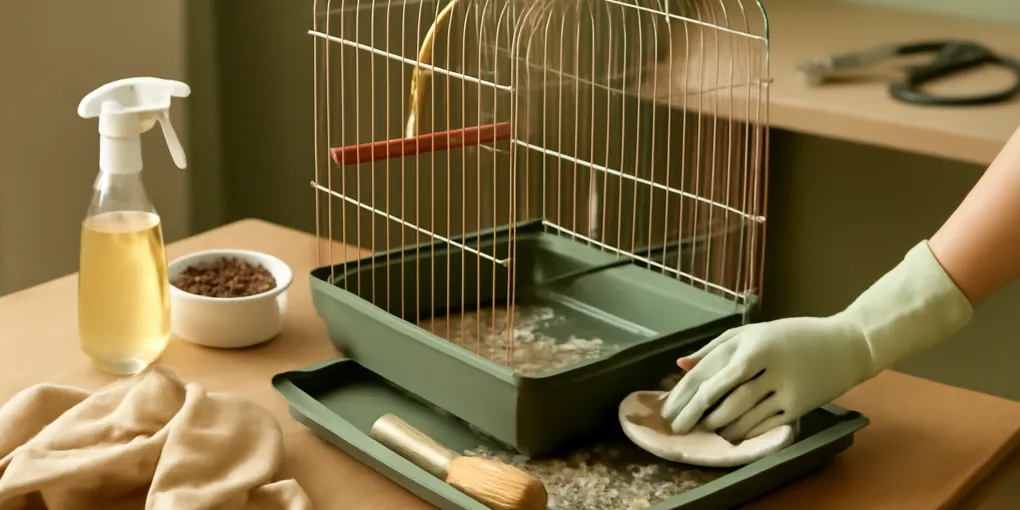
Supplies that make cleaning easier
- Unscented paper liners or plain paper cut to tray size.
- A dedicated scrub brush for dishes and another for cage bars or perches.
- Mild dish soap for routine washing.
- White vinegar solution for mineral deposits on dishes and bath cups.
- Clean towels for drying everything before it goes back.
- Backup food and water cups so one set can dry completely.
- A small handheld vacuum or dustpan used away from the birds, not a scented cleaning spray.
Do not use aerosol cleaners, heavily scented disinfectants, essential-oil sprays, oven-cleaner style products, or anything that leaves fumes near the cage. Birds have sensitive respiratory systems. When true disinfection is needed after illness, quarantine, or a veterinary instruction, use the product and dilution your avian veterinarian recommends and move the birds to a safe, ventilated location first.
Search Amazon for unscented parakeet cage liners
Search Amazon for stainless steel bird food cups
Cleaning-supply checks
The right supplies make safe cleaning easier without adding fumes or residue. Check:
- Liners: use unscented paper or cage-safe liners that can be changed before droppings build up.
- Food cups: stainless steel cups are easier to wash and inspect than scratched plastic.
- Disinfectants: avoid strong fumes around birds and follow avian-safe instructions when deeper disinfection is needed.
Daily five-minute cage check
Start with the tray and food areas. Replace the liner if it is wet, heavily soiled, or hiding droppings under seed hulls. A plain liner helps you see changes in droppings. Black, bloody, very watery, missing, or dramatically changed droppings deserve attention, especially if the bird is fluffed, quiet, tail-bobbing, or eating less.
Remove fresh foods after the safe feeding window for your home temperature. Greens, fruit, cooked grains, and moist foods should not sit all day in a warm cage. Wash the fresh-food cup, dry it fully, and do not refill it on top of residue. Water dishes should be refreshed daily and more often if a bird bathes in the cup or drops pellets into it.
Check perches below favorite sitting areas. A quick wipe is fine for a small fresh spot, but caked droppings on a perch need removal and washing. Feet spend hours on those surfaces. Do not ignore rope perches if they become damp or frayed.
Twice-weekly spot cleaning
Twice a week, rotate through the cage zones that collect grime: food-door bars, the area under the main sleeping perch, the bath corner, and toy attachment points. Move slowly and keep the birds in a safe alternate space if they panic when your hands enter the cage.
Wash food and water cups with warm water and mild dish soap, rinse thoroughly, and dry before reinstalling. Stainless steel cups are often easier to keep clean than scratched plastic. If you still use plastic cups, replace any that have cloudy scratches, chew marks, or seams that trap food.
Use this time to inspect toys. Remove frayed rope, loose bells, open split rings, sharp plastic, and anything with droppings ground into surfaces that cannot be cleaned. Cleaning is also safety inspection.
Weekly deeper cleaning protocol
Pick a predictable day and clean in the same order each week.
- Move the birds to a safe travel cage or bird-safe room if needed. Close windows, turn off ceiling fans, and keep other pets away.
- Remove dishes, baths, toys, and loose perches. Keep one familiar perch or toy available nearby so the cage does not return as a completely strange object.
- Remove and discard the liner. Vacuum or sweep seed hulls away from the cage only after the birds are not startled by the noise.
- Wash the tray with warm water and mild soap. Rinse until no residue remains, then dry fully.
- Scrub perches and dishes. Wood perches need time to dry; damp wood should not go straight back into the cage.
- Wipe cage bars around food doors and favorite perching zones. Avoid soaking joints or hardware that may rust.
- Reassemble the cage with a fresh liner, clean dry dishes, and a familiar layout. You can rotate one or two toys, but do not change everything at once for nervous birds.
The cage should smell neutral when finished. If it smells strongly like cleaner, it is not ready for birds.
When to disinfect rather than just clean
Routine cleaning removes food, droppings, dust, and grime. Disinfection is different. It is appropriate after certain illnesses, parasite concerns, quarantine transitions, or veterinary instructions. The risk is that disinfectants can harm birds if diluted incorrectly, left on surfaces, or used with poor ventilation.
If a bird has been sick, ask an avian veterinarian what product, dilution, contact time, rinse step, and drying time to use. Move birds away from the cleaning area. Do not improvise by mixing cleaners. Never mix bleach with vinegar or ammonia.
Cage layout after cleaning
Put food and water where droppings are less likely to fall into them. Keep the main sleeping perch away from the dishes. If a favorite perch always soils the water cup, move the cup or perch rather than simply washing the cup more often.
Keep bath cups away from seed dishes so water does not turn hulls into paste. If your bird bathes frequently, place the bath where splashes land on an easily changed liner. For birds that are nervous about changes, keep the main perch locations stable and rotate only one accessory at a time.
Common cleaning mistakes
The first mistake is using pleasant-smelling products made for humans. A scent that seems clean to a person can be a respiratory burden for a bird. The second mistake is letting wet wood, rope, or paper stay in the cage because the visible mess is small. Damp organic material is exactly what you want to remove.
The third mistake is deep-cleaning so aggressively that the birds lose every familiar perch, toy, and location cue at once. A clean cage should still feel like their cage.
Parakeet cage cleaning questions
How often should I change a parakeet cage liner?
Check it daily and change it whenever it is wet, heavily soiled, or covered with seed hulls. Many homes need daily liner changes under favorite perches and less frequent changes in cleaner tray areas.
Can I use vinegar to clean a bird cage?
Vinegar can help with mineral deposits on dishes or bath cups, but it is not a complete disinfectant plan for illness. Rinse and dry surfaces before birds return, and ask an avian veterinarian about disinfection after disease exposure.
Are scented cage liners safe for parakeets?
Avoid scented liners. Plain paper or unscented cage liners are better because they reduce unnecessary fragrance exposure and let you monitor droppings more clearly.
Should I remove all toys on cleaning day?
Remove toys for inspection and cleaning, but return some familiar safe items. Nervous birds often handle cleaning better when the cage layout remains mostly predictable.
Sources
For a separate accessory-shopping question, see the bird cage seed-guard guide.
- Merck Veterinary Manual. Pet birds: management and preventive care