Best Bird Baths for Small Cages: Safer Options for Budgies, Canaries, and Finches
Buyer's GuideLixit Quick Lock Bird Bath
Best outside-hanging bath for many wire cagesBest fit: Budgies, canaries, finches with compatible doors
$8-$15
Quick picks
| Product | Key Specs |
|---|---|
| See price on Amazon |
|
| See price on Amazon |
|
| See price on Amazon |
|
Product availability, certifications, and retailer details can change; check the current Amazon page before buying.
A bird bath for a small cage should solve one job: give the bird a shallow, voluntary way to bathe without crowding the cage or creating a wet, dirty floor. Many budgies, canaries, finches, and small parrots enjoy water, but they do not all use the same setup. Some hop into a hanging bath immediately. Others prefer a shallow dish or a gentle mist.
Use this best bird bath for small cage product comparison as the buying shortlist, then match the sizes, materials, cleaning demands, and pet-safety caveats against the setup described below.
The wrong bath can create problems: a doorway that traps feathers, a slick cup that tips, deep water that intimidates the bird, or a plastic cover that is hard to clean. For a small cage, fit and exit clearance matter as much as price.
Quick picks by bird and cage type
- Choose an outside-hanging bath if your cage door fits securely and you want to preserve floor space.
- Choose a clear plastic bath for birds that like a partially enclosed splash area and have enough door clearance.
- Choose a shallow ceramic dish if the bird dislikes enclosed baths or if you can supervise a short out-of-cage bath.
- Use misting instead of a bath when a bird is fearful, recovering, or likely to soil the cage with repeated spills.
- Skip deep bowls, slippery glass, and scented additives. Clean plain water is enough.
For transport days, see our guide to bird travel carriers for vet visits; bathing gear should stay out of a travel carrier unless a veterinarian gives a specific reason.
Bird-bath buying checks
Choose by species, cage door style, and cleanup, not by the cutest bath photo. Check:
- Depth: small birds need shallow water and easy exit points.
- Mounting: clip-on baths must attach securely without blocking perches or food cups.
- Cleaning: smooth plastic or ceramic is easier to wash before biofilm builds up.
How shallow is shallow enough?
For small birds, bathing water should be shallow enough that the bird can stand, splash, and leave easily. The bath is not a swimming pool. Fill a new bath conservatively, watch the first use, and empty it after the session. If the bird drinks from it, steps in droppings, or scatters food into it, treat that water as dirty and replace it.
Do not add soap, oils, or fragrances. Normal feather care depends on the bird’s own preening and a clean environment. If feathers look greasy, broken, or persistently abnormal, that is a veterinary question rather than a reason to buy a harsher bath product.
Best bath options for small cages
Lixit Quick Lock Bird Bath
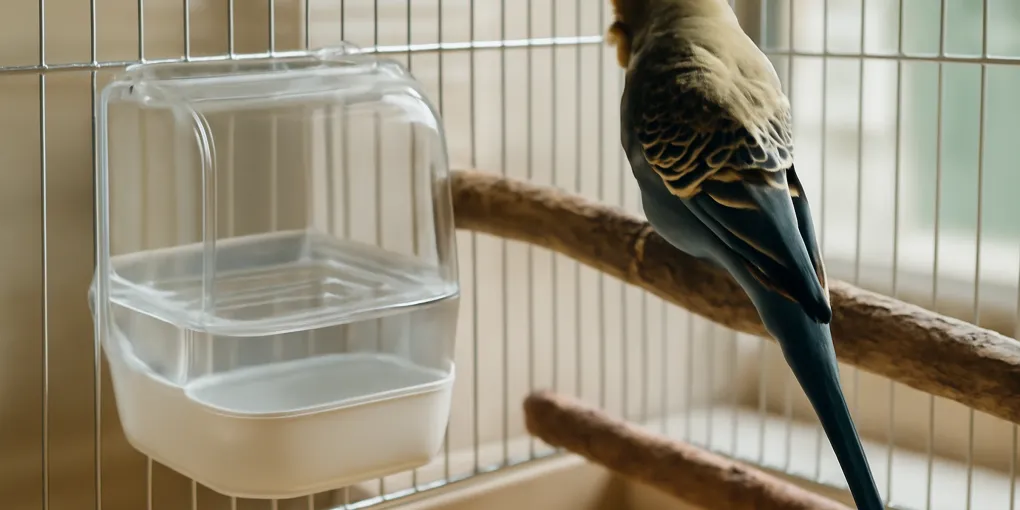
This style works well when the cage has a compatible door and the bird likes hopping through a small opening. Because the bath hangs outside the cage, it preserves interior space and can reduce the wet floor area. It is best for birds that are confident enough to enter and exit without panic.
- Best for: budgies, canaries, and finches in wire cages with matching bath-door dimensions.
- Caveat: measure the cage opening. A secure lock matters more than the brand photo.
- Current options: Search Amazon for Lixit Quick Lock Bird Bath
JW Insight Bird Bath
A clear plastic bath lets many owners see whether the bird is comfortable, and it can contain splashes better than an open bowl. It is still a tight space, so it is not ideal for a bird that startles easily or has damaged feathers.
- Best for: small birds that already investigate cage accessories calmly.
- Caveat: wash corners and seams carefully; biofilm and seed dust collect where water sits.
- Current options: Search Amazon for JW Insight Bird Bath
Shallow ceramic dish
A shallow dish is the simplest option and often the best fallback for birds that ignore hanging baths. Use it during a supervised session, then remove it. Ceramic has useful weight, but it can still soil cage paper and should not crowd food cups or sleeping perches.
- Best for: birds that prefer open water and owners who can supervise.
- Caveat: do not leave wet dishes in a cage all day; spilled water can contaminate food and bedding.
- Current options: Search Amazon for shallow ceramic bird bath dish
When misting is the better bath
Some birds prefer a fine mist from above rather than stepping into water. Use lukewarm clean water, avoid the face if the bird backs away, and stop before the bird becomes chilled or stressed. A bird that leans in, fluffs, and preens may enjoy misting; a bird that flees or clings to the bars is telling you the setup is wrong.
Misting is not a substitute for fixing dry air, poor diet, or feather disease. It is simply another way to offer normal bathing behavior.
Fit checks before you buy
Measure the cage door before choosing a bath that hangs outside the bars. Many product photos show a bath attached to a generic wire cage, but door height, door width, latch style, and bar spacing vary. A bath that hangs loosely can rattle or fall; a bath that requires bending bars is not a safe fit.
A door-mounted bath also needs enough exterior clearance from walls, curtains, and nearby furniture to sit level.
Look at the bird’s tail and wing clearance too. A canary or finch may be comfortable in a compact bath that feels tight for a budgie. A small parrot with long tail feathers needs enough room to turn without scraping the plastic wall. If the bird has clipped, damaged, or growing feathers, choose the most open and low-stress setup until normal movement returns.
Placement mistakes that cause mess
Do not place a bath directly over seed cups, mineral blocks, or paper you plan to leave in place all day. Splash water turns seed dust into paste and can soil cage liners quickly. Put the bath near a familiar perch during the bathing session, then remove it and dry the area.
Avoid placing a new bath in the bird’s sleeping corner. Small birds often treat favorite sleep areas as safe zones. If a large clear object appears there suddenly, the bird may avoid that part of the cage or panic at bedtime. Introduce the bath during a calm daylight period and remove it before evening.
Cleaning routine
Rinse and wash the bath after every use. Small birds shed dander and drop seed hulls quickly, and warm shallow water can become dirty in minutes. Use mild unscented soap, rinse thoroughly, and dry the bath before storage. Inspect plastic for cracks or cloudy rough surfaces that no longer clean well.
Species-specific notes
Budgies often investigate water socially, so a bath may work better after the bird has watched a cage mate or after you place a wet leafy green near the opening. Keep the first fill very shallow and let curiosity do the work. A bird that only splashes its chest or stands beside the water is still using the opportunity.
Canaries and finches usually need less hardware. A simple outside bath or shallow dish can be enough, but these small birds chill quickly if the room is cold or drafty. Offer bathing earlier in the day so feathers dry before evening temperatures drop.
Small parrots such as lovebirds, parrotlets, and cockatiels vary widely. Some prefer misting over a cup, and some chew plastic edges. If a bird chews the bath or tries to dismantle the latch, remove it between sessions and inspect for rough pieces before the next use.
What not to buy
Avoid deep novelty tubs, baths with decorative mirrors inside the splash area, and products that rely on suction cups inside the cage. Mirrors can frustrate some birds, deep tubs are unnecessary for small species, and suction cups can release when wet or chewed. Also avoid any bath that smells strongly of plastic out of the package; wash and air it out before offering it, and return it if the odor persists.
FAQ
How often should a budgie have a bath?
Offer bathing opportunities several times per week and let the bird choose. Some budgies bathe often; others prefer occasional misting. Force-bathing is not appropriate.
Can a bird bath stay in the cage all day?
Usually no. Short sessions are cleaner. Remove the bath after use so water does not collect droppings, seed hulls, or bedding.
Is tap water safe for bird bathing?
In areas where tap water is safe for people, plain clean tap water is commonly used for bathing. If your local water has a known problem, use the same safe water source you use for drinking.
Why won’t my bird use a new bath?
The opening may be too narrow, the water too deep, the placement too exposed, or the bird may simply prefer misting. Start with a shallow fill near a familiar perch and avoid chasing the bird toward it.
Sources
- VCA Animal Hospitals. Bathing birds: https://vcahospitals.com/know-your-pet/bathing-birds
- RSPCA. Caring for pet birds and environmental needs: https://www.rspca.org.uk/adviceandwelfare/pets/birds/environment
- Merck Veterinary Manual. Overview of pet birds: https://www.merckvetmanual.com/exotic-and-laboratory-animals/pet-birds/overview-of-pet-birds