Best Parakeet Travel Carriers for Vet Trips: Small-Bird Safety Picks for 2026
Buyer's GuidePrevue Pet Products Travel Bird Cage
Best simple wire travel cageBest for: Short car trips where airflow and visibility matter
$25-$45
Quick picks
| Product | Key Specs |
|---|---|
| See price on Amazon |
|
| See price on Amazon |
|
| See price on Amazon |
|
Product availability, certifications, and retailer details can change; check the current Amazon page before buying.
Medical Disclaimer
A fluffed, weak, bleeding, egg-bound, panting, injured, or not-eating bird needs urgent avian veterinary care. This buyer guide is about transport gear for short trips, not home treatment.
Quick picks
For most parakeet and budgie vet trips, choose a small secure carrier rather than the full cage. The carrier should keep the bird contained, allow airflow, provide a stable low perch or towel floor, and fit safely on the car seat.
- Choose a wire travel cage if you want airflow, simple cleaning, and easy millet placement.
- Choose a soft-sided carrier if you need lighter handling and your bird is not a seam chewer.
- Choose an acrylic carrier only when ventilation and heat control are clearly adequate.
If you also keep birds in a main enclosure, our parakeet cage cleaning protocol covers the weekly hygiene routine that should stay separate from travel gear.
Parakeet carrier safety score
| Criterion | Weight | Score | Why it matters for parakeet transport |
|---|---|---|---|
| Escape resistance | 30% | 8.5 | A door pop-open in a parking lot is the highest-consequence failure. |
| Ventilation and heat safety | 25% | 8.0 | Small birds can overheat or chill quickly during stressful travel. |
| Perch and foot safety | 20% | 8.0 | Low, stable footing reduces falls when the car turns or stops. |
| Cleaning and reuse | 15% | 7.5 | Carriers need to be disinfected after clinic exposure or droppings. |
| Transparency | 10% | 8.0 | Exact fit depends on bird size, temperament, and car-trip length. |
| Composite | 8.1/10 | A practical category where safety details matter more than style. |
Product notes
Prevue Pet Products Travel Bird Cage
A small wire travel cage is the easiest default for many parakeet owners. It gives airflow, lets the bird see out, and is easy for clinic staff to inspect. Check bar spacing, latch tension, and whether the tray can slide during movement.
Best fit: short car trips for birds that tolerate visible surroundings.
Search Amazon for Prevue travel bird cage parakeet
Kaytee Come Along small-bird carrier
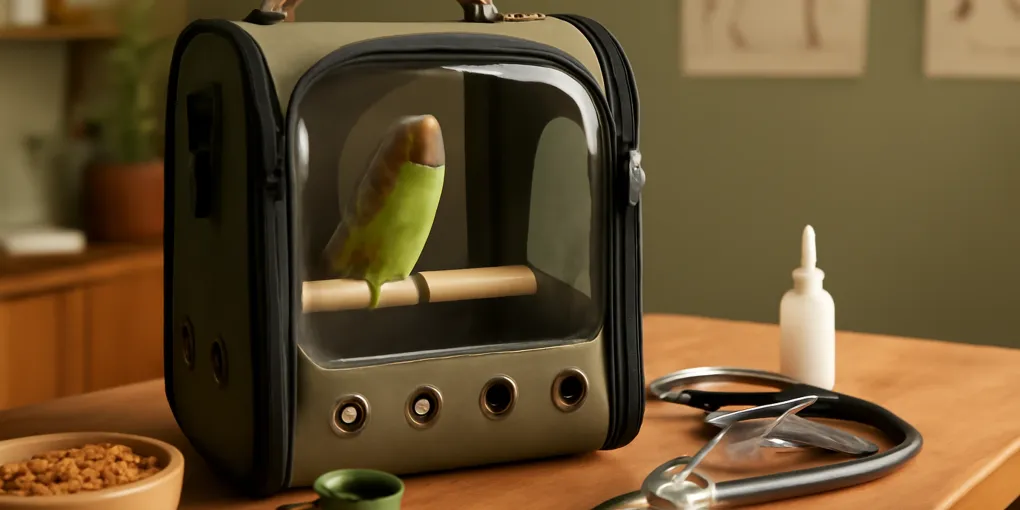
Soft-sided carriers are lighter and can feel less cage-like, but they need careful inspection. A curious budgie can work at seams, zippers, or mesh. Use it for short monitored trips, not unattended travel.
Best fit: calm birds and owners who want a lighter carrier to carry into the clinic.
Search Amazon for Kaytee Come Along small bird carrier
Small acrylic bird carrier
Acrylic carriers make visual checks easy and block some drafts, but ventilation and heat buildup are the tradeoffs. Never leave one in direct sun or a warm parked car. Confirm the latch cannot slide open.
Best fit: brief trips where the owner can monitor temperature and behavior the whole time.
Search Amazon for small acrylic parakeet carrier
Setup before the appointment
Let the carrier sit near the cage for a few days before a nonurgent appointment. Put a familiar perch, a towel on the floor, or a small piece of millet inside. Do short practice sessions without closing the door for long.
On travel day, remove swings, mirrors, bells, and loose toys. They can hit the bird during braking. Secure the carrier with a seat belt or footwell placement so it cannot slide.
Fit checks before you buy
Bar spacing and door security
For wire travel cages, bar spacing is not cosmetic. A parakeet should not be able to push its head through the bars or squeeze at a corner. Check the door latch with your fingers before the first trip. If the latch can be lifted by a beak, add a bird-safe clip that cannot pinch toes or catch feathers.
Door size matters too. A huge door can make loading easier, but it also creates a larger escape opening in a clinic lobby. A smaller door is safer if you can guide the bird calmly with a hand towel or millet target.
Inspect every access point, not only the main door. Removable trays and feeder openings need stops or latches that cannot shake loose in the car. Before loading the parakeet, carry the empty carrier by its handle, tilt it gently, and confirm that the base, tray, and door remain seated.
Perch height and grip
A high perch looks normal in a home cage, but it is risky in a moving car. Put the travel perch low enough that a slip does not become a hard fall. The perch should be thick enough that the foot wraps naturally, not a skinny dowel that forces the toes into one position.
For weak, elderly, or sick birds, ask the clinic whether a towel floor without a perch is safer. A bird that cannot grip well should not be asked to balance through turns and braking.
Ventilation and visual cover
A carrier needs airflow on more than one side. Acrylic and soft-sided carriers can work, but only if the ventilation openings are real and unobstructed. A pretty clear box with tiny holes can become hot quickly in sun.
Visual cover is separate from airflow. If your bird panics at passing cars, cover one side with a light towel while leaving vents open. Do not wrap the whole carrier like a sealed package.
Which carrier type fits which parakeet?
A confident bird that already steps onto a hand or target often does well in a small wire travel cage. It can perch, see the owner, and accept millet through the bars. A shy bird that flies hard at open space may be calmer with partial cover, as long as the carrier is ventilated and chew-safe.
For a bird going to the vet because it is sick, choose the carrier that lets the clinic see the bird without a long chase. A clear or wire carrier is often easier for initial observation than a deep opaque bag. If the bird is injured, call ahead and ask whether the clinic wants a towel-lined carrier with no perch.
Carrier size and clinic handling details
For a parakeet, bigger is not automatically safer during transport. The carrier should let the bird stand naturally, turn around, and settle on a low perch, but it should not create enough open space for repeated panic flights. A compact carrier also gives clinic staff better control when they move the bird from the exam room to a scale, towel, or treatment area.
Before buying, picture the entire appointment path: loading at home, carrying through the parking lot, waiting near dogs or loud equipment, and opening the door in an exam room. A carrier with a secure top handle, a door that opens predictably, and surfaces that can be disinfected after droppings is more useful than a stylish cage with awkward access. If the carrier includes cups, remove them for a short drive unless your avian vet asks for food or water in the carrier. Loose cups can swing, spill, or become obstacles when the bird braces during a stop.
Vet-trip packing list
Pack the carrier, a light towel, a small amount of familiar seed or millet, and photos of droppings or cage setup if the appointment is about illness. Bring the bird’s usual food name and any supplements or medications. Do not bring loose water in an open cup unless the clinic tells you to; spilled water can chill the bird and soak the floor.
If the trip is longer than a short local appointment, ask the avian vet about food, water, and temperature planning. A carrier that is fine for a ten-minute drive may not be right for a long trip, hotel stay, or airline-style travel. For repeat appointments, label the carrier with your name and the bird’s name, then keep a spare towel in the car in case the floor becomes soiled before the return drive.
Temperature and stress rules
Warm the car before bringing the bird outside in cold weather. In hot weather, cool the car first and keep the carrier out of direct sun. Covering part of the carrier with a light towel can reduce visual stress, but do not block airflow.
Watch for open-mouth breathing, wing lifting, collapse, or panic. Those are reasons to stop, adjust temperature, and call the clinic for instructions.
What to avoid
Avoid cardboard boxes for planned trips unless your vet specifically instructs it for emergency containment. Avoid large cages with high perches. Avoid carriers with loose feeder cups that can spill water, soak the floor, or hit the bird.
Do not use a carrier with bar spacing large enough for the head to pass through. Parakeets are small, fast, and very good at finding weak latches.
Parakeet travel carrier FAQ
How do I get a parakeet into a carrier without chasing it?
Practice before the appointment. Use millet, place the carrier near the main cage, and keep sessions short. For urgent visits, ask the clinic for safe capture advice.
Should I cover the carrier in the car?
Cover part of it if the bird is calmer with reduced visual stimulation, but leave ventilation open and monitor heat.
Can two parakeets travel in one carrier?
Sometimes bonded birds travel calmer together, but crowding and fighting are risks. Ask your avian vet, especially if one bird is sick or injured.
Sources
- VCA Animal Hospitals: Budgies - general care
- VCA Animal Hospitals: Budgies - feeding
Frequently Asked Questions
- Usually a smaller secure carrier is safer for short trips because it reduces sliding, falling, and escape risk. Very large cages can shift in a car.
- Often yes for short stable trips, but the perch should be low, secure, and sized for the bird's feet. Remove unsafe toys or loose swings.
- For short vet trips, ask your avian vet. Many owners use a small millet piece or familiar food, but open water cups can spill and chill the bird.