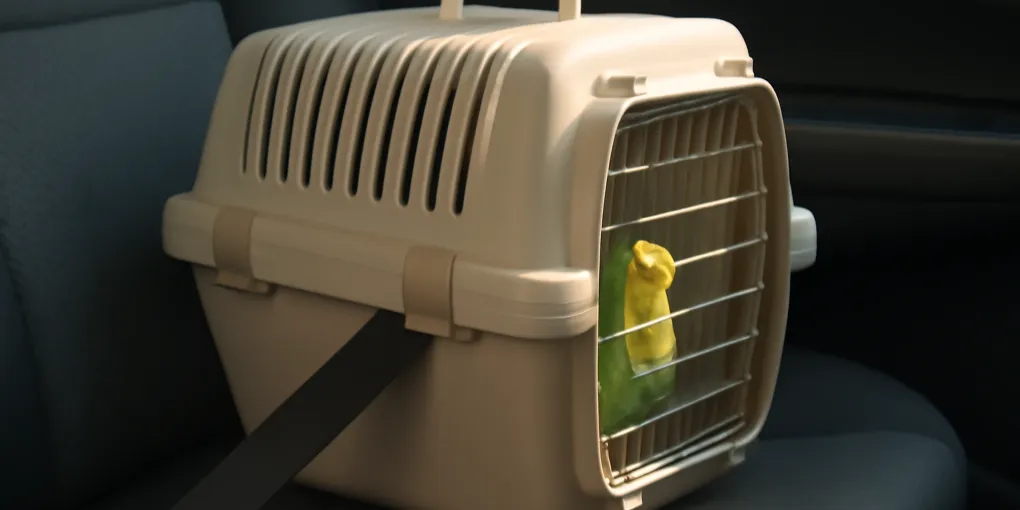
Parakeet Travel Carrier Safety: A Short-Trip Protocol for Budgies and Cockatiels
ProtocolQuick picks
Kaytee Come Along small bird carrier
★ Top pick Best compact short-trip carrier- Note: Check door latches, bar spacing, and the exact interior dimensions for your bird before use. A carrier must not substitute for a full-time cage.
Prevue travel bird cage for parakeets
Best for a bird already comfortable with a cage format- Note: Select a model with secure doors and a low, stable perch. Confirm that head and tail clearance are adequate with the bird standing normally.
For a brief vet trip, a parakeet carrier needs three things: secure containment, continuous airflow, and enough room for normal posture without inviting hard flights or falls. Prepare the carrier days before travel, secure it level in the vehicle, and keep the trip short. A bird that is open-mouth breathing, tail bobbing, panicking, or exposed to direct sun needs an immediate change of conditions and, if signs persist, veterinary advice.
Quick picks for a short bird trip
- For a compact vet visit: See price on Amazon for the Kaytee Come Along small bird carrier. Check the actual latch and bar spacing rather than trusting a lifestyle photo.
- For a bird used to a cage door: See price on Amazon for the Prevue parakeet travel cage. Skip it if the perch cannot be fixed low and stable.
Choose the carrier by the trip, not the product photo
See price on Amazon for the Kaytee Come Along small bird carrier if its latch, spacing, and interior dimensions fit the individual bird. See price on Amazon for the Prevue parakeet travel cage if the bird already accepts a cage-style enclosure. Neither is automatically safe for every budgie or cockatiel: inspect the exact listing and carrier in person before relying on it.
Write the carrier’s dimensions and the bird’s current weight in the travel record. That makes it easier to notice when a growing cockatiel, a new perch, or a clinic instruction makes the previous setup unsuitable.
Before loading the car, close and test every door twice while the carrier is empty. A latch that looks closed but lifts with light pressure is not an acceptable travel latch.
In cold weather, warm the vehicle before bringing the carrier out, then avoid placing it directly against a heater vent. In heat, cool the vehicle first and confirm the carrier remains out of sun before the bird leaves the house.
A good fit lets the bird stand upright, turn without crushing tail feathers, and grip a low perch without hitting the roof. It should not be so large that the bird can gain speed in a sudden stop. Avoid damaged plastic, rough wire ends, unlatched food doors, loose toys, mirrors, and gaps that can trap toes or a beak.
Set it up the day before
Put the clean carrier in the bird’s normal room with the door open. Let the bird inspect it at its own pace. Add one familiar, low perch only if it can be firmly secured; a swinging perch becomes a fall hazard in a moving vehicle. For a bird that will not perch calmly, a clean towel or liner on the floor may be safer for a very short trip, but ask an avian clinic for individual handling advice.
Use plain unscented paper as a liner so droppings remain visible. Do not spray fragrance, disinfectant, or air freshener near a bird. Remove water dishes that can spill on the bird during a short drive; ask the veterinary clinic for trip-specific feeding and water instructions, especially for a long journey, a young bird, or an unwell bird.
Car setup: level, shaded, observed
Place the carrier on a level rear seat or secure floor position where it cannot slide or tip. Keep it away from airbags, direct dashboard sun, blasting vents, open windows, and the cargo area. Never leave a bird in a parked car.
Use a breathable partial cover only if it makes the bird calmer. Covering all sides can block your view and reduce airflow. Watch the bird at safe stops: a calm stance and normal breathing are more useful signals than whether the carrier looks dark enough.
Do not play loud music, let dogs investigate the carrier, or open the door in an unsecured area. A travel carrier protects a bird only while its latches remain closed.
Arrival and return-home checks
At the clinic, tell staff if the bird had panic, a fall, vomiting, breathing changes, or unusual droppings in transit. On returning home, put the travel carrier beside the normal cage and allow a quiet, supervised transfer. Check that the bird resumes normal posture, breathing, drinking, and eating; do not assume a quiet bird is relaxed if it remains fluffed and motionless.
A carrier protocol is different from ordinary cage cleaning because the central risks are moving-vehicle momentum and temperature swings. A low stable perch, a secured vehicle position, and direct observation address those specific risks.
Before the appointment: write down the essentials
Put the clinic address, appointment time, bird’s normal diet, recent droppings changes, medication, and last known weight in the same travel bag. Do not add a new supplement, calming spray, or unfamiliar food on travel morning. If the visit is for breathing trouble, weakness, suspected egg binding, injury, or toxin exposure, call the clinic from the car for instructions rather than waiting in a warm vehicle.
For a pair or small flock, transport separately only when the clinic advises it or one bird needs isolation. A familiar companion may reduce distress for some bonded birds, but two animals in a carrier designed for one can create crushing, escape, and observation problems. The correct choice is the one that lets the bird stand normally and lets the caregiver see breathing and posture.
Use our bird travel-carrier comparison when you still need to choose a carrier. This protocol starts after that purchase decision and concentrates on acclimation, vehicle placement, airflow, temperature, and arrival checks for a short trip.
Parakeet travel-carrier FAQ
Should I cover a parakeet carrier during travel?
A breathable partial cover can reduce visual stimulation for some birds, but it must not restrict airflow or prevent observation. Keep part of the carrier open and remove the cover if the bird becomes hot or breathing changes.
Can a parakeet ride loose in the car?
No. A loose bird can escape, be injured during braking, or distract the driver. Keep the bird inside a closed, secured carrier until you reach an enclosed destination where transfer is safe.
Sources
- AVMA, Pet bird care: https://www.avma.org/resources-tools/pet-owners/petcare/pet-birds
- Merck Veterinary Manual, Overview of pet birds: https://www.merckvetmanual.com/exotic-and-laboratory-animals/pet-birds/overview-of-pet-birds
- Association of Avian Veterinarians, Find a veterinarian: https://www.aav.org/search/custom.asp?id=1803
Frequently Asked Questions
- A partial breathable cover can reduce visual overload, but it must never restrict airflow or conceal signs of overheating. Keep a side open for observation and adjust to the individual bird's response.
- No. A loose bird can escape, be injured by braking, or distract the driver. Use a secured carrier.