Best Budgie Perches for Foot Health: Natural Wood, Rope Tradeoffs, and Cage Layout
Buyer's GuideNatural wood budgie perch assortment
Best default upgradeBest for: Replacing identical dowels with varied diameter perches
$12-$30
Quick picks
| Product | Key Specs |
|---|---|
| See price on Amazon |
|
| See price on Amazon |
|
| See price on Amazon |
|
Product availability, certifications, and retailer details can change; check the current Amazon page before buying.
Medical Disclaimer
A budgie with swollen feet, sores, limping, overgrown nails, sitting low, fluffing, or reduced appetite needs an avian veterinarian. Perch changes can support husbandry, but they do not treat bumblefoot, arthritis, injury, or systemic illness.
Quick picks
The best budgie perch setup uses variety. A cage with three identical smooth dowels asks the same small areas of each foot to hold the same shape all day. A better setup mixes safe natural wood diameters, one comfortable rest surface, and careful placement that keeps food and water clean.
- Choose a natural wood perch assortment as the first upgrade from all-dowel cages.
- Add a small platform perch for a flat rest spot, especially for older birds.
- Use a nail grooming perch only as a secondary perch, not the main sleeping perch.
If the bird also travels to the clinic, our best parakeet travel carriers for vet trips covers short-trip carrier footing.
Budgie perch score
| Criterion | Weight | Score | Why it matters for budgie feet |
|---|---|---|---|
| Diameter variety | 30% | 8.6 | Different diameters spread pressure and exercise grip changes. |
| Surface safety | 25% | 8.2 | Rough, sharp, or abrasive surfaces can damage skin. |
| Toe and fiber risk | 20% | 7.8 | Hardware gaps and frayed rope can trap toes. |
| Cleaning practicality | 15% | 7.8 | Dirty perches keep droppings and moisture against feet. |
| Transparency | 10% | 8.0 | Owner inspection is still required because birds chew and wear perches differently. |
| Composite | 8.2/10 | Perch variety is a small cage change with real husbandry value. |
Product notes
Natural wood perch assortment
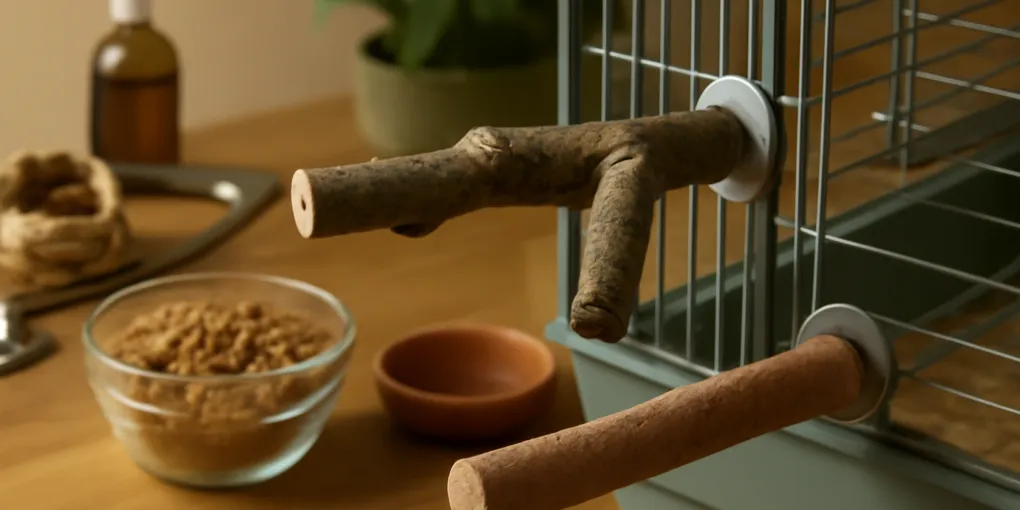
Natural wood perches are the best default because they create diameter and texture changes. Look for bird-safe wood, stainless or sturdy mounting hardware, and shapes that do not steal all flight space. Avoid mystery branches from outdoors unless you can identify and sanitize the wood safely.
Search Amazon for natural wood budgie perch assortment
Small bird platform perch
A platform perch gives a flat resting surface. It can help older birds or birds that need a break from gripping. Place it where droppings will not fall into food and where the bird can step on and off without squeezing through toys.
Search Amazon for small bird platform perch budgie
Limited-use nail grooming perch
A grooming perch may reduce some nail sharpness, but it is not a substitute for safe nail care. Choose designs with smoother top surfaces when possible and keep abrasive surfaces away from the main sleeping spot. If feet look red, shiny, or sore, remove it.
Search Amazon for budgie nail grooming perch smooth top
What bird-health sources say
Foot problems in caged birds are often linked to pressure, hygiene, nutrition, and inappropriate surfaces. The University of Missouri Extension parakeet care guide emphasizes cage setup, sanitation, and appropriate accessories for parakeets. The VCA bird perches guidance recommends perches of varying diameters and textures while avoiding sandpaper covers.
That is the practical target: variety without harshness.
Cage layout rules
Place the main sleeping perch high, stable, and away from drafts. Put food and water where droppings from higher perches will not land in them. Leave an open flight or hop path instead of filling every gap with accessories. A perch that looks useful in a product photo can become clutter in a small cage.
For a two-budgie cage, duplicate key resources: more than one comfortable perch, more than one feeding position if needed, and enough spacing that one bird cannot guard every good spot.
Materials to inspect
Natural wood should not splinter into sharp points. Rope should not fray. Plastic should not become slick with droppings. Mineral and concrete surfaces should not be the only places a bird stands. Hardware should tighten securely without leaving a toe-catching gap between perch and bars.
Check mounting washers weekly because loose hardware can make an otherwise suitable perch rotate underfoot.
Budgie perch FAQ
How many perches should a budgie cage have?
Enough to allow sleeping, feeding, and movement without crowding the cage. In a small cage, two or three well-placed perches can be better than six accessories that block flight.
Are sandpaper perch covers safe?
Skip them. They can irritate the bottom of the feet and usually do little for healthy nail wear. If nails overgrow, ask an avian vet or experienced groomer for safe trimming.
Can I use branches from my yard?
Only if you can identify the tree species, avoid pesticide exposure, scrub and sanitize correctly, and mount the branch safely. Purchased bird-safe wood is simpler for most owners.
How to choose diameters
A budgie should not wrap its front and rear toes all the way around every perch in the cage. The foot should open and close at different angles across the day. For most budgies, that means a mix of slim natural branches, medium resting branches, and one flatter rest area. Exact diameter depends on the bird, so watch the feet rather than trusting a package claim.
The main sleeping perch should feel secure and comfortable, not abrasive. Put more challenging textures in secondary positions where the bird steps on them briefly. If the bird spends all night on a rough grooming perch, the intended nail benefit can become foot irritation.
Natural wood buying checklist
Look for clearly described bird-safe wood, secure metal hardware, and a shape that can be mounted without wobble. The perch should not smell strongly of chemicals. Bark is useful when clean and intact because it adds texture, but loose bark that traps droppings should be removed or the perch replaced.
Avoid sets where every branch is nearly the same diameter. Also avoid perches so large that a budgie stands flat-footed without gripping. Variety is the point: one perch for confident grip, one for relaxed standing, one for stepping and climbing.
Rope and bendable perch tradeoffs
Rope perches can help cage layout because they bend into paths that rigid wood cannot. The risk is fiber damage. A budgie that chews rope can create strands that catch toes or crop up as ingestion hazards. If you use rope, trim nothing while it is mounted in the cage; remove the perch, inspect the full length, and replace it at the first sign of fraying.
Bendable perches should be used as travel paths, not as the only high sleeping spot. A wobbly rope near the top of the cage can make a nervous bird cling instead of rest.
Placement examples
Place the highest comfortable natural wood perch as the sleeping spot. Put the platform lower and to the side so droppings from the sleeping perch do not collect on it. Put a secondary textured perch near a food cup only if it does not force the bird to stand on abrasive material for long meals.
Leave a clear route from door to food and water. Budgies are active, and a cluttered cage can turn perches into obstacles. If the cage is small, remove decorative toys before removing the only varied perch.
Cleaning and replacement
Scrub droppings before they harden into cracks. Dry wood fully before returning it to the cage. Keep a spare perch so cleaning does not leave the bird with only one dowel for hours. Replace perches that split, loosen, smell sour after cleaning, or develop rough points where toes grip.
Red flags during a perch change
If a budgie avoids a new perch, sleeps lower than usual, lifts one foot repeatedly, or develops red pressure spots, remove the new item and reassess. Perch improvement should make movement more varied and confident. It should not make the cage harder to navigate.
Perch sets versus single upgrades
A set is useful when it includes genuinely different shapes: one branch-like perch, one flatter rest option, and one short stepping perch. A set is less useful when it is just five copies of the same dowel with different colors. For a small cage, buy fewer better pieces. For a larger flight cage, use multiple perches to create routes rather than a decorative wall of branches.
Single upgrades are better when you already know the missing job. If the cage has varied wood but no rest surface, buy the platform. If the cage has a good sleeping perch but no exercise path, add a branch near the door or food station.
Nail wear expectations
Perches can support normal wear, but they should not be expected to grind nails perfectly. Budgie nails vary with age, activity, nutrition, and individual growth. If nails snag on fabric or force the toes to twist, arrange a safe trim rather than adding harsher surfaces.
The safest perch plan uses moderate texture in several places and reserves abrasive grooming perches for short contact. Watch the skin under the feet after any nail-wear product is added. Smooth, healthy skin matters more than slightly shorter nails.
Multi-bird cage notes
Two budgies need more choice than one. If only one high natural perch exists, the dominant bird may claim it and leave the other bird on a lower, less comfortable surface. Add duplicate comfortable options at similar heights, then place food and water so one bird cannot guard the whole layout.
Frequently Asked Questions
- One dowel is not an emergency, but an all-dowel cage gives the same pressure points all day. Add varied natural wood and resting surfaces.
- Rope can be useful if the bird does not chew fibers, but frayed rope can catch toes or be swallowed. Inspect it often.
- Place the main sleeping perch high enough for security, away from drafts, and not directly over food or water.