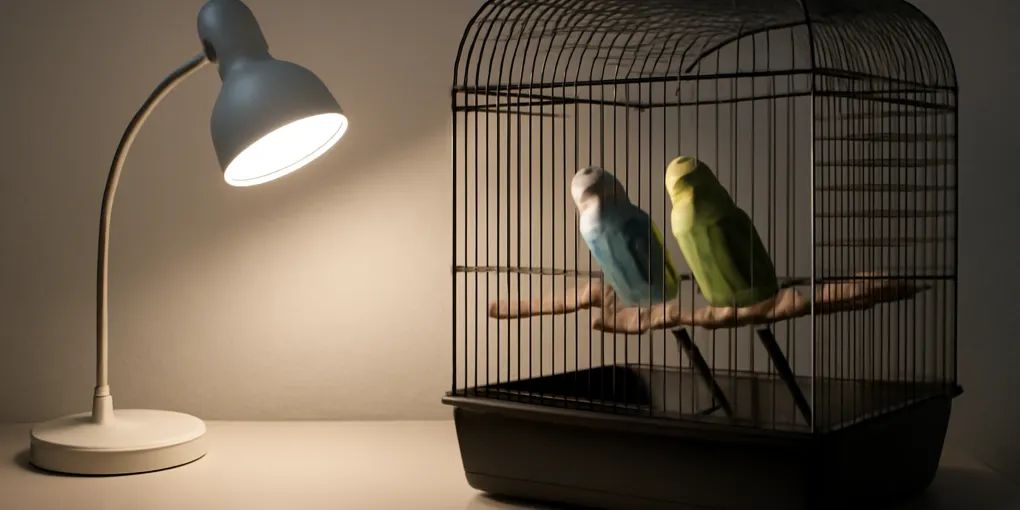
Do Parakeets Need UVB Lights? Benefits, Limits, and Safer Cage Placement
Evidence ExplainerQuick picks
| Product | Key Specs |
|---|---|
| See price on Amazon |
|
| See price on Amazon |
|
| See price on Amazon |
|
Product availability, certifications, and retailer details can change; check the current Amazon page before buying.
Do parakeets need UVB lights?
Parakeets do not need a random bright lamp clipped to the cage. Some indoor birds may benefit from carefully chosen full-spectrum or UVB lighting, but the decision depends on diet, daylight access, cage layout, bulb distance, duration, and veterinary advice. A badly placed lamp can create eye, skin, heat, or stress problems faster than it solves a nutrition issue.
The core idea is vitamin D and normal light cycles. Birds use light cues for behavior, activity, and physiology, and Merck’s pet-bird management guidance notes the importance of appropriate housing, nutrition, sanitation, and environmental conditions for captive birds (Merck Veterinary Manual). Many pet-bird veterinarians discuss full-spectrum lighting as one husbandry tool, not as a substitute for a balanced diet or exams.
If your parakeet’s cage routine is already disrupted by night frights, start with our parakeet cage cover sleep protocol before adding more equipment. If perches are sparse or uncomfortable, our budgie perch guide is a better first upgrade.
The short answer
A UVB or full-spectrum bird lamp may be useful when a parakeet lives entirely indoors, has little safe daylight exposure, and your avian veterinarian agrees that lighting belongs in the care plan. It is not automatically required for every budgie, and it is not safe to use a reptile bulb or high-output fixture without bird-specific placement guidance.
Ordinary window sunlight is not a reliable UVB plan. Glass changes the spectrum, and a cage in a sunny window can overheat while still failing to provide the intended ultraviolet exposure. Outdoor sun is also not simple: predators, escape risk, temperature, and stress matter.
What to buy only if you can place it correctly
- Search Amazon for bird full-spectrum lamps if you need a bird-specific lamp and can follow distance directions.
- Search Amazon for plug-in lamp timers to keep daily exposure predictable.
- Search Amazon for natural budgie perches so the cage has real choices between brighter and shaded zones.
- Search Amazon for avian travel carrier if your better first step is a vet visit rather than lighting experiments.
Placement matters more than marketing language
A bird-safe lamp should sit outside the cage where the bird cannot chew cords, touch a hot fixture, or sit directly against the bulb. The bird should have a shaded retreat. A perch placed at the exact lamp distance may be useful, but there must also be a way to move away.
Do not mount a lamp so the bird’s only favorite perch is directly underneath it all day. Do not run cords through bars. Do not use cracked fixtures, improvised clamp lights, or bulbs with unknown output. Replace bulbs according to the product schedule because visible brightness and UVB output do not decline in the same obvious way.
Why reptile bulbs are not the default
Reptile UVB bulbs vary widely in output and intended distance. A bearded dragon basking setup is not a budgie cage setup. Birds have different behavior, feathers, exposed skin areas, eye sensitivity, and cage movement patterns. A high-output bulb close to a small cage can create an exposure problem.
Choose products labeled for birds, read the current manual, and ask an avian veterinarian if the bird has egg-laying issues, poor bone health, abnormal droppings, feather damage, seizures, weakness, or appetite changes. Those are medical problems, not shopping prompts.
Diet still does heavy lifting
Lighting conversations often hide a bigger issue: seed-heavy diets. A lamp cannot fix chronic nutrient imbalance. Many parakeets need a gradual, safe transition toward a more complete diet with pellets, vegetables, and species-appropriate variety under veterinary guidance. Abrupt diet changes can be dangerous if the bird refuses new foods.
Calcium access also needs context. A cuttlebone or mineral block may be useful, but it is not a full diet. See our parakeet cuttlebone and mineral block setup for a cage-level approach.
A safer trial plan
If you and your veterinarian decide to try a bird lamp, start with a short, predictable schedule and a written cage map. Mark the perch that receives the intended light, then mark at least one shaded perch, food station, and water station that stay out of the direct beam. Watch where the bird actually chooses to sit. A budgie that pants, squints, avoids the lit side, flares wings, or becomes frantic is not “adjusting”; the setup needs to stop and be reassessed.
Do not change diet, cage location, bedtime, and lighting in the same week. One change at a time makes it easier to notice appetite shifts, night-fright patterns, or feather-picking triggers. Keep the fixture outside the cage, keep cords inaccessible, and replace the bulb on the schedule printed by the manufacturer rather than waiting until it looks dim.
Parakeet UVB lighting FAQ
Can I put the cage in direct sun instead?
Only with extreme caution. Direct sun can overheat a cage quickly, and outdoor exposure adds escape and predator risks. If you use fresh air or sun, the bird needs shade, secure containment, temperature monitoring, and supervision.
How many hours should a bird lamp run?
Follow the bird-specific lamp instructions and your veterinarian’s advice. More is not automatically better. A timer is useful because inconsistent all-day lighting can disrupt normal rest.
What signs mean I should call a vet first?
Weakness, fluffed posture, abnormal droppings, egg binding signs, seizures, poor appetite, fractures, severe feather loss, or sudden behavior change should be handled medically before buying a lamp.
Bottom line
Parakeet UVB lighting can be a useful indoor husbandry tool, but only when it is bird-specific, correctly placed, timed, and paired with diet and veterinary care. Do not use a bright lamp to compensate for poor nutrition, unsafe cage layout, or unresolved health signs.
Sources
- Merck Veterinary Manual. “Management of Pet Birds.” https://www.merckvetmanual.com/exotic-and-laboratory-animals/pet-birds/management-of-pet-birds
- Lafeber. “Budgie.” https://lafeber.com/pet-birds/species/budgie/
- Lafeber. “Budgerigar.” https://lafeber.com/pet-birds/budgie/
Frequently Asked Questions
- Ordinary window glass blocks much of the useful ultraviolet exposure, so a sunny window is not the same as safe direct outdoor sun or a properly placed bird lamp.
- Usually no. Birds need predictable day-night cycles and a shaded escape area. Follow product directions and veterinary advice for duration.
- No. Lighting, diet, calcium, vitamin D status, exercise, and veterinary care all interact. A lamp cannot compensate for a chronically poor diet.