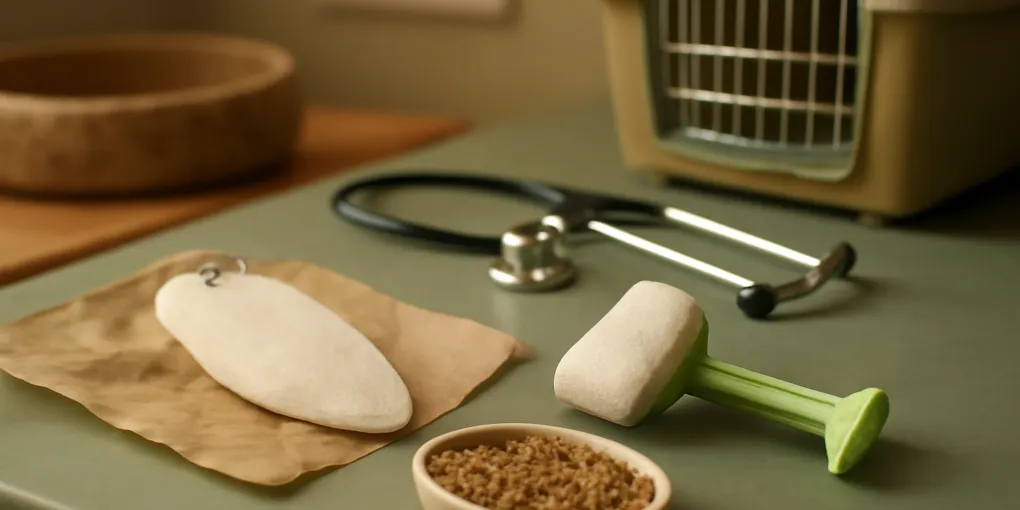
Parakeet Cuttlebone and Mineral Block Setup: Calcium Access Without Cage Clutter
ProtocolQuick picks
Plain cuttlebone for small birds
★ Top pick Best simple calcium access- Simple ingredient
- Easy to mount
- Useful gnawing surface
- Some birds ignore it
- Holder clips vary in quality
Small-bird mineral block
Best backup texture- Different hardness
- Can encourage beak work
- Cheap to replace
- Flavored blocks may add unnecessary ingredients
- Not a balanced diet
Cuttlebone is one of the cheapest parakeet cage accessories, but it is often used as if it solves three different problems at once: calcium, beak wear, and boredom. It can help with access and activity. It cannot fix an unbalanced diet, an overgrown beak, or a cage that lacks safe perches and foraging.
This setup is for healthy budgies and other small parakeets. If your bird has a rapidly growing beak, weight loss, weakness, egg-laying problems, or droppings that change, call an avian veterinarian.
Quick picks: cuttlebone and mineral accessories
Start with two simple items, not a crowded wall of supplements:
- Plain cuttlebone for small birds: Choose an unflavored cuttlebone with a secure holder or replace the holder with a safer clip. Search Amazon for plain parakeet cuttlebone.
- Small-bird mineral block: Use as an optional second texture if your parakeet ignores cuttlebone or if your veterinarian recommends it. Search Amazon for small-bird mineral block.
Do not buy large parrot blocks for a small cage unless you can mount them securely without stealing flight and hopping space.
Step 1: Put diet first
A cuttlebone is not a balanced diet. Parakeets need a species-appropriate diet, clean water, and veterinary guidance when health changes. VCA’s budgie care guidance notes that seed-only diets are commonly deficient and that diet conversion should be handled carefully (VCA budgie care). That matters because a mineral block cannot make a poor diet complete.
If your bird eats only seed, make diet improvement the main project and treat cuttlebone as a small support item.
Step 2: Mount at beak height
Place the cuttlebone next to a stable perch so the bird can brace its feet and nibble with a neutral posture. The bird should not have to hang from the bars, stretch upward, or twist sideways. Do not put it under a favorite sleeping perch where droppings will soil it.
Check the holder. Some thin metal clips have sharp points or loosen quickly. If the cuttlebone wobbles, replace the clip or use a purpose-made holder that sits flat against the cage bars.
Step 3: Keep one mineral option visible
More is not better. One cuttlebone and one optional block are enough for most small-bird cages. Too many hard accessories can reduce usable cage space and make cleaning harder. If your bird ignores both, try moving the cuttlebone near a preferred daytime perch before adding more products.
Our parakeet foraging station protocol is a better place to add activity if the cage feels dull. Foraging and varied perches do more for daily welfare than hanging five mineral shapes in a row.
Step 4: Watch use, dust, and droppings
A parakeet may scrape cuttlebone daily, ignore it for weeks, or destroy one quickly during nesting behavior. Monitor normal patterns. Replace a cuttlebone when it is heavily soiled, damp, crumbling into dirty debris, or reduced to a sharp awkward shape.
Do not panic if the bird does not use it every day. Do pay attention if the bird suddenly chews obsessively while also acting sick, weak, fluffed, or less interested in food.
Cage placement checklist
Use this check before leaving the accessory in the cage:
- The bird can stand on a stable perch and reach the surface without leaning far forward.
- The holder has no sharp wire ends inside the cage.
- The block does not sit over food or water where powder will fall into bowls.
- The accessory is not in the fastest flight path between favorite perches.
- The surface stays dry during bathing, misting, and water changes.
- You can remove it during weekly cleaning without dismantling the whole cage.
That last point matters. Accessories that are hard to remove tend to stay dirty too long.
How to tell normal nibbling from a problem
Normal use looks casual: the bird scrapes, tastes, or rubs the beak for a short period and then returns to eating, preening, or playing. Concerning use looks frantic or appears with other changes. A parakeet that suddenly attacks mineral surfaces while sitting fluffed, losing weight, or ignoring normal food needs a health check.
Also watch the beak shape. A smooth, symmetrical beak that wears gradually is different from a beak that crosses, flakes deeply, bleeds, or grows so long that the bird struggles to hull seed. The second pattern is not a shopping problem.
When beak wear is not enough
Healthy parakeet beaks grow and wear through eating, chewing, perching, and normal activity. Cuttlebone can add a safe scraping surface, but overgrowth can reflect liver disease, mites, trauma, malocclusion, or nutrition problems. VCA’s general budgie care guidance treats beak and nail condition as part of routine health monitoring, not a cage-accessory problem (VCA budgie care).
If the upper beak extends too far, crosses, flakes deeply, bleeds, or changes quickly, do not rely on a harder block. Book an exam.
Cleaning schedule
During weekly cage cleaning, remove the cuttlebone and block, inspect the holder, wipe the surrounding bars, and discard anything damp or contaminated. Do not wash a porous cuttlebone and return it wet to the cage. Replace it instead.
Keep mineral accessories away from water bowls and fresh-food splash zones. Damp mineral surfaces can collect debris and become less appealing.
If the cage uses paper liner, look at the dust below the block. A little powder is expected. Wet clumps, droppings stuck to the holder, or rusty clips mean the setup needs to move or be replaced. Cheap replacement is better than trying to disinfect a porous accessory that has been soiled.
Diet and calcium context
Egg-laying hens, birds on seed-heavy diets, and birds with medical problems have different mineral needs. Do not try to correct those needs by hanging several blocks and guessing. Ask an avian veterinarian about diet, pellets, fresh foods, sunlight or lighting, and whether supplementation is appropriate.
For a healthy pet budgie, the goal is steady access to a simple mineral surface while the main diet does the heavy lifting. If the bird eats a varied veterinarian-approved diet and barely touches cuttlebone, that can be normal.
What to avoid
Avoid scented or brightly dyed blocks unless your veterinarian specifically recommends the product. Avoid loose strings or clips that can trap toes. Avoid placing hard accessories where a startled bird may crash into them during a night fright. If your parakeet has frequent night frights, simplify the cage layout and review your sleep setup with our parakeet cage cover sleep protocol.
Parakeet cuttlebone FAQ
Which side of the cuttlebone faces the bird?
Most birds use the softer chalky side more easily. If the holder forces the hard shell side outward, flip or remount it so the bird can scrape the usable surface.
How often should I replace cuttlebone?
Replace it when it is dirty, damp, broken into sharp shapes, or mostly consumed. In a clean dry cage, a lightly used cuttlebone can last weeks to months.
Is a mineral block better than cuttlebone?
Not automatically. Plain cuttlebone is usually the simpler first choice. Mineral blocks vary by ingredients and hardness, so use them as optional texture rather than proof that the diet is complete.
Frequently Asked Questions
- Many parakeets do fine with one plain cuttlebone plus a balanced diet. A mineral block is optional if your bird ignores cuttlebone or your veterinarian recommends extra access.
- Mount it beside a stable perch where the bird can nibble without stretching, under no perch that will soil it, and away from the main water splash zone.
- No. Overgrown, crossed, cracked, or bleeding beaks need an avian veterinarian. Cuttlebone is enrichment and mineral access, not medical treatment.