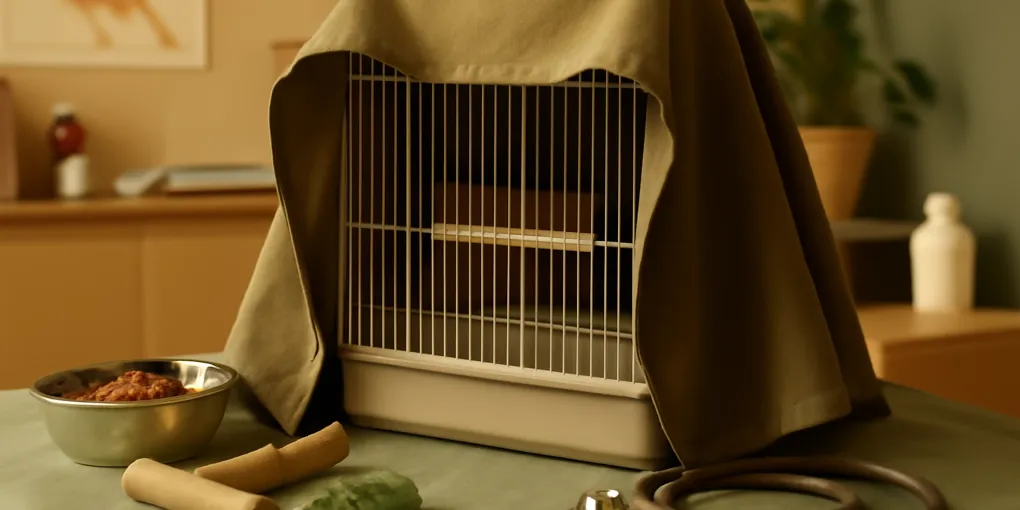
Parakeet Cage Cover Sleep Protocol: Darkness, Airflow, and Night Frights
ProtocolQuick picks
breathable bird cage cover
★ Top pick- Best for: Reducing visual disturbance while leaving ventilation gaps
- Check first: Do not seal every side in a warm room.
- Rationale: A purpose-made cover is easier to fit without loose threads or heavy fabric.
low-output bird-safe night light
- Best for: Birds with night frights in completely dark rooms
- Check first: Avoid bright light that keeps the bird active.
- Rationale: A dim reference light can help a startled bird reorient.
cotton cage-cover clips
- Best for: Securing lightweight fabric away from bars and perches
- Check first: Keep clips outside the cage and away from beak access.
- Rationale: Clips can prevent fabric slipping into chewing range.
The goal is quiet darkness, not a sealed tent
A parakeet cage cover can help when television light, hallway movement, or early sunrise keeps a bird alert. The cover should reduce stimulation while preserving airflow and giving the bird a predictable bedtime routine.
RSPCA bird-care guidance emphasizes a suitable environment, safe housing, and protection from stressors. VCA’s budgie care pages describe budgies as active social birds that need consistent husbandry. A cover is useful only when it improves rest without creating heat, fear, or chewing hazards.
Sleep setup scorecard
| Criterion | Weight | Score | Why it matters here |
|---|---|---|---|
| Research | 30% | 7.5 | Bird-welfare sources support stable, low-stress housing and environmental control. |
| Evidence quality | 25% | 7.0 | Cage-cover advice is mostly husbandry practice, not product trials. |
| Value | 20% | 8.0 | A simple breathable cover can solve light disturbance cheaply. |
| User signals | 15% | 8.5 | Night frights, panting, chewing, and restless calling are visible feedback. |
| Transparency | 10% | 8.0 | The protocol explains when not to cover. |
| Composite | 7.7/10 | Helpful when used partially, consistently, and with airflow. |
Recommended products for safer cage covering
- Search Amazon for breathable cage covers if the cage sits in a room with evening light or movement.
- Search Amazon for bird-safe night lights if the bird has night frights in total darkness.
- Search Amazon for cage cover clips if a lightweight cover slips, but keep clips outside beak reach.
Step 1: fix the room before the fabric
Move the cage away from drafts, cooking fumes, loud speakers, and windows with flashing headlights. A cover will not compensate for a stressful cage location. The bedtime room should be quiet, stable, and not overheated. If the same room is used for cleaning or travel prep, keep those disruptions out of the sleep window; the related parakeet cage cleaning protocol covers daytime hygiene tasks that should not be saved for lights-out.
If the bird shares a living room, set a consistent lights-down time. Sudden darkness while people keep moving around the cage can trigger alarm instead of sleep.
Step 2: start with partial coverage
Cover the back and two sides first, leaving the front partly open. This blocks movement from behind the cage while preserving airflow and allowing the bird to orient. Watch the bird’s posture: calm fluffing and quiet perching are good signs; frantic climbing, wing flapping, or alarm calls mean the setup changed too fast.
Use breathable fabric with no loose loops or fringe. Keep fabric outside the bars so the bird cannot chew threads, and choose a size that drapes over the cage frame rather than sagging onto perches, toys, or food cups.
Step 3: manage night frights
Night frights can happen when a bird startles in darkness and cannot reorient. If this happens, do not simply add a thicker cover. Try a dim night light across the room, partial cover only, and a perch layout that leaves clear flight-free space around sleeping spots.
After a fright, check wings, toes, cere, and feathers for injury. Repeated night frights deserve an avian-veterinary conversation.
Step 4: check airflow and temperature
Put your hand inside the covered cage area before bedtime. It should not feel stuffy or warm. In summer, leave more open space. In winter, do not use a cover as the only temperature plan if the room is unsafe or drafty.
Avoid scented laundry products, dusty fabric, and covers stored near smoke or cooking odors. Birds have sensitive respiratory systems, and the cover sits directly around their breathing space.
Morning reset
Remove or fold back the cover at a consistent wake time so the bird can see the room before household activity starts. Check droppings, food cups, and perch position before assuming the night went well. A bird that slept quietly but wakes with ruffled feathers, tail bobbing, or a dirty vent needs health attention rather than another cover adjustment.
Shake out the cover away from the cage and inspect it for chewed edges, loose threads, and damp spots. If the bird can reach the fabric through the bars, move the cover farther out or switch to a better-fitting style. Fabric that becomes a chew toy can create crop, toe, or entanglement risk.
If the bird consistently sleeps better with only the back half covered, keep that partial setup instead of chasing full blackout. The winning routine is the one that produces calm evening posture, quiet overnight perching, normal morning appetite, and no frantic wing marks on the bars. Repeatable calm beats a darker cage every time, especially for nervous budgies in busy homes.
Parakeet cage cover FAQ
What time should I cover a parakeet cage?
Use the same general bedtime each night, after the bird has eaten and settled. Consistency matters more than an exact clock time.
Should the cover go over all four sides?
Only if the bird stays calm and the room remains well ventilated. Many cages do better with the front or lower edge open.
Can I use a towel as a cage cover?
A clean lightweight towel can work temporarily, but avoid heavy, fuzzy, scented, or loose-thread fabric. Purpose-made covers are easier to size safely.
Why is my parakeet louder after covering?
The cover may be too sudden, too dark, too warm, or used while the room remains active. Step back to partial coverage and a calmer routine.
Sources
For a separate accessory-shopping question, see the bird cage seed-guard guide.
- RSPCA: Pet bird welfare advice
- RSPCA: Bird environment advice
- VCA Animal Hospitals: Budgies - general care
Frequently Asked Questions
- No. Some birds sleep well uncovered in a quiet dim room. A cover helps when light or movement keeps the bird alert.
- Yes if it is heavy, sealed on all sides, or used in a warm room. Leave airflow and monitor room temperature.
- Stop using full coverage, try partial coverage, add a dim night light, and ask an avian vet if frights continue.