Parrot Foraging Toy Rotation Protocol: Safer Enrichment Without Overloading the Cage
ProtocolQuick picks
| Product | Key Specs |
|---|---|
| See price on Amazon |
|
| See price on Amazon |
|
| See price on Amazon |
|
Product availability, certifications, and retailer details can change; check the current Amazon page before buying.
Parrot foraging toy rotation protocol
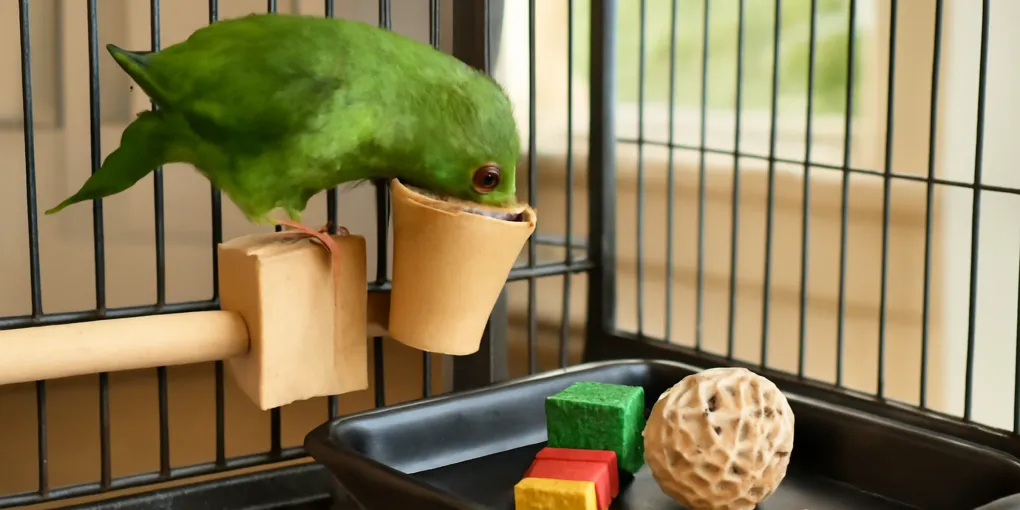
A good parrot foraging rotation gives the bird work without turning the cage into a cluttered obstacle course. Start with part of the bird’s normal measured food, hide it in one easy task, watch the bird solve it, and increase difficulty slowly. The point is not to make feeding frustrating. The point is to replace some bowl-only eating with safe searching, chewing, lifting, shredding, and problem solving.
Lafeber’s avian behavior resources describe foraging as a natural behavior and a useful way to reduce boredom when it is introduced safely (Lafeber foraging). Its behavior guidance also warns that pet birds need appropriate outlets and management, not only more cage accessories (Lafeber behavior). The AVMA’s bird-owner guidance reinforces that bird care requires species-appropriate housing, nutrition, and veterinary support (AVMA).
For cage and travel-space basics, pair this with our bird travel carrier guide before adding more hanging items.
Step 1: protect the diet first
Use foraging to deliver a portion of the bird’s existing diet, not a pile of extra sunflower seeds. If the bird already has a veterinary diet plan, keep that plan. Measure the daily allowance, then reserve a small amount for the toy. This avoids the common mistake of making enrichment so treat-heavy that the bird ignores balanced food.
Start with highly visible food. Put a few pellets or vegetable pieces in a shallow paper cup, on a tray under a loose paper layer, or inside a simple open holder. If the bird has never foraged, it should win quickly. A bird that cannot find food may become anxious or simply give up.
Step 2: choose safe starter materials
Plain paper cups, unprinted paper strips, cardboard made for bird use, untreated wood, stainless hardware, and washable acrylic toys are common starting points. Avoid fragrance, glue strings, staples, lead weights, mystery metal, dyed craft pieces not sold for birds, and anything sized small enough for the bird to swallow.
Species and beak strength matter. A budgie, cockatiel, conure, African grey, and macaw should not receive the same toy just because all are parrots. The toy should be challenging enough to interest the bird but not so delicate that it becomes fragments in minutes.
Step 3: keep cage space usable
Foraging should not block normal movement. Keep clear routes to water, main perches, and sleep areas. A large hanging toy placed in the wrong corner can force tail rubbing, wing bumps, or awkward climbing. If the cage is already small, move some enrichment to a supervised play stand instead of hanging every new item inside.
Watch how the bird moves around the toy. Calm investigation, beak tapping, shredding, and returning to normal perches are good signs. Repeated panic flights, refusal to enter the cage, feather-destructive frustration, or aggressive guarding means the setup needs to be simpler, smaller, or removed.
Step 4: increase difficulty one variable at a time
Change one thing per rotation: location, cover, container, or food visibility. Do not move the toy, hide all food, add a new material, and change the cage layout on the same day. A gradual plan lets you know which change helped or hurt.
A simple progression looks like this: visible pellet in open cup, pellet under paper strip, pellet inside folded paper, pellet in a drawer toy that opens easily, then mixed tasks across two cage locations. Keep at least one easy win available so the bird is not locked into a puzzle it cannot solve.
Step 5: supervise new toys
The first session with any new toy should happen while you are home. Watch for chewing style, foot entrapment, beak wedging, sharp edges, loose clips, and pieces dropping into water. Some birds dismantle hardware faster than expected. Others are frightened by moving parts or reflective surfaces.
If the bird wears a leg band, has toe problems, or is a strong chewer, be more conservative with chains, rings, woven fibers, and tight openings. When in doubt, ask an avian veterinarian or experienced avian behavior professional before leaving the item in the cage unattended.
Cleaning and replacement rules
Food residue changes the safety profile of a toy. Wet pellets, fruit, vegetable pieces, and damp paper should not sit in the cage all day. Remove fresh food promptly, wash reusable parts, and let them dry fully before reuse. Rotate toys through a cleaning station rather than letting every item stay until visibly disgusting.
Replace toys when wood splinters sharply, rope frays, plastic cracks, clips loosen, or the bird starts swallowing pieces. Chewed enrichment is normal; swallowed fragments are not. Keep a small discard bin near the cage so damaged parts do not drift back into use.
Buying notes
Start with inexpensive supplies before buying complicated puzzles. A search Amazon for bird paper foraging supplies covers beginner tasks. A search Amazon for acrylic parrot foraging toys can add repeatable difficulty for birds that already solve simple covers. A search Amazon for untreated wood parrot foraging toys is better when chewing itself is the needed outlet.
Do not buy by color alone. Buy by material, attachment safety, cleanability, size, and whether your bird’s beak can destroy or swallow parts. Avoid bundles with many tiny unknown pieces if you cannot identify each material.
Rotation example
On Monday, hide breakfast pellets in two open paper cups. On Wednesday, fold one cup edge so the bird must lift paper. On Friday, move one easy task to the play stand and add one washable drawer toy in the cage. On Sunday, clean everything, discard damaged paper, and return to a simpler task if the bird seemed frustrated.
The schedule is flexible. The rule is not novelty for novelty’s sake. It is safe, observable work that the bird can learn.
Parrot foraging toy FAQ
How many foraging toys should be in the cage at once?
Usually one or two active foraging tasks are enough, especially in a smaller cage. More items can reduce flight and climbing space.
Should I hide all food in toys?
Not at first. Keep reliable access to the main diet while the bird learns. Full foraging programs should be planned with an avian veterinarian or experienced bird professional.
Are paper toys safe for parrots?
Plain paper can be useful when the bird shreds it rather than swallows it, and when wet or soiled paper is removed quickly. Avoid coated, scented, glittered, or unknown craft paper.
Sources
- Lafeber: Foraging for pet birds
- Lafeber: Bird behavior
- AVMA: Selecting a pet bird
Frequently Asked Questions
- Rotate one or two items every few days rather than changing the whole cage at once. Keep familiar perches, water, and at least one easy food option stable.
- No. Use foraging to deliver part of the existing diet or approved treats. Ask an avian veterinarian about diet changes.
- Remove frayed rope, loose metal, broken plastic, wet paper, spoiled food, sharp splinters, and any item the bird tries to swallow.