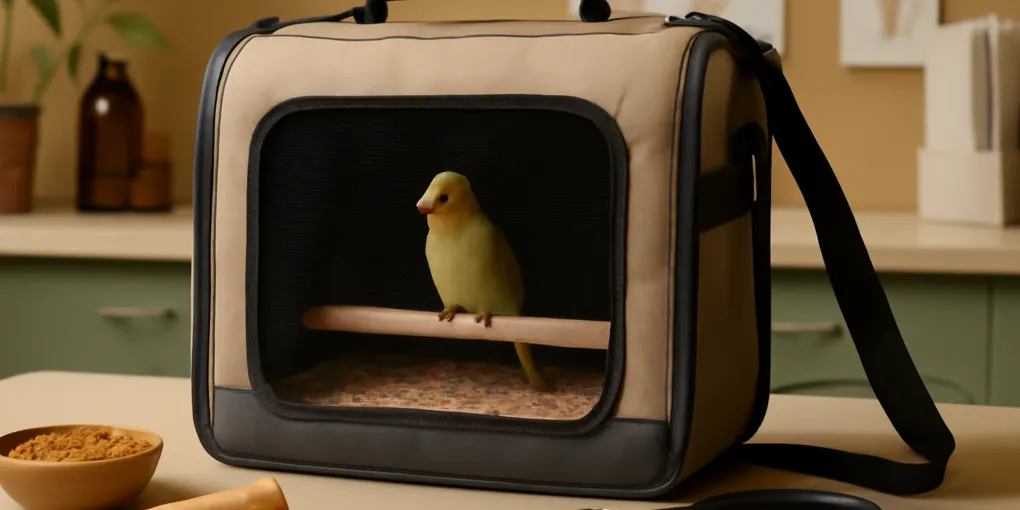
Best Bird Travel Carriers for Vet Visits: Safer Small-Parrot and Finch Options
Buyer's GuidePrevue Pet Products Travel Bird Cage
Best rigid cage styleBest for: Cockatiels, conures, budgies, and small parrots that need a secure short-trip cage
$35–$70
Quick picks
| Product | Key Specs |
|---|---|
| See price on Amazon |
|
| See price on Amazon |
|
| See price on Amazon |
|
Product availability, certifications, and retailer details can change; check the current Amazon page before buying.
Best Bird Travel Carriers for Vet Visits: Safer Small-Parrot and Finch Options
The best bird travel carrier for a vet visit is secure, well ventilated, easy to clean, and small enough that the bird cannot launch across the enclosure during a sudden stop. For most pet birds, a short-trip carrier is not a decorative backpack or a loose cardboard box. It is a controlled transport space that keeps feet, wings, beak, and doors in predictable places.
Start with the appointment, species, and temperament. A calm budgie going ten minutes to an annual exam needs a different setup from a nervous conure, a disabled cockatiel, or a bird that chews every soft seam. If the bird is weak, bleeding, breathing with an open beak, fluffed and unresponsive, or sitting on the cage floor, call the clinic before transport so they can advise heat, darkness, and urgency.
For other small-pet setup decisions, see our hamster sand bath protocol and rabbit litter training protocol. Birds are different, but the same rule applies: the enclosure should reduce stress without hiding safety problems.
Quick picks for bird travel carriers
- Search Amazon for Prevue travel bird cage if you want a rigid cage-style carrier with a low perch and removable tray.
- Search Amazon for Kaytee Come Along bird carrier if your bird is calm, the drive is short, and you need a lightweight soft-sided option.
- Search Amazon for clear-front bird travel carrier if you need to watch posture and breathing during the ride.
- Search Amazon for cotton bird cage cover if partial darkness helps your bird settle without blocking ventilation.
PSR G6 score for a vet-visit bird carrier
| Factor | Weight | Score | Weighted contribution |
|---|---|---|---|
| Research fit | 30% | 4.3 | 1.29 |
| Evidence quality | 25% | 3.9 | 0.98 |
| Value | 20% | 4.4 | 0.88 |
| User signals | 15% | 4.1 | 0.62 |
| Transparency | 10% | 4.2 | 0.42 |
| Composite | 100% | 4.2/5 |
A carrier scores well when it turns a stressful appointment into a lower-risk transfer. It scores lower when the product is marketed around outdoor display, backpack novelty, or panoramic viewing instead of latch security, ventilation, and injury prevention.
What to check before buying
Perch height is the first safety test. A low perch lets the bird stand naturally without falling far if the car turns or brakes. Very tall travel cages may look roomy but can let a startled bird flap into bars or drop onto a hard tray. For sick or weak birds, the clinic may recommend no perch at all, with a towel on the bottom instead.
Door security is next. The latch should close positively and should not be easy for a parrot beak to lift. Test it at home before the appointment. If a bird can push the door open on the kitchen table, it can do the same in a parking lot.
Ventilation matters more than a clear view. Mesh, vents, and bar spacing should allow air flow without creating toe, head, or beak traps. Avoid sealed acrylic boxes in hot cars and avoid placing the carrier in direct sun while waiting.
How the picks differ
A rigid travel cage is the default for many cockatiels, budgies, lovebirds, and small parrots. It is easier to secure with a seat belt, easier to clean after droppings, and harder for a bird to chew through. Choose bar spacing that fits the species, then add a low perch and a towel or paper liner.
A soft-sided bird carrier can work for a calm bird on a short trip. Its advantage is weight and storage. Its weakness is chew resistance. If your bird bites seams, climbs mesh frantically, or has a history of escape, choose rigid walls.
A clear-front carrier is useful when monitoring matters. You can see whether the bird is gripping, crouching, panting, or sitting low. The tradeoff is heat and glare, so ventilation and shade are non-negotiable.
Setup before appointment day
Leave the carrier near the home cage for several days if the visit is planned. Let the bird see it, place millet or a favorite food near the opening, and practice brief voluntary entries if safe. Do not turn the first carrier experience into a chase ten minutes before the appointment.
Line the bottom with plain paper or a small towel that cannot snag toenails. Pack a spare towel, recent diet details, medication names, and photos of droppings if that is part of the concern. For some birds, a partial cover reduces visual stimulation; for others, it increases panic because they cannot see the owner. Test lightly, not during an emergency.
Car safety and temperature
Place the carrier where it cannot slide or tip. Many owners use the rear seat with a seat belt routed around the carrier, not through a door gap. Never ride with the bird loose in the car. A loose bird can escape through a door, distract the driver, or be injured by an airbag.
Birds are sensitive to heat, cold, fumes, and sudden drafts. Warm the car before winter transport, cool it before summer transport, and keep aerosols, smoke, and strong fragrances away. Do not leave the bird unattended in a parked vehicle.
When the carrier is not enough
If your bird is struggling to breathe, falling from the perch, bleeding, having seizures, or sitting fluffed on the cage floor, the carrier is only one part of emergency handling. Call the veterinary clinic or emergency hospital before leaving. They may ask you to keep the bird warm, dark, and quiet, or to bring the regular cage if moving the bird is unsafe.
For routine wellness visits, carrier training is still worth doing. A bird that enters calmly and rides in a stable enclosure gives the veterinarian a better starting point and lowers the chance of owner injury during capture.
Species-specific fit notes
Budgies and finches need tighter bar spacing than larger parrots. A carrier sold for “small animals” may still have gaps that are too wide for a tiny bird’s head, so check dimensions rather than the product title. Small birds also chill faster during winter transfers. Pre-warm the car, cover only part of the carrier, and keep the trip direct.
Cockatiels and green-cheek conures often do well in compact rigid carriers with a low perch. Watch crest and tail clearance. A carrier that forces the bird to crouch or rub tail feathers on every turn is too cramped for a routine appointment, even if it would work for a five-minute emergency move.
Larger parrots need a different standard. A strong beak can defeat weak plastic clips, soft seams, and decorative zippers. For Amazons, African greys, cockatoos, and macaws, ask an avian veterinarian or experienced rescue what travel crate style they trust for the species. The cost of a stronger carrier is easier to justify when escape would be dangerous for the bird and the driver.
Cleaning and storage after the visit
Clean the carrier after every clinic trip. Remove paper, wipe droppings, wash removable cups or trays, and let the carrier dry before storage. If the visit involved infectious-disease concerns, ask the clinic whether ordinary soap is enough or whether a bird-safe disinfectant and contact time are needed. Do not spray harsh cleaners inside and then load the bird while fumes remain.
Store the carrier assembled, not buried behind holiday boxes. A travel carrier is emergency equipment. If a bird breaks a blood feather, chews a toxin, or crashes into a window, you should not be searching for missing screws and perches while the bird declines.
Keep one small label on the carrier with the bird’s name, species, regular clinic, and owner phone number. Do not write medication doses on the label unless the veterinarian told you to; those can change. The label is for a hectic reception desk or evacuation stop, not a substitute for current medical records.
FAQ
Should a bird travel carrier have a perch?
Usually yes for a healthy bird that grips well, but the perch should be low and stable. Weak, injured, or neurologic birds may need a towel-lined bottom instead; ask the clinic before transport.
Is a clear backpack carrier safe for parrots?
Some clear carriers are usable for short trips, but many prioritize looks over heat control and ventilation. Check vents, shade, latch quality, and interior space before considering one.
Can I use the bird’s regular cage for a vet visit?
Sometimes, especially if the bird is hard to catch or medically fragile. For many routine visits, a smaller carrier is safer because it limits flapping and is easier to secure in the car.
What should I put in the carrier for a short appointment?
Use a paper liner or towel, a low perch if appropriate, and a small familiar food only if it will not spill or create mess. Skip loose toys that can swing into the bird during braking.
Sources and veterinary references
- Merck Veterinary Manual. Pet birds and environmental care: https://www.merckvetmanual.com/bird-owners
- Merck Veterinary Manual. Disorders and diseases of birds: https://www.merckvetmanual.com/bird-owners/disorders-and-diseases-of-birds