Cat Carrier Training for Vet Visits: A Calm Step-by-Step Protocol
ProtocolQuick picks
| Product | Key Specs |
|---|---|
| See price on Amazon |
|
| See price on Amazon |
|
Product availability, certifications, and retailer details can change; check the current Amazon page before buying.
Direct answer
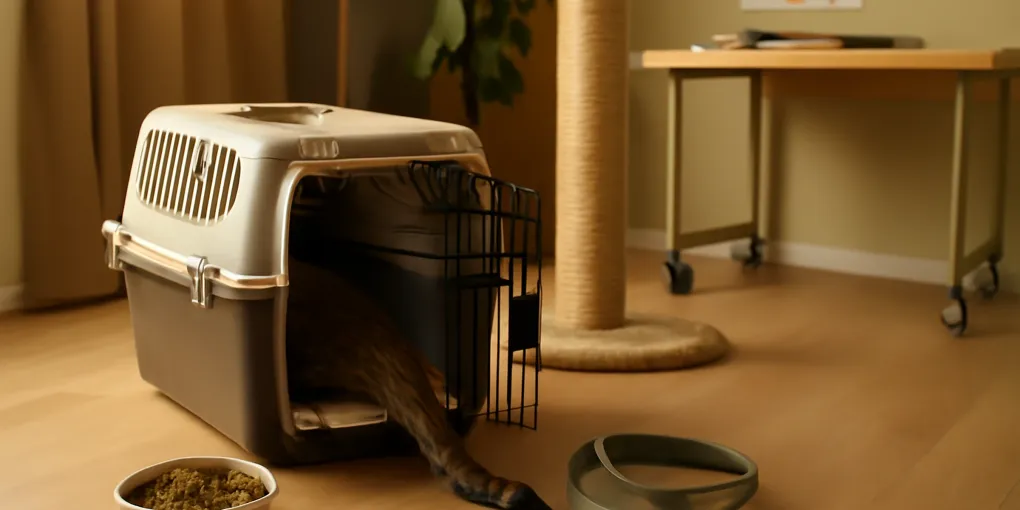
Carrier training works best when the carrier becomes furniture before it becomes transportation. Leave it open in the cat’s normal space, add familiar bedding, feed treats or small meals near it, and practice the door, lifting, and car steps separately. Do not wait until the morning of a veterinary appointment.
A good protocol is slow enough that the cat still chooses to approach. If the cat runs, hides, growls, or freezes, go back to an easier step.
Gear that makes training easier
- Search Amazon for top-loading hard-sided cat carriers if emergency loading is the current failure point.
- Search Amazon for washable cat carrier mats for traction and familiar scent.
- Search Amazon for lickable cat treats if your cat values food rewards more than toys.
How we score this protocol
| Criterion | Weight | Score | Why it matters here |
|---|---|---|---|
| Research | 30% | 8.5 | Feline veterinary groups consistently recommend acclimating cats to carriers and minimizing stressful handling. |
| Evidence Quality | 25% | 8.0 | The steps are behavior-practice based rather than product-claim based. |
| Value | 20% | 8.5 | Leaving the carrier out and adding a washable mat costs little compared with missed or traumatic vet visits. |
| User Signals | 15% | 8.0 | The common failure points are hiding, door closure, lifting, and car noise. |
| Transparency | 10% | 9.0 | Severe fear, pain, or travel sickness may need veterinary guidance rather than more home practice. |
Step 1: Choose a carrier that does not fight you
Hard-sided carriers with a secure top opening are often easier for cats that brace against a front door. Soft carriers can work for calm cats, but they may collapse during loading and are harder to clean after urine, vomit, or diarrhea. Whatever style you use, check that the latch cannot pop open and that the base stays level when carried.
The carrier should be large enough for the cat to stand, turn, and lie down, but not so oversized that the cat slides during turns. Add a washable mat or towel that smells like home. Avoid loose fluffy bedding that blocks ventilation or bunches under the cat.
Step 2: Make the carrier boring
Put the carrier in a normal room with the door open or removed. Do not stare at the cat or lure aggressively. Place treats near the carrier at first, then at the threshold, then inside. If your cat eats meals confidently, move a small portion closer over several days.
Some cats prefer a carrier partly covered with a towel, while others need a clear view. Watch body language. A low tail, flattened ears, crouched posture, or sudden grooming means the step may be too much.
Step 3: Practice the door without leaving
Once the cat goes inside comfortably, touch the door and reward. Later, close it for one second, reward through the opening, and reopen before the cat pushes. Build to longer closures slowly. The goal is not trapping the cat; it is teaching that the door closing predicts calm release.
If the cat bolts at the sound of the latch, practice the latch sound while the cat is outside the carrier and eating. Separate the sound from confinement before combining them again.
Step 4: Add lifting and motion
A cat that accepts the closed door may still panic when the carrier moves. Lift it one inch, set it down, reward, and stop. Then carry it across the room. Keep the carrier level with two hands; swinging makes many cats feel unsafe.
Do not rush from room practice to a full car ride. First sit in the parked car with the engine off. Then try a driveway loop or a few minutes around the block. If the cat drools, vomits, pants, or soils the carrier, ask the veterinarian about motion sickness or medication before the next necessary trip.
Step 5: Appointment-day setup
On vet day, keep the room quiet. Put the carrier on a stable surface or floor, not a high counter where a startled cat can fall. Bring an extra towel and a small bag for soiled bedding. Covering the carrier with a light towel can reduce visual stress in the waiting room, but keep airflow clear.
Tell the clinic if your cat is fearful before the appointment. Many clinics can suggest arrival timing, pheromone products, or pre-visit medication when appropriate.
Common mistakes
Do not store the carrier in a garage and bring it out only for shots. Do not chase the cat through the house. Do not tip the carrier vertically and shake the cat in. That may work once, but it teaches the cat to disappear earlier next time.
Do not assume a prettier carrier is safer. Secure latches, cleanability, ventilation, and a level base matter more than looks.
FAQ
How long does cat carrier training take?
Some cats improve in a week; others need several weeks of short sessions. A cat with years of bad carrier experiences should progress by body language, not by a calendar.
Should I use treats inside the carrier?
Yes, if your cat likes treats and does not guard food. Lickable treats can help because the cat stays engaged for several seconds.
Is a top-loading carrier better?
For many cats, yes. A top opening lets you lower the cat in calmly and allows veterinary staff to access the cat with less pulling.
Related reading
- For hydration setup decisions, see cat water bowl placement protocol.
- For resting-space safety, read cat window perch safety setup.
Sources
- International Cat Care explains cat-friendly travel and carrier acclimation: https://icatcare.org/advice/travelling-with-your-cat/
- AAFP Cat Friendly Homes covers reducing stress around veterinary visits and handling: https://catfriendly.com/
- Cornell Feline Health Center discusses reducing stress for cats and recognizing fear-related behavior: https://www.vet.cornell.edu/departments-centers-and-institutes/cornell-feline-health-center
Bottom line
Carrier training is a sequence, not a wrestling match. Make the carrier familiar, reward voluntary entry, practice door and lift steps separately, and slow down before the cat rehearses panic.