Best Cat Carriers for Vet Visits: Low-Stress Features That Matter
Buyer's GuideTwo-door hard-sided cat carrier
Best overallBest for: Routine vet visits and emergency handling
Quick picks
| Product | Key Specs | Pros / Cons |
|---|---|---|
| See price on Amazon |
|
|
| See price on Amazon |
|
|
| See price on Amazon |
|
|
Product availability, certifications, and retailer details can change; check the current Amazon page before buying.
The best cat carriers for vet visits open from the top or have a removable upper half, stay stable in the car, clean easily, and close securely. Low-stress access matters because frightened cats should not be shaken, dragged, or dumped out at the clinic.
How We Score This Evidence
| Criterion | Weight | Score | Weighted | Why it matters here |
|---|---|---|---|---|
| Research | 30% | 8.0 | 2.40 | Low-stress veterinary handling guidance strongly supports carrier access and acclimation. |
| Evidence Quality | 25% | 7.5 | 1.88 | The strongest evidence is behavior and handling guidance, not head-to-head consumer product trials. |
| Value | 20% | 8.5 | 1.70 | A good carrier lasts years and can prevent missed appointments, escape risk, and forced handling. |
| User Signals | 15% | 8.0 | 1.20 | Owners and clinics consistently report easier visits with top-loading and removable-top carriers. |
| Transparency | 10% | 9.0 | 0.90 | This guide recommends product categories and features rather than pretending one branded carrier fits every cat. |
| Composite Score | 8.1/10 | A high-value purchase when fit, latch quality, and training are handled correctly. |
Why Carrier Design Changes the Whole Visit
A carrier is not just a box for transportation. It controls how easily you can load the cat, how safe the car ride is, how stressed the waiting room feels, and whether the veterinary team can examine the cat without escalating fear. Cats remember forced handling. A bad carrier can make every future appointment harder.
Veterinary low-stress handling guidance consistently favors carriers that allow access from more than one direction. A top door lets you lower a cat in gently. A removable top lets a fearful cat stay in the bottom half for the first part of the exam. A towel over the carrier gives visual privacy in the waiting room.
Best Overall: Two-Door Hard-Sided Carrier
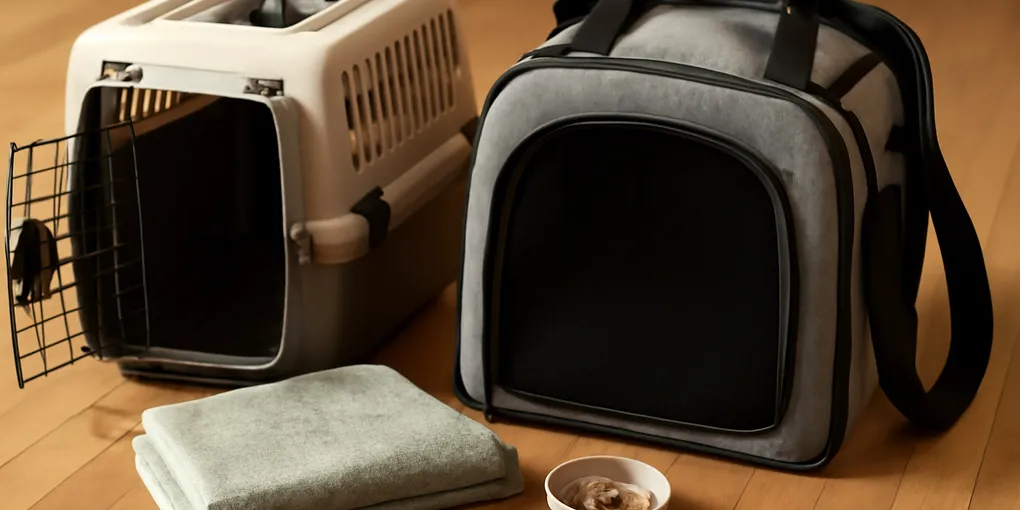
For most cats, choose a hard-sided carrier with both a front door and a top door. Hard plastic is easier to wipe clean after accidents, more stable in the car, and less likely to collapse onto the cat. The top door makes loading easier for cats that brace their legs against the front entrance.
Check the latch quality carefully. Doors should close with a clear lock, not a flimsy flex. The handle should feel secure, but carry with one hand under the carrier when possible. Handles can fail, and a dropped carrier can injure the cat and create an escape emergency.
Shop the category: Search Amazon for two door hard sided cat carrier
Best for Fearful Cats: Removable-Top Carrier
A carrier with a removable top is ideal for cats that freeze, hide, or become defensive at the clinic. The veterinarian can remove the lid and begin with the cat sitting on familiar bedding in the bottom tray. That reduces the need to pull the cat through a small front door.
Look for secure clips or screws that cannot pop open in the car. Practice opening and closing the carrier at home so you are not learning the mechanism in a clinic parking lot with a nervous cat inside.
Shop the category: Search Amazon for cat carrier removable top
Best for Calm Short Trips: Structured Soft-Sided Carrier
Soft carriers can be comfortable and easier to store, but they are not the safest default for every cat. Choose one only if it has a structured frame, locking zippers or zipper clips, strong seams, and enough ventilation. A sagging fabric bag can make a cat feel unstable and can be harder to clean after urine or vomit.
Soft carriers are best for calm cats, short car rides, and situations where you can monitor the carrier closely. They are weaker choices for escape artists, fractious cats, emergency transport, or cats that urinate from stress.
Shop the category: Search Amazon for structured soft sided cat carrier
Fit and Safety Checklist
The cat should be able to stand, turn around, and lie down. Bigger is not always better. In a sudden stop, a cat in an oversized carrier can slide into the side wall. Add a washable towel or thin bed for traction.
Secure the carrier in the footwell behind the front seat or with a seat belt only if the carrier manufacturer allows it and the belt path is stable. Do not let a cat ride loose in the car. A loose cat can crawl under pedals, escape through an open door, or become a projectile during braking.
Label the carrier with your phone number. Keep a spare towel, small trash bag, and pet-safe wipes nearby for accidents. For emergency readiness, store the carrier somewhere reachable, not buried behind boxes.
How to Train the Carrier Before the Appointment
Leave the carrier out all year. Remove the door if needed and place familiar bedding inside. Drop treats near it, then inside it. Feed occasional meals beside or inside the bottom half. When the cat enters voluntarily, close the door for a few seconds, reward, and release.
Do not make the carrier appear only on appointment day. That pattern teaches the cat that the box predicts stress. Five minutes of carrier familiarity several times per week can make routine visits much easier.
What to Avoid
Avoid cardboard carriers except as a one-time shelter or emergency option. They weaken with urine, rain, and chewing. Avoid decorative carriers with poor ventilation. Avoid carriers that require full disassembly just to load the cat. Avoid backpack bubble carriers for routine vet care if the cat has little room to hide or shift posture.
Door Design Matters More Than Looks
The front door should open smoothly, latch clearly, and be large enough for the cat to walk through without scraping whiskers or shoulders. A top door is valuable because many cats resist being pushed into a front opening but tolerate being lowered into a carrier. The top door should lock securely; a loose top latch is an escape risk in a parking lot.
A removable top is even better for clinic handling. If the cat is fearful, the veterinary team can remove the top and examine the cat in the lower half on familiar bedding. That approach avoids the classic mistake of tipping, shaking, or pulling a terrified cat out through the front.
Cleaning and Accident Readiness
Stress urination, vomiting, drooling, and shedding are normal travel possibilities. A hard carrier with smooth plastic surfaces is easier to disinfect than fabric. Put an absorbent towel or washable pad inside, but avoid a thick bed that makes the cat unstable. Bring a spare towel in a bag so you can swap bedding after an accident.
Soft carriers require more scrutiny. If urine soaks into seams or padding, odor can linger and make future trips worse. Choose removable washable liners when possible. If the cat gets carsick or urinates during travel, a hard carrier is usually the more practical long-term choice.
Escape Prevention Checklist
Before each trip, inspect latches, screws, clips, zippers, seams, and handle attachment. Push gently on doors from the inside and outside. A clever or panicked cat can exploit a small gap. If the carrier uses screws, confirm they are present and tight after cleaning.
At the clinic, keep the door closed until the exam room door is closed. In the car, do not open the carrier to comfort the cat. A loose frightened cat can wedge under seats or bolt through a door. Talk calmly instead, keep the carrier level, and cover it with a towel if the cat is visually overstimulated.
Matching Carrier to Cat Personality
A confident, food-motivated cat may do well in a top-loading hard carrier with a soft towel and treats. A fearful cat benefits from a removable top, familiar bedding, and pre-visit medication if your veterinarian recommends it. A large cat needs a carrier rated for its actual weight with a wide base and strong handle. A kitten needs a secure carrier that is not so large that it slides around.
For arthritic cats, choose a low threshold or removable top so they do not have to climb awkwardly. For cats with respiratory disease, prioritize ventilation and avoid overheating. For escape artists, avoid weak zippers, decorative wicker, or doors that flex under pressure.
What to Keep With the Carrier
Store a small travel kit beside the carrier: towel, disposable liner, treats, medication instructions, vaccination paperwork if needed, a recent photo of the cat, and your contact information. In emergencies, the best carrier is one you can grab fast with essentials nearby.
For multi-cat homes, label each carrier and keep enough carriers for all cats. Disasters, evacuations, and urgent veterinary trips are exactly when sharing one carrier becomes risky. Separate carriers reduce redirected aggression and make transport more manageable.
Frequently Asked Questions
Should I cover the cat carrier with a towel?
Usually yes. A towel can reduce visual stress in the car and waiting room. Keep airflow clear and avoid overheating.
Is a backpack carrier good for cats?
Some cats tolerate structured backpacks, but many bubble-style designs prioritize appearance over low-stress handling. For vet visits, a stable hard carrier is usually better.
Can two cats share one carrier?
Usually no. Even bonded cats can panic, redirect aggression, or injure each other during travel. Use separate carriers unless your veterinarian gives a specific reason otherwise.
How do I get a hiding cat into a carrier?
Use preparation rather than a chase. Confine the cat calmly to one room, use a top-loading carrier, move slowly, and ask your veterinary team about pre-visit medication if travel fear is severe.
Related Carrier Training
If your cat panics before the carrier even leaves the floor, pair the gear choice with a gradual training plan like our cat carrier training before vet visits protocol.
Bottom Line
For vet visits, prioritize access, stability, cleaning, and secure closure over cute styling. A two-door hard carrier or removable-top model makes handling safer for the cat, the owner, and the veterinary team. Train it before you need it.
Buying Mistakes That Create Stress Later
Do not buy a carrier only by matching the listed pet weight. Weight limits tell you whether the handle and shell are rated for the load; they do not tell you whether the cat can turn around comfortably or whether the base stays level when you walk. Measure your cat from nose to tail base and from floor to shoulder, then choose the smallest carrier that still allows standing, turning, and lying down without compressing the spine. Oversized carriers can let a cat slide during braking, while cramped carriers make loading and clinic handling harder.
Avoid carriers that require you to shake the cat out through one front opening. That design punishes the exact cats who already need gentler handling. Decorative wicker carriers and fashion-forward bubble backpacks can look appealing online, but they are often harder to clean, harder to open quickly, and less useful during urgent veterinary care. For most households, a plain hard-sided model with a secure front door, top access, and washable bedding is the safer long-term choice.
Sources
- American Association of Feline Practitioners and International Society of Feline Medicine feline-friendly handling and environmental needs guidance.
- Cat Friendly Homes guidance on carrier training and reducing veterinary visit stress.
- Cornell Feline Health Center guidance on transporting cats and reducing stress.
- AVMA pet travel and disaster-preparedness guidance for safe transport.
- Fear Free Pets educational resources on carrier acclimation and low-stress veterinary visits.