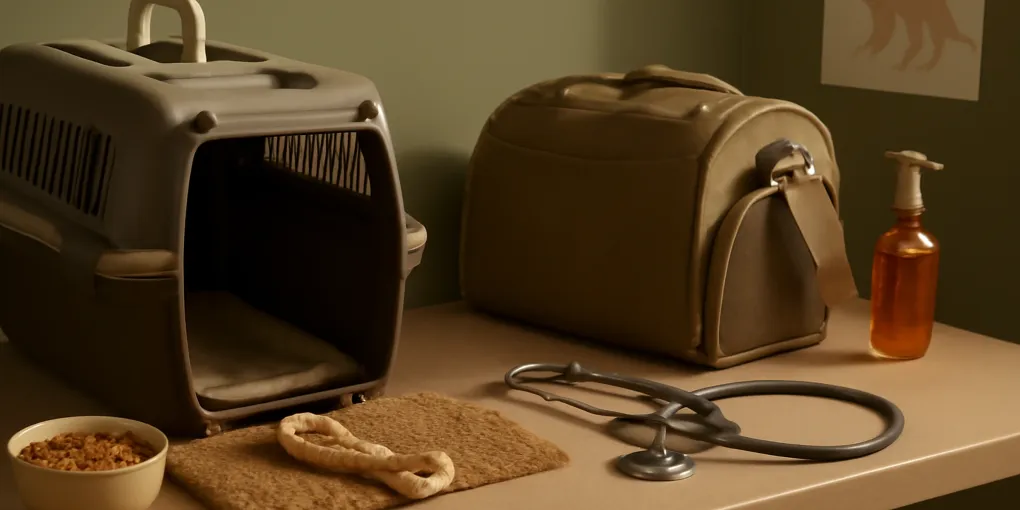
Petmate Two-Door Top Load Cat Kennel
Best overall vet-visit carrierBest for: Cats who resist front-loading at appointment time
$35–$60
Quick picks
| Product | Key Specs |
|---|---|
| See price on Amazon |
|
| See price on Amazon |
|
| See price on Amazon |
|
Product availability, certifications, and retailer details can change; check the current Amazon page before buying.
Best Cat Carriers for Vet Visits: Calm, Safe Picks for Nervous Cats
The best cat carrier for routine vet visits is usually a rigid, two-door carrier that opens from the top and front. A top-loading door lets clinic staff lift a frightened cat instead of dragging the cat through a narrow front opening, and a hard washable shell is easier to clean after urine, vomit, or motion sickness. For most homes, search Amazon for Petmate two-door top-load carrier options as the starting format. Choose a soft-sided carrier only if your cat is small, calm, and unlikely to claw through mesh.
For other low-stress cat setup choices, see our automatic wet-food feeder guide and cat enrichment station protocol.
Quick picks for vet-day carriers
- Search Amazon for Petmate Two-Door Top Load Cat Kennel if you want the safest default for routine vet visits.
- Search Amazon for Sherpa Original Deluxe Pet Carrier if your cat is small, calm, and you need a flexible soft carrier.
- Search Amazon for Sleepypod Mobile Pet Bed if the carrier also needs to double as a more secure car-restraint system.
- Search Amazon for washable cat carrier pad to add traction without leaving loose blankets that bunch under the cat.
PSR G6 score for cat carriers
| Factor | Weight | What we prioritized |
|---|---|---|
| Research fit | 30% | Feline-friendly handling guidance and clinic practicality |
| Evidence quality | 25% | Veterinary behavior guidance over marketing claims |
| Value | 20% | Durable carriers that can survive repeated cleanings |
| User signals | 15% | Latch reliability, real sizing complaints, and cleaning feedback |
| Transparency | 10% | Clear caveats for soft carriers, car travel, and anxious cats |
A carrier does not sedate fear or replace carrier training. It simply makes safe handling easier when the cat is stressed. The best choice is the one your cat can enter before the visit and the clinic can open safely during the visit, even if the design looks plain compared with trendier travel bags and novelty backpacks.
Best overall: Petmate Two-Door Top Load Cat Kennel
A two-door hard carrier is the most useful design for routine veterinary visits. The top door matters because many cats brace their legs against a front opening. When the whole top opens, the owner or technician can lift the cat with less pulling, less scruffing, and less panic. The rigid shell also protects the cat from being squeezed in a crowded waiting room.
The Petmate two-door style is not fancy, but it fits the job: plastic shell, ventilation, a top door, a front door, and surfaces that can be washed after a stressful appointment. Measure your cat before buying. The cat should be able to turn around, but an oversized carrier can make a nervous cat slide during turns in the car.
Best soft-sided carrier: Sherpa Original Deluxe
Soft carriers are easier to store and carry, but they are not automatically kinder. A soft carrier can collapse around a panicking cat, absorb odor, and make cleaning harder after urine or diarrhea. The Sherpa Original Deluxe is a reasonable choice for small, calm cats because the structure is better than many bargain mesh bags and the liner can be removed.
Do not choose a soft carrier for a cat that claws at mesh, bites zippers, soils during travel, or needs force-free clinic handling after a long drive. For those cats, a hard top-load carrier is usually safer and less frustrating.
Premium pick: Sleepypod Mobile Pet Bed
The Sleepypod design makes sense for owners who want the carrier to be part bed, part car-restraint system, and part vet-visit tool. Leaving the base out at home can help the carrier smell familiar before appointment day. The downside is cost and sizing. Large cats may not fit comfortably, and not every household needs a premium travel system for two annual clinic visits.
If car safety is the main reason you are upgrading, look for crash-test information from the Center for Pet Safety rather than relying on vague “car safe” language. A carrier loose on the back seat can become a projectile in a crash.
Sizing and setup details that matter
Measure from nose to base of tail and from floor to shoulder. Most cats need a carrier just large enough to stand, turn, and lie down. Add a thin washable pad for traction. Avoid deep bedding that shifts under the cat. If your cat soils the carrier, bring a spare pad and plastic bag rather than trying to clean the carrier in the clinic parking lot.
Do not buy only by the product’s weight limit. Weight limits can make a carrier sound roomy while the actual floor length is too short for a long cat. A 14 lb compact cat and a 14 lb long-bodied cat may need different carriers. If your cat is near the upper end of the size chart, choose the larger hard-sided version rather than a soft carrier that bows inward.
Latch design is another practical detail. Before the first appointment, close every latch, lift the carrier by the handle, and then support it from underneath. Some nervous cats push against the door with surprising force. A carrier that pops open in a parking lot is a genuine safety failure, not a minor inconvenience.
Test this again after every deep cleaning, because reassembled clips can look closed without seating fully.
Label the carrier with your name and phone number. If your cat has a medical condition, add a note on the carrier and tell the clinic before opening it.
Car placement on appointment day
The safest everyday habit is to place the carrier level on the vehicle floor behind a front seat when it fits securely, or to use a restraint system designed for the specific carrier when the manufacturer provides one. Do not let the carrier slide around on a seat. If you must use a seat belt, follow the carrier maker’s instructions rather than looping the belt through random handles.
Covering part of the carrier with a towel can reduce visual stress for some cats, especially in a busy waiting room. Leave ventilation open and watch for overheating. In warm weather, pre-cool the car before loading the cat and never leave the carrier in a parked vehicle.
Clinic handling features to prefer
Veterinary teams often appreciate carriers with removable tops or large top doors because the cat can stay in the bottom half during part of the exam. That matters for shy cats that feel safer in a familiar base. Smooth plastic interiors are easier to disinfect than fabric seams. Screws or clips should be secure enough for transport but not so awkward that the clinic cannot open the carrier when needed.
Avoid novelty carriers with poor ventilation, narrow bubble windows, or shapes that force the cat into a crouch. A carrier can look charming online and still be a bad clinic tool.
How to reduce carrier panic before the appointment
The American Association of Feline Practitioners encourages making the carrier part of the home environment rather than a scary object that appears only before restraint and transport. Leave the carrier open in a quiet room, place treats near it, feed occasional meals nearby, and practice closing the door for seconds before building to minutes.
Carrier training should be quiet and specific. Put the carrier in the same place for several days, reward the cat for looking at it, then for stepping near it, then for stepping inside. Do not wait until the morning of the appointment to test the door. If the cat eats treats in the base but panics when the top is attached, practice with only the bottom half first and rebuild slowly.
For very fearful cats, ask the clinic about pre-visit pharmaceuticals before the appointment day. Do not improvise with human sedatives or essential oils.
Cat carrier buying questions
Is a top-entry carrier better for cats?
Usually, yes. A top-entry door gives handlers another way to lift the cat and can reduce the pulling that happens with front-only carriers. It is especially useful for cats that freeze, brace, or hide in the back of the carrier.
Should I buy a backpack carrier for vet visits?
Backpack carriers are convenient for humans but often less stable for cats. They can bounce, tilt, and place the cat at odd angles. Choose one only if it has strong structure, good ventilation, and enough room, and do not use it for a cat that panics in confined spaces.
Can I put two cats in one carrier?
For vet visits, separate carriers are usually safer. Even bonded cats can redirect fear toward each other in a clinic or car. Separate carriers also let the veterinary team examine one cat without the other escaping.
What should go inside the carrier?
Use a washable non-slip pad or towel that smells familiar. Avoid loose toys, food bowls, and bulky blankets that reduce footing. For cats that urine-soil during travel, use an absorbent pad and bring a spare.