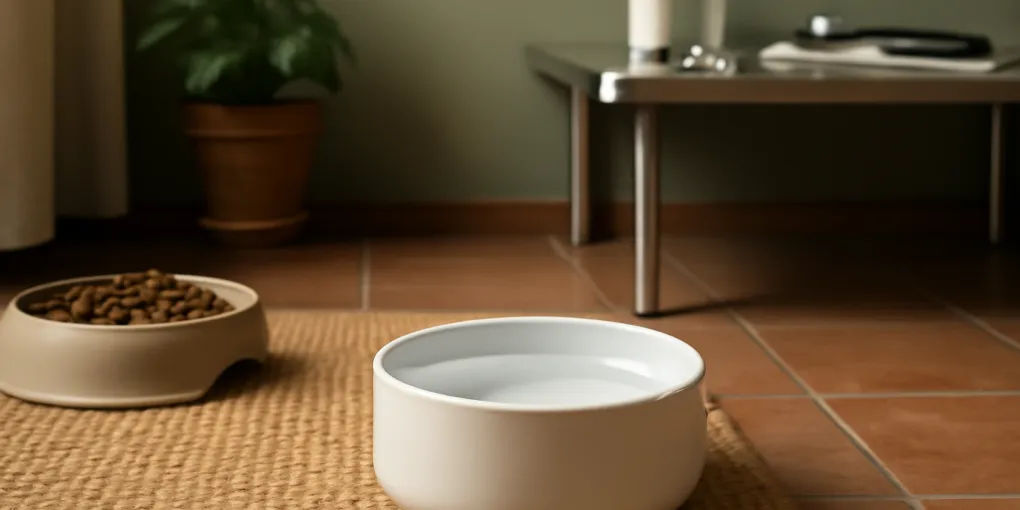
Cat Water Bowl Placement Protocol: Better Hydration Without Buying a Fountain First
ProtocolQuick picks
Wide shallow ceramic cat bowl
★ Top pick Best first water station- Comfortable whisker clearance
- Heavy enough to resist tipping
- Easy to wash
- Can chip if dropped
- Needs daily cleaning
Stainless steel cat water bowl
Best backup bowl- Durable
- Dishwasher-friendly
- Low odor retention
- Light bowls may slide
- Reflective surface bothers some cats
A cat that ignores the water bowl may not be rejecting water. The bowl may be too close to food, too close to the litter box, too narrow, too dirty, or placed where the cat feels exposed. Before buying a fountain, fix the water station.
The goal is simple: clean water in a quiet location, served in a bowl the cat can use without crowding its whiskers or competing with another pet. This protocol gives you a one-week reset that costs less than most fountains and often reveals whether the problem is placement, bowl design, or true fountain preference.
Quick picks
For most homes, start with two plain bowls instead of one complicated device:
- Wide shallow ceramic bowl: good first station because it is heavy, stable, and whisker-friendly. Search Amazon for wide ceramic cat bowls.
- Stainless steel backup bowl: durable second station for another room or hallway. Search Amazon for stainless cat bowls.
Skip tiny deep bowls, decorative bowls with rough interiors, and lightweight plastic dishes that slide, scratch, or hold odor. Plastic can be convenient for travel, but a scratched daily water bowl is harder to keep clean.
Placement rule one: separate water from litter
Put water well away from the litter box. Even tidy litter areas create dust, odor, and traffic patterns that make a water station less appealing. If your only current bowl sits near the box because the utility room has tile, move one bowl to a quiet hallway, bedroom corner, or low-traffic living area.
Watch the cat approach. A good station lets the cat drink with its back or side protected, not in the middle of a doorway where people or dogs pass behind it.
Placement rule two: test distance from food
Many cats drink more reliably when water is not directly beside the food dish. Food crumbs fall into water, and some cats seem to prefer water in a separate location. You do not need a dramatic setup. Move the bowl six to ten feet away for a week and track whether the water level changes.
If your cat eats wet food, water intake from the bowl may naturally be lower. That is not automatically a problem, but the bowl still needs to be clean and available.
Cornell Feline Health Center’s feeding guidance emphasizes that cats should have fresh, clean water available at all times, which makes bowl placement and cleaning part of the hydration setup rather than an afterthought (Cornell Feline Health Center feeding guidance).
Bowl shape and material
Choose a bowl wider than the cat’s muzzle and shallow enough that the whiskers do not press hard against the sides. The whisker-fatigue idea is debated in formal research, but the practical test is easy: if your cat paws water, drinks from cups, or avoids a narrow bowl, offer a wide shallow bowl and see what changes.
Ceramic and stainless bowls are easiest to recommend because they wash well and resist odor when kept intact. Retire chipped ceramic. Retire stainless bowls with rust spots or rough seams.
Multi-cat and dog households
Use at least two water stations for two cats, and more if the home has multiple floors. A confident cat can block a single bowl without obvious fighting. Put stations far enough apart that one cat cannot guard both from the same resting spot.
If a dog drinks from the cat bowl, place one station on a stable raised surface the cat can access safely, or use a pet gate with a cat opening. Do not rely on a tiny bowl hidden behind clutter; cats still need comfortable posture and easy escape routes.
Cleaning cadence
Dump and refill water daily. Wash the bowl with dish soap and hot water, then rinse well. If the bowl feels slippery, that is biofilm, and topping it off is not enough.
For dusty rooms, long-haired cats, or cats that drop food into water, wash twice daily. Keep a second bowl in rotation so the cat has water while the first bowl dries.
The FDA’s pet food and treat handling guidance is relevant because food residue, treat dust, and dirty hands can contaminate feeding areas (FDA pet food handling tips). Treat water bowls as food-contact surfaces.
The seven-day reset
Day 1: Put out two fresh bowls: one ceramic, one stainless. Place them in different quiet areas away from the litter box.
Days 2-3: Note which bowl loses more water. Do not judge by a single sip; look at the level at the same time each day.
Days 4-5: Move the weaker station farther from food or traffic. If the cat drinks from human cups or sinks, copy the location style with a safe bowl nearby.
Days 6-7: Decide whether a fountain is actually needed. If the cat now drinks from the better bowl, keep the simple setup. If the cat strongly prefers moving water, then consider a fountain with easy pump access and keep one plain bowl as backup.
If your cat ignores both bowls after the reset, compare the result with our fountain-specific guide, Do Cat Water Fountains Help Cats Drink More?, so you are choosing moving water for a real preference rather than a dirty or poorly placed bowl.
Cat water bowl FAQ
Should a cat water bowl sit next to food?
Not as the only option. One bowl near food is fine if the cat uses it, but a second bowl several feet away reduces crumbs in the water and gives picky cats a cleaner-feeling station.
Is ceramic or stainless steel better for a cat water bowl?
Both can work. Choose smooth ceramic if you want weight and low sliding, or stainless steel if you want a durable backup bowl that can go through the dishwasher. Retire chipped, scratched, rusty, or rough bowls.
When should I buy a fountain instead?
Consider a fountain after a week of clean, wide bowls in better locations if your cat still seeks running taps or ignores still water. Keep one plain bowl available as a backup during cleaning or power outages.
Reader test: what to do today
Tonight, wash the current bowl, move it away from food and litter, and add a second wide shallow bowl in a quiet room. If your cat starts using the new station within a week, you solved a layout problem. If not, you have clean baseline evidence before spending money on a fountain.
Frequently Asked Questions
- Place water in a quiet, easy-to-reach area away from the litter box and preferably away from the food bowl. Add a second station for multi-cat homes or large floor plans.
- Not always. Many cats do well with clean, wide bowls in good locations. Try better bowl placement and daily washing before assuming a fountain is required.
- Refresh water daily and wash the bowl at least daily for wet mouths, dusty rooms, or multi-cat homes. Do not just top off slimy water.