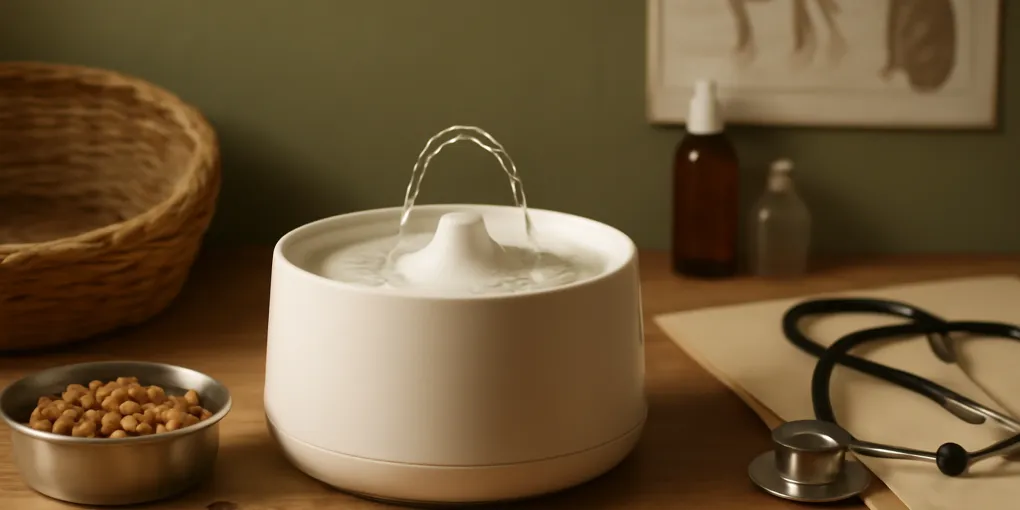
Do Cat Water Fountains Help Cats Drink More? Evidence, Limits, and Setup Tips
Evidence ExplainerQuick picks
| Product | Key Specs |
|---|---|
| See price on Amazon |
|
| See price on Amazon |
|
| See price on Amazon |
|
Product availability, certifications, and retailer details can change; check the current Amazon page before buying.
Quick answer
A cat water fountain may encourage some cats to drink more, especially cats attracted to moving water. It is not a reliable hydration treatment for every cat, and a fountain has not been shown to prevent urinary obstruction, kidney disease, or dehydration on its own. A wide, clean bowl may work just as well for a cat that dislikes pump noise or splashing.
The practical test is simple: keep the familiar water bowl available, add the fountain as another water station, and watch which source the cat actually uses. A fountain earns its place only if the cat drinks from it and the household can keep the basin, intake, spout, tubing, and impeller free of slime.
Current shopping paths:
- Stainless-steel cat fountains: Search Amazon for cat water fountain stainless steel
- Ceramic cat fountains: Search Amazon for ceramic cat water fountain
- Model-specific replacement filters: Search Amazon for cat fountain replacement filters
Amazon results can mix capacities, pump designs, filter sizes, sellers, and warranties. Confirm the exact fountain model and compatible filter before purchasing.
What the evidence can and cannot say
Small cat studies and owner observations suggest that some cats prefer moving water, but they do not establish that every cat drinks more from a fountain than from a wide, clean bowl. They also do not show that buying a fountain prevents urinary obstruction, chronic kidney disease, or dehydration. Wet-food intake, water added to meals, weather, illness, and the number and location of water stations can influence total water intake more than the drinking vessel alone.
Fountain refill volume is only a rough household measure because evaporation, splashing, pump operation, and multiple cats all remove water from the reservoir. To compare behavior, keep the cat’s familiar bowl available, measure water added to each source at the same time each day, and note actual fountain drinking visits rather than assuming a falling water line means ingestion. Litter-clump size can reveal a change worth discussing with a veterinarian, but it cannot quantify hydration or diagnose kidney or urinary disease.
A filter may catch hair and debris or reduce odor, but it does not sterilize recirculating water. Biofilm can persist in the impeller well, intake slots, spout, and tubing even when the basin looks clear. Evidence about drinking preference therefore cannot excuse skipped maintenance: disassemble and clean the pump and water path on the manufacturer’s schedule, replace the exact compatible filter as directed, and provide fresh water between cleanings. Stop relying on the fountain if the pump cannot be opened for cleaning, replacement filters no longer fit, or slime and odor return quickly.
Judge a fountain by this cat’s repeated drinking behavior and by whether the household can keep every wet component clean. A sudden increase or decrease in drinking, straining to urinate, frequent small urine clumps, vomiting, lethargy, or reduced appetite needs veterinary assessment; a fountain trial cannot distinguish preference from diabetes, kidney disease, cystitis, obstruction, or another medical cause.
A small crossover study of healthy cats compared a free-falling fountain with a still-water bowl. Its limited sample and individual variation support a cautious conclusion: water-source preference differs by cat, so a fountain should be tested rather than assumed to improve intake. That is a much narrower claim than the promises often made on product listings.
Is a fountain worth trying for this cat?
A fountain is a reasonable experiment when a cat repeatedly seeks dripping taps, paws at water before drinking, or ignores some still-water stations but approaches moving water. It may also add a useful station in a multi-level home. It is less compelling when the cat already drinks readily from several clean bowls or when nobody can commit to pump disassembly and filter replacement.
Do not remove the existing bowl to force fountain use. Place the new fountain near, but not directly against, the familiar bowl so the cat can investigate without losing access to water. Choose a quiet location away from litter trays and busy appliances. Many cats also prefer water separated from food, so test placement before blaming the fountain itself.
For a multi-cat home, one fountain is not automatically enough. A timid cat may avoid a shared fountain guarded by another cat. Keep multiple water stations in separate locations, including at least one still-water bowl, so no cat must pass another cat or enter a dead-end corner to drink.
What to inspect before buying
The useful specifications are the ones that determine access and cleaning:
- Open drinking area: the cat should be able to drink without pressing its whiskers into a narrow recess.
- Pump access: the cover and impeller should come apart without special tools. A pump advertised as removable is not enough if the impeller well stays sealed.
- Short, reachable water path: hidden tubes, decorative towers, and tight corners give biofilm more places to persist.
- Stable basin: check the filled weight and base, particularly for cats that push or tip bowls.
- Noise and flow control: a low-water pump can become louder. An adjustable flow may help a cautious cat, but it adds no value if adjustment parts are difficult to wash.
- Cord routing: keep the cord out of the drinking area and use the fountain only as its instructions permit. A chewed, cracked, or wet electrical connection means unplugging the unit.
- Replacement parts: verify that the exact pump and filter remain available. Do not trim or stack a near-match filter to make it fit.
Stainless steel is easy to visually inspect and does not chip like ceramic, but a steel basin does not make a plastic pump self-cleaning. Ceramic adds weight and can suit cats that shove light bowls, but chipped glaze or an inaccessible pump remains a reason to replace the unit. Material choice matters less than being able to reach every surface touched by recirculating water.
Run a fair fountain trial
Start with the lowest flow setting and let the cat approach voluntarily. If the pump startles the cat, run the fountain unplugged as a plain basin first, then switch on the pump during a calm period. Never place treats in the reservoir or use cleaners, flavorings, or additives that the fountain manufacturer does not permit.
For about two weeks, keep bowl and fountain locations stable. At the same time each day, record water added to each source, whether you directly saw the cat drink, and any spill or pump outage. In a multi-cat household, direct observation matters because total reservoir loss cannot show which cat drank.
The trial succeeds when the cat repeatedly chooses the fountain and normal cleaning remains manageable. It fails when the cat avoids the area, only plays in the stream, repeatedly empties the basin by pawing, or stops using other water sources without clearly drinking from the fountain. If the fountain adds uncertainty rather than access, return to clean bowls in several locations.
Cleaning is the decisive feature
Top up with fresh water as needed, but do not treat topping up as cleaning. Unplug the fountain before handling it. Empty and wash the basin and removable water-path pieces at the interval in the model’s instructions, then open the pump housing and remove hair or film around the impeller. Rinse away cleaner completely before refilling.
Check the intake and water level daily. Pumps can run hot or fail when clogged or allowed to run dry. Replace the filter on the manufacturer’s schedule, sooner if the instructions require it for a multi-pet home. A fresh filter cannot compensate for slime in the spout or pump cavity.
Retire the fountain if cracks, chipped glaze, damaged cords, persistent odor, or inaccessible biofilm make thorough cleaning impossible. Also reconsider it if replacement filters disappear from sale or ongoing filter cost causes the household to stretch changes beyond the specified interval.
When this is a veterinary question
A fountain is an optional water-delivery device, not a response to urinary or systemic illness. Seek prompt veterinary care for straining with little or no urine, repeated trips to the litter box, crying while urinating, blood in urine, vomiting, collapse, or marked lethargy. Urinary obstruction can be an emergency, particularly in male cats.
Schedule veterinary assessment for a persistent increase or decrease in thirst, appetite or weight change, unusually large or small urine clumps, or new urination outside the litter box. Do not use apparent fountain interest to conclude that a cat is well hydrated or to delay prescribed treatment.
Frequently Asked Questions
Do cat fountains reliably make cats drink more?
No. The limited comparison evidence supports testing a fountain for an individual cat, not promising a universal increase. Keep a familiar bowl available and measure the whole household routine rather than assuming reservoir loss equals one cat’s intake.
How often should a cat fountain be cleaned?
Follow the model’s manual for the basin, filter, and pump interval, and shorten it when hair, slime, odor, or multiple cats make the water path dirty sooner. A refill is not a substitute for opening the pump and cleaning the impeller cavity.
Is a fountain appropriate for a cat with urinary symptoms?
A fountain may be an optional water source, but it is not treatment. Straining, repeated litter-box trips, blood, vomiting, collapse, or marked lethargy warrants prompt veterinary care; do not delay that assessment while changing water equipment.
Sources and evidence notes
The fountain-specific evidence base is small. The key controlled comparison is Grant, 2010, “Effect of water source on intake and urine concentration in healthy cats”, published in the Journal of Feline Medicine and Surgery. Its result should not be stretched into a claim that fountains reliably increase intake in all cats.
Placement and access guidance is also informed by the AAFP and ISFM Feline Environmental Needs Guidelines, which emphasize distributed, separated resources that cats can access safely. Product listings are used only as shopping paths because fountain models, bundles, sellers, and filter compatibility change. Verify the current manual, dimensions, pump-cleaning steps, filter code, and return terms before buying.