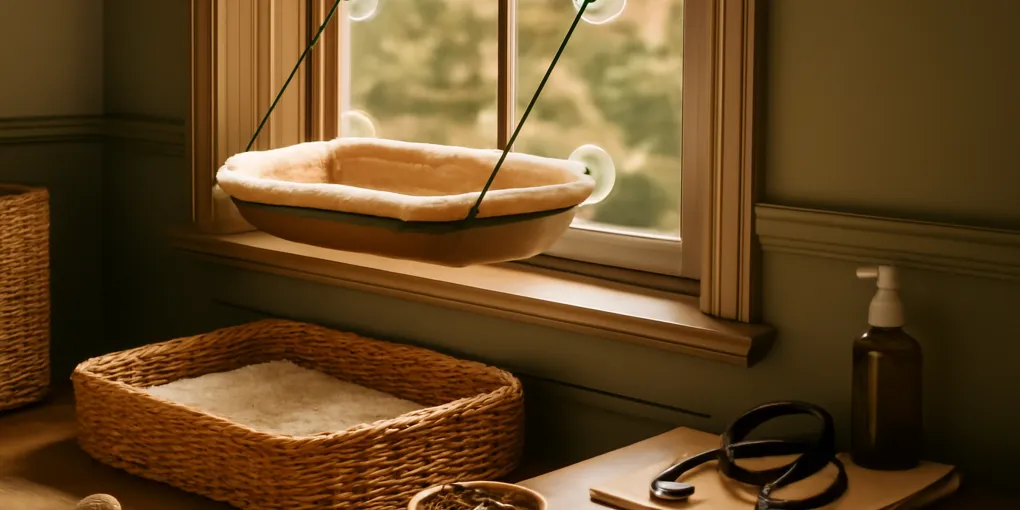
Best Cat Window Perches for Apartment Cats: Safe Picks and Setup Checks
Buyer's GuideK&H EZ Mount Cat Window Bed
Top PickBest fit: Apartment window lookout
Check current price
Quick picks
| Product | Key Specs |
|---|---|
| See price on Amazon |
|
| See price on Amazon |
|
| See price on Amazon |
|
Product availability, certifications, and retailer details can change; check the current Amazon page before buying.
Best fit in one minute
The best cat window perch for an apartment is the one that stays stable on your actual window, matches your cat’s weight and mobility, and can be inspected without damaging the lease. A perch is enrichment, not furniture decor. It should give a cat a safe lookout, a sunning option, and distance from household traffic without adding a fall hazard.
Apartment cats vary widely: a young climber may enjoy a higher shelf, while a senior cat may need a low sill platform reached by a chair or step. Pet Science Review scores window perches higher when they have redundant support, washable covers, realistic weight ratings, and a setup plan that accounts for blinds, cords, screens, and landlord restrictions.
Window-perch safety score
| Criterion | Weight | Score | Weighted | Window-perch rationale |
|---|---|---|---|---|
| Research | 30% | 8.1 | 2.43 | Environmental enrichment and vertical space have strong welfare logic for indoor cats. |
| Evidence Quality | 25% | 7.9 | 1.98 | Support is strongest for choice, resting places, and stress reduction; brand-level perch trials are rare. |
| Value | 20% | 8.3 | 1.66 | Good perches can replace improvised furniture stacks and protect windowsills. |
| User Signals | 15% | 8.0 | 1.20 | Owners report success depends on suction reliability, sill depth, cover washing, and cat size. |
| Transparency | 10% | 9.0 | 0.90 | Picks are framed by perch type, installation risk, and renter-friendly inspection needs. |
| Composite | 100% | 8.17/10 | High-value enrichment when installation is conservative. |
Quick picks by product type
- K&H EZ Mount cat window bed search — common suction-cup style for renters who cannot screw into trim; check cup size and replacement availability.
- Kitty Cot window perch search — mesh platform style that suits cats who prefer airflow and firmer support.
- sill mounted cat window perch search — better for deep sills where mechanical support is allowed and suction cups are undesirable.
Product fit comparison
| Best fit | Perch type | Strength | Watch-out |
|---|---|---|---|
| Renters with smooth glass | Suction-cup hammock | No drilling and easy repositioning | Cups need clean glass and routine tug checks |
| Large cats or multi-cat use | Sill-supported shelf | More predictable load path | May not fit shallow vinyl sills |
| Warm windows and sun naps | Padded platform | Comfortable resting surface | Cover must be washable and dry quickly |
| Cats that chew fabric | Mesh platform | Less plush material to destroy | Less cozy in cold rooms |
Installation safety checks
Clean the glass, test suction when the window is closed, and press each cup until the indicator or seal looks uniform. Leave the perch unloaded for several hours, then press downward by hand before inviting the cat. A safe first trial happens while someone is home, not overnight.
For sill-mounted models, measure sill depth, trim shape, and the distance to blinds. Do not clamp onto loose trim, cracked paint, or a surface that flexes. If the building has old windows, insect screens, or child-safety rules, treat the screen as a bug barrier only; it is not fall protection for a cat leaning or jumping.
Choosing by cat profile
A kitten or athletic adult may accept a higher perch, but it still needs a landing route. For suction-cup K&H-style hammocks, reserve the highest glass for cats that already jump cleanly to a chair or sill and stay under the listed weight rating with margin. A senior, overweight, or arthritic cat needs a lower sill shelf, a nearby ottoman step, or a freestanding window bed that does not require a vertical leap. A timid cat may prefer a side window away from street noise; a bird-reactive cat needs blinds raised out of the strike zone so excitement does not turn into swatting cords or scratching screens.
Multi-cat households need more than one desirable lookout. A single sunny perch can become a guarding resource, especially when one cat controls the only warm window. If one cat blocks the other, add a second bed at a similar height or choose a wider sill-supported shelf only if the manufacturer allows the combined weight. For renters, photograph the clean glass, suction cups, and sill condition at setup so weekly inspections are easy to compare.
Cleaning and lease-friendly maintenance
Wash covers on a schedule tied to shedding, pollen, and hairball season. Vacuum mesh and seams before laundering so hair does not clog the washer. Inspect suction cups for cracking, cloudiness, or curled edges; replace them before they fail. Keep photos of the installation and product instructions if lease rules require removable fixtures.
Common mistakes
- Trusting a printed weight limit without checking glass cleanliness and cup condition.
- Installing over a radiator, baseboard heater, or drafty air conditioner that changes comfort and adhesion.
- Letting blind cords hang inside the perch area.
- Assuming two cats can share one narrow platform safely.
- Forgetting that an insect screen is not structural fall protection.
Internal reading
For other cat enrichment decisions, see how to introduce a cat to an automatic feeder and best cat trees for large cats. For household readiness, pair the setup with how to build a pet first aid kit.
Window and lease compatibility
Start with the window, not the product. Older wood windows, textured glass, removable storm panes, and windows with condensation problems can make suction cups unreliable. Vinyl frames may have narrow sills that do not accept clamp-style shelves. If the lease bans drilling or adhesive hardware, choose a removable model and keep the instructions in case a property manager asks how it attaches.
Check the window’s daily conditions. A perch in direct afternoon sun can become too warm for long naps, especially for dark-coated cats. A drafty winter window may be unpleasant even if the platform is soft. If the cat uses the perch only briefly, the problem may be temperature or street noise rather than the bed shape.
Blinds are a common apartment failure point. Slats can bend, cords can tangle, and a cat jumping through blinds may pull the perch sideways. Raise blinds above the platform or choose a window covering that does not create dangling loops in the landing zone.
Weight ratings and real-world margins
Printed weight ratings assume correct installation on an appropriate surface. They do not account for dirty glass, old suction cups, two cats jumping at once, or a cat landing with momentum. Build in a margin. A fifteen-pound cat should not be placed on a perch that feels barely adequate for fifteen pounds.
For large cats, prioritize a wide platform and a support path that transfers weight to the sill or wall rather than relying only on cups. For small cats, stability still matters because a narrow platform can wobble when the cat turns around. Watch the first few jumps and exits. If the cat scrambles or hooks claws into fabric to stay balanced, the perch is not a calm resting surface.
Enrichment value beyond the view
A good perch gives the cat choice: warm sun, street watching, distance from dogs or children, and a defined resting place that smells familiar. It can reduce boredom for indoor cats, but it should not be the only enrichment. Cats still need scratching surfaces, hiding places, play, feeding routines, and litter boxes in safe locations.
Use the perch as part of a room plan. Place a scratcher nearby if the cat scratches the window trim after bird watching. Add a second resting place if another cat blocks access. Close the curtains when outside activity overstimulates the cat. The best perch is adjustable within the household routine, not a permanent stage for constant arousal.
Maintenance schedule
Weekly: tug each support point, vacuum hair, and inspect seams. For suction models, release and re-seat cups according to the product instructions rather than assuming they last forever. Wash covers before skin oils and hair create odor.
Monthly: check whether sunlight has made plastic brittle, whether fabric has stretched, and whether the window frame shows marks. If the perch has metal brackets, confirm no sharp edge touches the window or wall. Replace worn cups and covers early; a small part is cheaper than a fall or damaged window treatment.
How to introduce the perch
Let the cat find the perch at floor level first if the design allows it, or place treats on the window ledge while the platform is supervised. Do not lift a nervous cat onto a high perch and step away. For cautious cats, use a chair or ottoman as an intermediate step for the first week. Remove the step later only if the cat jumps smoothly.
If the cat ignores the perch, change one variable at a time: location, cover texture, access step, or time of day. Avoid spraying strong scents or adding catnip if that makes the cat roll, scratch, or act less coordinated near a window.
How we weighed the evidence
The evidence support is strongest for environmental choice and safe resting areas, not for a named perch brand. We used feline enrichment guidelines to define the benefit, then judged product types by failure points: support, surface, access, cleaning, and whether the installation creates hazards. That keeps the recommendation practical without pretending that a perch alone solves stress or behavior problems.
Red flags after installation
Remove the perch if the cat launches at birds and hits the glass, if suction cups creep downward, or if the platform twists when the cat turns around. Also remove it when the cat uses it to harass another pet below, because enrichment should not create a new conflict point. A perch that scares the cat once may be avoided for weeks, so conservative placement is better than pushing the highest possible view.
Good signs are quieter: the cat climbs up without rushing, rests with loose posture, leaves without scrambling, and returns at predictable times of day. If the cat naps there only when a blanket is added, choose a washable cover that preserves traction. If the cat uses the sill beside the perch instead, the platform may be too narrow, too warm, or too exposed.
Renter-friendly placement test
Before committing to a perch, map the apartment like a cat uses it. Mark the window height, the closest stable takeoff point, the landing area, direct sun exposure, and any blind cords or radiator edges near the spot. A good perch should create an easy loop: approach, climb, rest, watch, and leave without panic jumping. If the only exit is a long drop to a slippery floor, the placement is not ready.
Renters should also think about reversibility. Suction cups avoid holes but need clean glass and frequent checks. Sill-mounted designs may be more stable but can mark paint or conflict with lease rules. Freestanding furniture may be bulkier yet safer for heavy, senior, or highly reactive cats. Choose the format that the owner can inspect weekly, not the one that looks most minimal in product photos.
FAQ
Are suction-cup cat perches safe in rentals?
They can be safe on clean, smooth glass when installed exactly as directed and checked often. They are a poor fit for textured glass, damaged seals, loose panes, or owners who will not inspect cups.
How high should an apartment cat perch be?
High enough to feel useful, low enough that the cat can reach and leave without a risky leap. Senior or heavy cats usually need lower access and a step.
Can a window perch replace a cat tree?
Sometimes it can replace one function: a lookout. It does not replace scratching, climbing routes, hiding spots, or multi-level territory for every cat.
Final owner checklist for this setup
Keep the perch if it passes a weekly tug test, the cat uses it calmly, covers wash cleanly, and the window area is free of dangling cords and screen pressure. Remove it if cups lose grip, the cat launches into glass, or the setup creates conflict between cats.
Sources
- AAFP/ISFM Environmental Needs Guidelines — indoor cats benefit from safe resting places, choice, and vertical territory.
- Ohio State Indoor Pet Initiative: Environmental enrichment — practical indoor-cat environment guidance.
- International Cat Care: Making your home cat friendly — home layout and resting-place recommendations.
- ASPCA: General cat care — owner-level cat-care context for safe home routines and veterinary escalation.