How to Build a Pet First Aid Kit: Evidence-Based Home Checklist
ProtocolQuick picks
| Product | Key Specs |
|---|---|
| See price on Amazon |
|
| See price on Amazon |
|
| See price on Amazon |
|
Product availability, certifications, and retailer details can change; check the current Amazon page before buying.
Editorial Transparency
Pet Science Review uses AI tools during drafting support, outline organization, and source review. Human editors review every article for accuracy, clarity, product-link policy, and source quality. We do not fabricate reviewers, veterinary credentials, test results, ASINs, or citations.
How to Build a Pet First Aid Kit: Evidence-Based Home Checklist
A pet first aid kit is not a replacement for veterinary care. Its job is narrower and more useful: help you control bleeding, rinse contamination, take a temperature, protect a wound, and transport your dog or cat safely until a veterinarian can examine them.
This checklist is built around guidance from the American Veterinary Medical Association, the American Red Cross pet first aid curriculum, and veterinary emergency principles used in RECOVER CPR guidance for dogs and cats.
TL;DR
- Build for stabilization, not home treatment.
- Prioritize bandaging, rinsing, temperature checks, safe restraint, and records.
- Do not include human painkillers or old antibiotics.
- Store the kit where you can grab it during evacuation or a late-night emergency.
- Review expiration dates twice per year.
PSR Composite Score: How We Weighted the Evidence
For emergency-preparedness protocols, Pet Science Review rewards practical supplies that support transport to veterinary care without encouraging unsafe home treatment.
| Criterion | Weight | Score | Weighted | Why it matters here |
|---|---|---|---|---|
| Research Depth | 30% | 8.5 | 2.55 | Draws from veterinary first aid, emergency care, and owner-preparedness guidance |
| Evidence Quality | 25% | 8.0 | 2.00 | Strong for stabilization basics; product-specific evidence is less relevant than correct use |
| Value | 20% | 9.0 | 1.80 | Most supplies are inexpensive and useful across many emergency scenarios |
| User Signals | 15% | 9.0 | 1.35 | Clear labels, records, and grab-and-go storage improve real-world response |
| Transparency | 10% | 9.0 | 0.90 | Emphasizes limits and emergency red flags rather than overclaiming home treatment |
| Composite | 100% | 8.60/10 | High-value preparedness protocol with clear veterinary-care boundaries |
The kit scores highly because it reduces confusion during emergencies. It does not score as a treatment system; veterinary diagnosis remains essential.
What a Pet First Aid Kit Is Actually For
First aid can make a meaningful difference in the first 10 minutes after a cut paw, broken nail, minor burn, tick bite, or heat-stress scare. It can also prevent a bad situation from getting worse during the drive to an emergency hospital.
It should not become a reason to watch and wait through red-flag symptoms. Veterinary emergency literature consistently treats respiratory distress, collapse, uncontrolled bleeding, seizures, severe trauma, heatstroke, and toxin exposure as urgent-care situations where time matters.
A good kit helps with five tasks:
- Protect you from blood, saliva, and panic bites.
- Stop or slow bleeding.
- Rinse debris or irritants.
- Measure body temperature.
- Move the pet safely to professional care.
Step 1 — Pack the Core Wound-Care Supplies
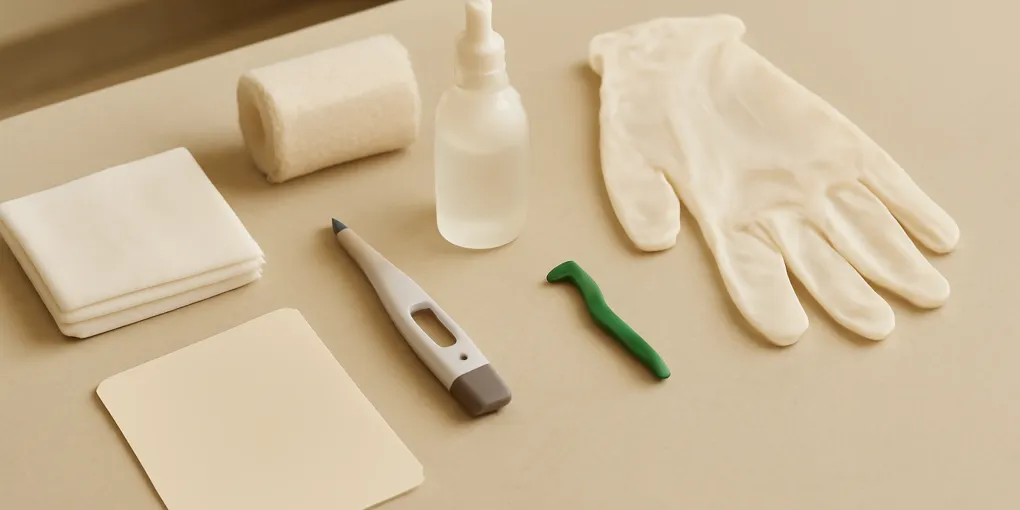
These items cover the most common at-home first aid scenario: a bleeding nail, scraped paw pad, small laceration, or irritated skin spot that needs temporary protection.
| Supply | Why it belongs in the kit | Notes |
|---|---|---|
| Nitrile gloves | Protects you and keeps the wound cleaner | Choose latex-free if anyone in the home has allergies |
| Sterile gauze pads | Absorbs blood and covers wounds | Several 2x2 and 4x4 pads are useful |
| Non-stick pads | Protects raw skin without sticking | Better than dry gauze directly on abrasions |
| Roll gauze | Holds dressings in place | Do not wrap tightly |
| Self-adhering bandage wrap | Adds light compression and keeps bandage secure | Leave room for swelling; check toes often |
| Blunt-tip scissors | Cuts wrap without stabbing skin | Safer around anxious pets |
| Saline rinse | Flushes debris from wounds or eyes | Plain sterile saline, not medicated drops |
Product search links:
- Search Amazon for Pet first aid gauze and bandage wrap
- Search Amazon for Sterile saline wound rinse for pets
- Search Amazon for Nitrile gloves first aid kit
Use light pressure for bleeding, then call your veterinarian if bleeding does not slow within several minutes, if the wound is deep, or if the injury involves the eye, chest, abdomen, or a bite wound.
Step 2 — Add Temperature and Monitoring Tools
A digital rectal thermometer is one of the most useful items in a pet first aid kit. Normal temperature ranges are typically around 100.5–102.5°F for dogs and cats, though individual baselines vary. A temperature above 104°F with concerning signs can indicate heat illness; a low temperature after trauma can also be serious.
Pack:
- Digital rectal thermometer.
- Water-based lubricant.
- Small notebook or waterproof card for recording time, temperature, gum color, breathing rate, and symptoms.
- Pen or permanent marker.
Product search links:
Do not rely on ear, forehead, or nose temperature checks when deciding whether an emergency is developing. If your pet is panting heavily, weak, vomiting, or disoriented, call emergency care even if you cannot get a temperature safely.
Step 3 — Include Safe Restraint and Transport Items
Pain and fear can make even gentle pets bite or scratch. Veterinary first aid guidance emphasizes safety for both the animal and the caregiver.
Add:
- Soft muzzle for dogs, sized correctly.
- Large towel for cats and small dogs.
- Slip lead or backup leash.
- Collapsible water bowl.
- Emergency blanket.
- Disposable cold pack wrapped in a towel, not placed directly on skin.
Important: never muzzle a vomiting pet, a pet struggling to breathe, or a brachycephalic dog that is overheating. For cats, towel wrapping is usually safer than a muzzle.
Product search links:
- Search Amazon for Soft dog muzzle emergency restraint
- Search Amazon for Pet emergency blanket
- Search Amazon for Collapsible pet water bowl
Step 4 — Pack Tick, Splinter, and Grooming Tools
Minor foreign-body problems are common after walks, hikes, and yard play. Keep tools simple.
- Fine-tip tweezers for splinters and small debris.
- Tick remover tool.
- Small flashlight or headlamp.
- Styptic powder for bleeding nails.
- Comb for checking foxtails, burrs, or matting around an injured area.
Product search links:
- Search Amazon for Tick remover tool for dogs and cats
- Search Amazon for Styptic powder for dog nails
After tick removal, monitor the bite site and watch for fever, lethargy, lameness, or appetite changes. Ask your veterinarian about tick-borne disease risk in your region.
Step 5 — Add Records and Emergency Contacts
A first aid kit is also an information kit. During stress, you do not want to search your phone for vaccine dates, medication names, or the closest emergency hospital.
Include:
- Your veterinarian’s phone number.
- Nearest 24-hour emergency hospital.
- ASPCA Animal Poison Control or Pet Poison Helpline number.
- Current medications and dosages.
- Known allergies.
- Vaccine dates.
- Microchip number.
- Recent photo of each pet.
Keep a paper copy and a phone note. Paper matters during power outages, evacuations, or dead batteries.
What Not to Put in the Kit
Avoid stocking supplies that encourage unsafe home treatment.
Skip these unsafe supplies:
- Human pain relievers such as ibuprofen, naproxen, or acetaminophen.
- Leftover antibiotics.
- Hydrogen peroxide as a routine wound cleaner.
- Essential oils.
- Alcohol wipes for open wounds.
- Superglue for wounds unless specifically directed by a veterinarian.
- Prescription medications not assigned to that pet.
Many common human medications can be toxic to pets. If poisoning is possible, call a veterinary poison hotline or emergency hospital before giving anything by mouth.
Storage and Maintenance Protocol
- Put everything in a waterproof, clearly labeled case.
- Store it near leashes or carriers, not buried in a bathroom cabinet.
- Add a smaller travel pouch for the car.
- Check expiration dates every six months.
- Replace opened saline, dirty wrap, used gloves, and expired cold packs.
- Reprint records after medication changes or new diagnoses.
For multi-pet homes, label records and medication lists by pet name. Weight matters for veterinary triage and medication decisions, so record each pet’s current weight.
When First Aid Is Not Enough
Go directly to emergency care for:
- Trouble breathing.
- Collapse or inability to stand.
- Seizures.
- Suspected poisoning.
- Uncontrolled bleeding.
- Bite wounds or deep punctures.
- Eye injuries.
- Heatstroke signs.
- Severe vomiting or repeated retching.
- Bloated abdomen or nonproductive retching in dogs.
- Inability to urinate, especially in male cats.
The best first aid decision is often fast transport.
Scenario Checklists
Bleeding Nail or Paw Pad
Put on gloves, apply gentle pressure with gauze, and use self-adhering wrap only tightly enough to hold the dressing. Check toes for swelling, coldness, or color change. If bleeding continues, the cut is deep, or your pet cannot bear weight, call your veterinarian.
Tick Found After a Walk
Use a tick remover or fine tweezers close to the skin. Pull steadily without twisting aggressively. Clean the area with saline and record the date. Ask your veterinarian whether tick-borne disease monitoring or prevention changes are needed in your region.
Heat-Stress Concern
Move your pet to shade or air conditioning, offer cool water if they are alert, and begin transport guidance from an emergency veterinarian. Do not use ice baths. Heavy panting, collapse, vomiting, disorientation, or a temperature above 104°F with clinical signs should be treated as urgent.
Evacuation or Storm Event
Put the first aid kit with carriers, leashes, medication records, food, water, and litter supplies. A kit buried in a closet is not useful when you have five minutes to leave.
Kit Review Schedule
Review the kit every January and July. Replace expired saline, brittle wrap, old gloves, dead flashlight batteries, outdated medication lists, and old emergency hospital phone numbers. If you move, update the nearest 24-hour clinic immediately.
Customize the Kit for Your Household
A useful kit reflects the pets you actually have. A household with a diabetic cat should keep updated medication information and feeding notes in the record pouch. A home with a brachycephalic dog should make heat and breathing emergencies prominent on the contact card. Hiking households may need extra tick tools, paw rinse, and a larger roll of bandage wrap.
For senior pets, include mobility notes: how to lift safely, whether the pet has spinal pain, and which carrier or sling works best. For anxious pets, write the safest handling method before an emergency happens. A note like “wrap Milo in the blue towel; do not pick up under belly” can prevent panic decisions.
If a pet takes prescription medication, do not store loose pills in the first aid kit unless your veterinarian tells you to. Instead, store a current medication list, the prescribing clinic, and pharmacy phone number. During evacuation, bring the labeled medication container separately.
The goal is to make the kit usable by any responsible adult in the home, not just the person who built it. Label sections clearly and review the contents together once so everyone knows where gloves, gauze, thermometer, and emergency numbers are stored.
Sources
- American Veterinary Medical Association. “First aid tips for pet owners.” AVMA owner guidance on emergency first aid. https://www.avma.org/resources-tools/pet-owners/emergencycare/first-aid-tips-pet-owners
- American Red Cross. “Cat and Dog First Aid.” Course and owner guidance for pet first aid preparation. https://www.redcross.org/take-a-class/first-aid/cat-dog-first-aid
- Fletcher DJ, Boller M, Brainard BM, et al. “RECOVER evidence and knowledge gap analysis on veterinary CPR. Part 7: Clinical guidelines.” Journal of Veterinary Emergency and Critical Care. 2012;22 Suppl 1:S102-S131. DOI: 10.1111/j.1476-4431.2012.00757.x. https://pubmed.ncbi.nlm.nih.gov/23088187/
- Merck Veterinary Manual. “Wound Management in Small Animals.” Veterinary reference for wound-care principles. https://www.merckvetmanual.com/emergency-medicine-and-critical-care/wound-management/wound-management-in-small-animals
Bottom Line
Build a pet first aid kit around the actions that matter before a veterinarian takes over: protect yourself, stop bleeding, rinse contamination, measure temperature, restrain safely, and move quickly. Keep medications out unless your veterinarian explicitly prescribes them, and treat the kit as a bridge to care, not a home clinic.
Frequently Asked Questions
- At minimum: nitrile gloves, sterile gauze pads, non-stick dressings, roll gauze, self-adhering bandage wrap, saline eye/wound rinse, digital rectal thermometer, blunt-tip scissors, tweezers, tick remover, disposable cold pack, muzzle or towel restraint, emergency contact card, and copies of vaccine/medication records.
- Some supplies overlap, such as gauze, gloves, saline, and digital thermometers. Do not give human pain relievers, antiseptic creams, hydrogen peroxide, or medications unless your veterinarian specifically instructs you. Many common human drugs are toxic to dogs and cats.
- One household kit can work if it contains species-neutral supplies and clearly separates pet-specific medications or records. Cats usually need towel restraint rather than a muzzle, and both cats and small dogs need smaller bandage sizes.
- Go immediately for trouble breathing, collapse, seizures, eye injury, suspected poisoning, uncontrolled bleeding, major trauma, heatstroke, bloat signs, inability to urinate, or severe pain. First aid should stabilize transport, not delay veterinary care.