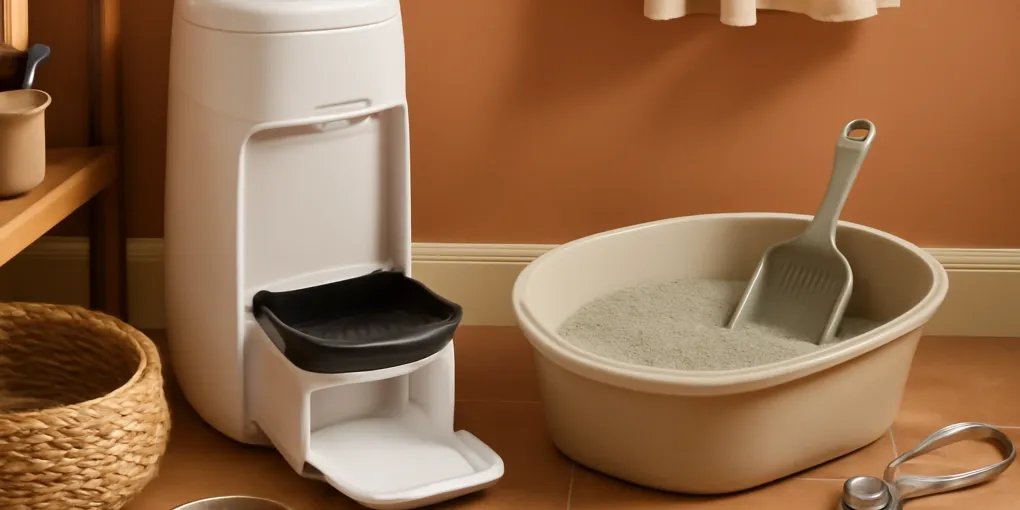
Litter Genie Easy Roll Review: Odor Control Helper or One More Plastic Chore?
ReviewLitter Genie Easy Roll
Best fitBest for: Containing litter odor between trips to the outdoor trash
Varies
Quick picks
| Product | Key Specs |
|---|---|
| See price on Amazon |
|
| See price on Amazon |
|
| See price on Amazon |
|
Product availability, certifications, and retailer details can change; check the current Amazon page before buying.
How we evaluated the options
Pet Science Review compares these options by species-specific evidence, safety risk, owner practicality, realistic cost, and product-label clarity. Those factors matter more than a single headline rating because the best choice depends on the pet, supervision level, and the problem you are trying to solve.
| Criterion | Weight | Score | Weighted | Why it matters here |
|---|---|---|---|---|
| Research | 30% | 8.0 | 2.40 | The guidance starts with pet-safety, behavior, husbandry, cleaning, and veterinary red flags before shopping convenience. |
| Evidence Quality | 25% | 7.5 | 1.88 | Direct product trials are limited, so recommendations are framed around plausible mechanisms, owner observation, and conservative claims. |
| Value | 20% | 8.0 | 1.60 | The article favors durable, washable, appropriately sized items over novelty features that add cost without reducing risk. |
| User Signals | 15% | 7.5 | 1.13 | Common owner failure points are addressed: setup friction, cleaning, replacement parts, pet avoidance, and household consistency. |
| Transparency | 10% | 8.5 | 0.85 | Affiliate incentives, search-link limits, uncertainty, and safety caveats are disclosed plainly. |
| Composite Score | 7.9/10 | Useful as buyer guidance when paired with veterinary advice for individual pets. |
Quick take
Litter Genie Easy Roll Review: Odor Control Helper or One More Plastic Chore? is really a safety-and-routine question before it is a shopping question. The best choice is the one your household can use consistently, clean easily, and stop using quickly if your pet shows discomfort. This guide explains what to look for, what not to overclaim, and how to pair product decisions with practical observation.
Useful Amazon searches:
- Search Amazon for Litter Genie Easy Roll
- Search Amazon for cat litter disposal pail
- Search Amazon for litter pail refill bags
Marketplace listings change often. Do not assume a search result is the same product, size, seller, or warranty until you check the current page.
What problem this should solve
For Litter Genie Easy Roll review, the most reliable decision is boring: choose a product that reduces a real daily friction point without creating a new risk. Pets do not read marketing claims. They react to texture, sound, smell, heat, stability, access, and routine. A useful product should make the safe behavior easier for the owner and more predictable for the animal. If the item requires complicated cleaning, fragile parts, app troubleshooting, or constant supervision, its practical value drops even when the listing looks impressive.
Watch the pet, not only the product. Avoidance, frantic chewing, repeated pawing, appetite change, vomiting, diarrhea, limping, coughing, collapse, urinary changes, hiding, or unusual vocalizing should pause the experiment. Those signs can mean the item is a poor match, but they can also reveal pain, fear, heat stress, dental trouble, skin irritation, urinary disease, or gastrointestinal disease. For puppies, seniors, cats with urinary history, brachycephalic dogs, and pets with chronic illness, owner observation and veterinary advice matter more than any affiliate roundup.
A good setup also has an exit plan. Keep packaging until the pet has used the item normally for several days. Check seams, cords, lids, filters, hinges, edges, and chew points after the first sessions. If the item touches food, water, waste, bedding, or the mouth, assume cleaning is part of the product cost. The cheapest option is rarely cheap if it smells, traps moisture, grows biofilm, collapses, or has to be replaced every few weeks.
Safety first: red flags and limits
Fit, sizing, and placement
Materials, cleaning, and durability
How to introduce it without stress
When to skip or return it
What to buy first
Common mistakes
Maintenance checklist
Bottom line
Review verdict
This product category is most useful for owners who already maintain a consistent litter routine and want odor containment between trips to the outdoor trash. It is less compelling if you dislike proprietary refills, have many litter boxes, or need a zero-plastic solution. The purchase should be judged by whether it makes scooping more consistent, not by whether it can eliminate litter odor completely.
Sources and evidence notes
This article uses conservative pet-safety guidance from veterinary and welfare sources rather than manufacturer claims. Useful references include the American Veterinary Medical Association’s pet owner guidance, Merck Veterinary Manual care summaries, WSAVA nutrition and welfare resources, American Animal Hospital Association preventive-care guidance, and species-specific welfare guidance from groups such as AAFP for cats. Product links are shopping links because listings, bundles, sellers, and ASINs change; verify the exact model before purchasing.
Practical reader notes for litter genie easy roll review
Use the scoring notes above to narrow the practical choice: match the product or protocol to your space, risk tolerance, maintenance capacity, and the specific constraints described above.
For product comparisons, prioritize fit and repeat use over impressive feature lists. A cheaper item that is easy to place, clean, dose, adjust, or return often beats a premium item that adds friction. Check dimensions, serving size, material notes, warranty language, and whether replacement parts or refills are easy to find. For health and wellness topics, compare the article’s evidence notes with your own risk profile, medications, sleep schedule, training load, and clinician guidance. Stop using any protocol that creates pain, dizziness, allergic symptoms, digestive distress, or a behavior pattern that feels hard to control.
A useful first test is a two-week trial with a clear success metric. Choose one outcome that matters: fewer missed sessions, faster cleanup, less morning stiffness, better adherence, lower noise, easier travel, or a more predictable measurement routine. Keep the rest of the setup stable so you can tell whether the change helped. If the result is neutral, return or retire the item quickly instead of expanding the system around it. If it helps, document the settings, dose, location, or schedule that made it work so the benefit survives busy weeks.
Readers should also separate evidence strength from personal fit. Stronger evidence can justify trying a category, but it does not guarantee that a particular brand, accessory, or routine will be the best match. Weak or emerging evidence does not automatically make a topic useless; it means the trial should be lower cost, lower risk, and easier to abandon. This is why our recommendations emphasize transparent trade-offs, realistic setup instructions, and situations where skipping the purchase is the smarter move.
Finally, revisit the choice after the novelty period. If the product is not used, if the protocol creates more steps than it saves, or if the article’s safety caveats apply to you, the right answer may be to simplify. The goal is not to own the highest-scoring option. The goal is to solve the reader problem with the least friction and the most honest understanding of benefits, limits, and uncertainty.
Field checks before relying on litter genie easy roll review
A good field check is specific enough that a reader can repeat it on a normal week. Put the item, routine, or buying criterion into the exact setting where it is supposed to help. For a training or supplement topic, that means the same meal timing, sleep window, workout duration, and recovery day pattern you normally use. For a home or pet product, that means the real doorway, cabinet, litter area, couch, crate, bathroom, or storage shelf rather than a cleared-off test space. The point is to see whether the recommendation survives ordinary friction.
Track three observations: what became easier, what became more annoying, and what you would change before recommending it to another person. If the answer is vague after two weeks, treat that as a weak result. A useful choice should reduce decision load, make the next action obvious, or solve a measurable problem without demanding constant attention. If it only works when everything else is perfect, it is probably not the right primary pick.
When to skip or downgrade the pick
Skip a litter disposal pail if the box is already next to an outdoor trash route or if cartridge refills will not be replaced consistently. Downgrade to a sealed small trash can and daily bag removal when odor control depends more on scoop frequency than a proprietary system. Upgrade only when the pail sits within reach of the litter box, seals reliably, and does not make the scoop routine slower.
Test the pail through a full refill cycle. It earns the space if bags tear cleanly, odor stays contained, and the household still scoops on schedule. If the refill is confusing, the pail overfills, or the lid area gets dirty, a simpler lined can with more frequent removal may be the cleaner choice.
Maintenance and follow-through plan
Plan the follow-through before buying or changing the routine. Decide where the item will live, who resets it, how often it needs cleaning or replacement, and what signal tells you it is no longer useful. For nutrition and fitness choices, write down the dose, timing, contraindications, and stop conditions. For organization and pet-care choices, write down the reset interval, cleaning method, and what would make the setup unsafe or impractical.
Review the decision after fourteen days and again after six weeks. The first review catches immediate fit problems; the second catches novelty effects. Keep the choice only if it is still being used without reminders and the benefit is visible in normal life. If it fails, record why: wrong size, wrong flavor, too much noise, confusing instructions, insufficient evidence, poor comfort, or simply not the bottleneck you needed to solve. That note is often more valuable than another product search.
Decision checklist
Before changing purchases, routines, or setups, confirm measurements, fit, contraindications, and current seller details for your household or clinician-reviewed situation.
If two options look similar, prefer the one with clearer instructions, fewer hidden assumptions, and easier reversibility. A transparent mid-priced choice usually beats a premium choice that depends on perfect adherence. Keep notes on the actual outcome rather than the expected benefit. That habit makes future choices faster and helps you avoid repeatedly buying solutions for the same unresolved constraint.
Odor-control reality check: the pail works best when clumps are dry, bags are sealed without gaps, and the unit is emptied before waste compresses against the lid. Homes with multiple cats may need a faster emptying cadence even when the refill still has capacity.
Placement detail: keep the pail beside the litter box but out of splash zones and direct heat. A small scoop mat, spare roll, and disinfecting wipes nearby make daily use more consistent. If odor persists, review litter-box cleaning frequency before blaming the pail alone.
Final fit check: compare the recommendation against the real use case before buying or changing a routine. Confirm the measurements, cleaning work, replacement parts, return window, and any health or safety limits that apply in your home. A slightly less impressive option that is easier to maintain, safer to use, and more likely to be followed consistently will usually outperform the highest-scoring option that does not fit daily life.