Quick picks
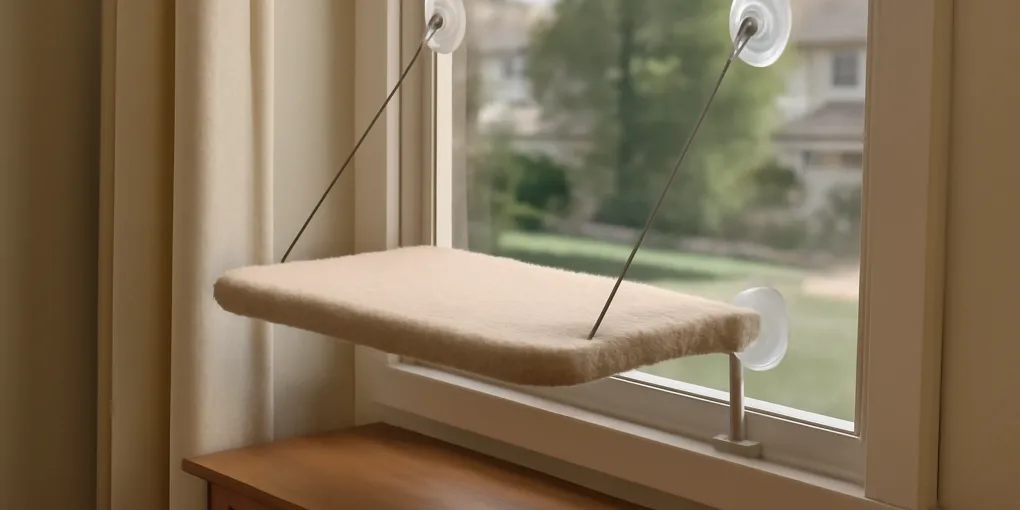
K&H EZ Mount style suction-cup window perch
★ Top pick- Best for: Renters with smooth glass who can inspect suction cups often
- No drilling
- Popular design
- Good sunny-window fit
- Suction cups need cleaning
- Not ideal for textured or cold drafty glass
Sill-mounted cat window perch with brackets
- Best for: Heavier cats or multi-cat homes where a mechanical support is safer
- More physical support
- Less dependent on suction
- Good for daily use
- Needs sill fit
- May require screws or clamps
Direct answer
A cat window perch is safest when the mount, weight limit, and landing path match the cat. Do not judge safety by whether the perch stays up empty. Test it with gradual load, inspect every cup or bracket, and remove blind cords before inviting the cat onto it.
If you want a no-drill option, Search Amazon for K&H EZ Mount window perch is the style to compare. For heavy cats or rough landings, Search Amazon for sill-mounted cat perch and prioritize mechanical support.
Quick picks by mounting situation
- Search Amazon for K&H EZ Mount window perch if the window glass is smooth, the cat is within the stated weight limit, and you can re-seat suction cups after cleaning or weather changes.
- Search Amazon for sill-mounted cat perch for heavier cats, hard landings, or homes where a bracket/clamp gives a better safety margin than suction alone.
How to judge whether a window perch is safe enough
| Factor | Weight | Score | Why it matters for a perch |
|---|---|---|---|
| Research | 30% | 8.0 | Cat enrichment guidance supports vertical space, but mounting safety is product-specific. |
| Evidence quality | 25% | 7.5 | The key evidence is manufacturer load limits plus repeated owner inspection. |
| Value | 20% | 8.0 | A good perch adds enrichment in a small home without buying a full cat tree. |
| User signals | 15% | 8.0 | Cup failure, cord hazards, and multi-cat crowding are the common problems. |
| Transparency | 10% | 8.5 | This is not set-and-forget furniture. It needs inspection. |
| Overall fit | 8.0/10 | Worth using when mounted conservatively and kept away from cord and heat hazards. |
Step 1: choose the safer window
Pick a window with smooth clean glass, a solid sill, and enough floor space for the cat to jump up and down without hitting furniture. Avoid windows above radiators, unstable shelves, sharp decor, or a narrow landing that makes the cat twist midair.
Remove blind-cord loops or tie them out of reach with a proper cord-safety device. A perch should not place a cat beside a dangling loop, especially if the cat bats at cords while watching birds.
Step 2: match mount style to cat weight
Suction-cup perches depend on clean glass, good cup condition, correct installation, and routine rechecking. They are best for lighter cats in windows that do not get extreme temperature swings. Bracketed or sill-mounted perches make more sense for heavier cats, seniors who land hard, or homes where two cats may compete for the same sunny spot.
Use the cat’s real weight, not a guess. If two cats may climb on together, use combined weight and leave a safety margin. A perch rated for exactly one cat’s weight is too close for a leaping landing.
Step 3: install and load-test before use
Clean the glass or sill as the manufacturer directs. Let suction cups fully seat, tighten brackets evenly, and check that fabric sleeves or cables are not twisted. Press down gradually with a hand, then add a bag or books lighter than the cat, then near the cat’s weight. Watch for sliding, creaking, cup edges lifting, or bracket movement.
Do not lure the cat up until the perch passes a still-load test and a gentle bounce test. If any cup lifts during the test, remove the perch, clean, and reinstall rather than pushing it back in place.
Step 4: introduce the cat calmly
Put a treat on the edge and let the cat approach from a stable chair, step, or cat tree. Do not lift a nervous cat onto a high perch. If the cat jumps down awkwardly, lower the setup or add a stable step.
Indoor enrichment works best when the cat controls access. For a broader setup, connect the perch to a cat enrichment station instead of making one window the only exciting place in the room.
Weekly inspection checklist
Once a week, check every suction cup edge, bracket, cable, screw, seam, and fabric sleeve. Reclean cups if dust or condensation collects. Look for claw holes, sagging fabric, stretched seams, or cracked plastic. Retire the perch if the frame flexes more than it did when new.
After a heat wave, cold snap, window cleaning, or a hard cat landing, inspect immediately. A perch can look fine from across the room while one cup is starting to peel.
Cat window perch FAQ
Is a window perch good for indoor cats?
Yes, it can add vertical space, sunlight, and outdoor viewing. It should complement play, scratching, and hiding options, not replace them.
Should I put a bird feeder outside the perch window?
Only if it does not cause frustration, window lunging, or unsafe wildlife contact. Keep screens secure and avoid setups that make the cat slam into glass.
What if my cat chews the cables or straps?
Remove the perch and choose a different design. A chewed support strap is not safe to repair with tape.
Can I use a perch on frosted or textured glass?
Suction cups may not seal well on textured surfaces. Use a sill-supported design or skip that window.
When to choose a cat tree instead
Skip a window perch if the window is high, drafty, cracked, above a heater, or crowded by blinds and cords. A floor-based cat tree beside the window is heavier and less elegant, but it may be safer for a large cat, an elderly cat, or a cat that launches at birds. The best enrichment product is the one that remains stable when the cat uses it at full speed.
A cat tree is also better when multiple cats compete for the same view. One narrow window hammock can turn into a pushing contest. If you still want a perch, install two separate resting spots at different heights so each cat has an exit.
Red flags after installation
Remove the perch if the fabric sags, the frame tilts, the cat lands with a thud, or any suction cup edge turns cloudy and loose. Also remove it if your cat chews a support cable, paws at the blind cord, or uses the perch to ram the window screen. Those are design-fit failures, not training quirks to ignore.
Keep a small calendar reminder for inspection. Window perches fail quietly when dust, condensation, heat, and repeated landings weaken the mount. A thirty-second check is easier than treating a fall injury.
Sources
- Ohio State Indoor Pet Initiative: Basic indoor cat needs
- International Cat Care: Making your home cat friendly
- HealthyChildren: Childproofing your home
Frequently Asked Questions
- They can be safe for the right glass and cat weight if installed exactly as directed and rechecked often, but bracketed perches are safer for heavier cats.
- Only if the combined weight is below the perch limit and both cats can use it without pushing, wrestling, or landing hard.
- Choose a low-risk window with secure glass, no blind-cord loop, no hot radiator, and a stable landing path.