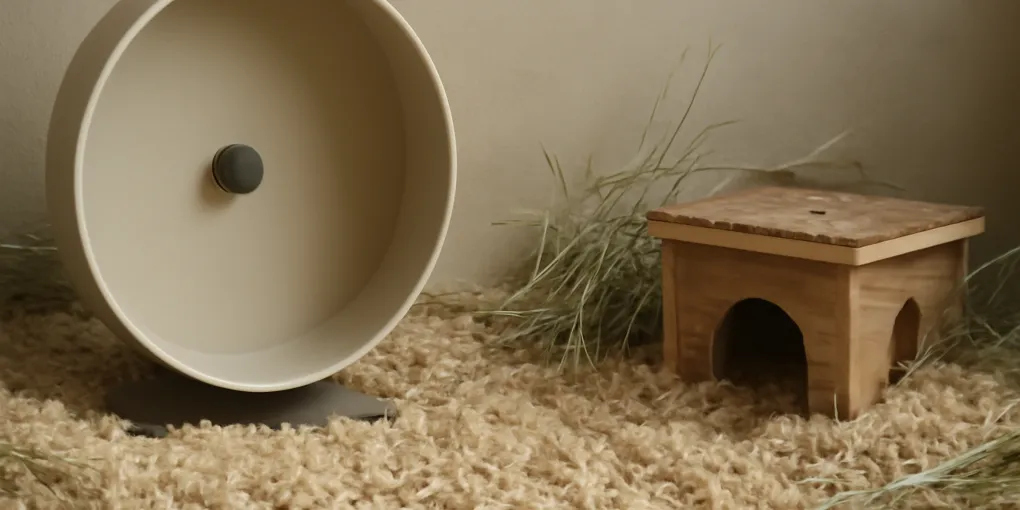
Best Hamster Wheels for Safe Running: Size, Surface, and Noise Checks
Buyer's GuideNiteangel Super-Silent Hamster Exercise Wheel
Best adjustable upright wheelBest fit: Dwarf sizes in 8-10 in; Syrian hamsters usually need 11-12 in
$25-$45 depending on size
Quick picks
| Product | Key Specs |
|---|---|
| See price on Amazon |
|
| See price on Amazon |
|
| See price on Amazon |
|
Product availability, certifications, and retailer details can change; check the current Amazon page before buying.
Hamsters run because roaming is part of their normal nightly behavior, not because a wheel is a cute cage accessory. A bad wheel can make that behavior harder: too small and the hamster arches its back; mesh or rungs can catch toes; a wobbly base can tip into bedding; and a wheel that cannot be cleaned becomes a urine and odor problem.
Use this best hamster wheel safe size product comparison as the buying shortlist, then match the sizes, materials, cleaning demands, and pet-safety caveats against the setup described below.
The safest shopping shortcut is this: buy the largest solid-surface upright wheel your enclosure can hold while letting the hamster run with a mostly level back. For many dwarf hamsters that means 8 to 10 inches. For Syrian hamsters, 11 to 12 inches is often the safer starting range. Individual body length and posture matter more than the label on the box.
Quick picks by enclosure and hamster size
- Best first check: choose a wheel diameter that keeps your hamster’s spine from curving upward during full-speed running.
- For most dwarf hamsters: a solid 8-10 inch wheel is a practical starting range if the running surface is smooth and the base is stable.
- For Syrian hamsters: start with 11-12 inches when the enclosure height allows it; many 8-inch wheels are too small once the animal stretches out.
- For shallow bin cages: measure from bedding surface to lid after bedding depth is added, not from the empty floor.
- Avoid: wire rungs, mesh tracks, novelty tiny wheels, and saucers that make the hamster run with a sideways bend.
Read our hamster sand bath setup if you are building a complete low-stress enclosure rather than buying one item at a time.
Wheel-selection checks for the buyer guide
This page is the product shortlist. If you only need the sizing logic, read the companion explainer: Do hamster wheels need to be 10 to 12 inches?. For buying, compare wheels on:
- Diameter for the actual animal: dwarf hamsters often start around 8-10 inches; Syrian hamsters commonly need 11-12 inches.
- Solid running surface: avoid wire rungs, mesh, and tiny novelty wheels.
- Enclosure fit: measure height after bedding is added so the wheel does not hit the lid or force bedding removal.
What makes a hamster wheel safe
A safe wheel has four visible traits. First, the running track is solid, not bars or mesh. Second, the wheel is large enough for a neutral running posture. Third, the base or mount stays stable when the hamster accelerates. Fourth, the wheel can be removed and washed without taking the entire habitat apart.
Size is the mistake that causes the most buyer regret. Product pages often use breed labels casually, and photos can make wheels look larger than they are. Before buying, measure your current wheel if you have one, measure enclosure height after bedding, and look for owner photos that show the wheel in a real tank or bin cage.
Best wheel styles by enclosure fit
Niteangel Super-Silent Hamster Exercise Wheel
This is the best general starting point when you want a quiet, adjustable, solid-track wheel and can choose the size carefully. The height-adjustable stand helps if bedding depth changes or if you want the wheel slightly above substrate. Choose the largest size that fits without forcing the hamster under the axle or into the lid.
- Best for: owners building a naturalistic enclosure with deep bedding.
- Caveat: a small Niteangel is still a small wheel; do not let the brand name substitute for diameter.
- Current options: Search Amazon for Niteangel Super-Silent hamster wheel
BUCATSTATE 11-Inch Hamster Wheel
The 11-inch class is a useful value range for many Syrian hamster homes because it is meaningfully larger than the small wheels bundled with starter cages. It works best in an enclosure with enough vertical clearance and a flat area where the base will not sink or tilt.
- Best for: Syrian hamster owners upgrading from a too-small starter wheel.
- Caveat: check the exact listing dimensions; some bundles use similar photos for different sizes.
- Current options: Search Amazon for BUCATSTATE 11-inch hamster wheel
Exotic Nutrition Silent Runner 12-Inch Wheel
The Silent Runner style is worth considering when you have a large enclosure and want a high-diameter enclosed-track wheel. The 12-inch size gives many Syrian hamsters more room to stretch, but it is bulky and must be cleaned well because the front ring and track can trap debris.
- Best for: large Syrian hamster enclosures with enough height and cleaning access.
- Caveat: confirm the wheel is suitable for hamsters rather than larger small mammals, and inspect openings for pinch points.
- Current options: Search Amazon for Exotic Nutrition Silent Runner 12-inch wheel
The size test after delivery
Put the wheel in the enclosure for a short supervised evening check. Watch from the side. The hamster should not look like a banana while running, and the head should not be forced sharply upward. If the animal repeatedly flies off, avoids the wheel, or seems to skid, the issue may be surface texture, wheel angle, or an unstable base rather than interest.
Do not judge fit from a single still photo. Hamsters stretch differently at full speed than when sniffing the track. If you are unsure, record a short side-view video and compare the back line during the fastest part of the run.
Fit checks by common cage layout
Glass tanks and front-opening terrariums usually make wheel placement easier because the base can sit on a firm corner and the wheel can be lifted out for cleaning. The tradeoff is height. Deep bedding is good for burrowing, but a 12-inch wheel sitting on top of six inches of substrate may hit the lid. In that layout, owners often create a stable low platform under the wheel while keeping the rest of the enclosure deep.
Make that platform wider than the wheel base so nightly digging cannot tip one stand leg into the bedding.
Bin cages need a different check. Plastic sides can flex when a heavy wheel leans into them, and lid mesh may sit lower than expected. Measure the inside height after the lid is clipped on. If you cut a raised mesh lid, make sure no sharp hardware sits near the wheel path.
Barred starter cages are where wheel problems show up fastest. Many are too shallow for deep bedding and too short for a Syrian-safe wheel. If the only wheel that fits is tiny, the cage is the limiting product, not the hamster. Upgrade the enclosure before spending money on another small accessory.
Red flags after a week
A safe wheel should look boring after the first few nights: regular use, no wobbling, no trapped bedding, and no new rub marks anywhere. Recheck if you see fur loss near the shoulders, repeated falling, frantic chewing at the stand, or a wheel that walks across the cage. Those signs can mean the wheel is undersized, unstable, too slick, or placed where bedding jams the track.
Noise is also information. A quiet bearing is convenient for people, but a sudden clicking or grinding sound can mean hair, bedding, or a cracked part is caught near the axle. Remove the wheel, inspect it by hand, and replace damaged pieces instead of adding oil or household lubricants where the hamster can contact them.
Cleaning and bedding placement
Place the wheel where bedding will not jam the stand or bury the lower rim. If your hamster urinates in the wheel, clean it frequently with pet-safe mild soap and rinse thoroughly. A wheel near the sand bath may stay cleaner than one beside a nest, but every hamster has different habits.
Avoid strong fragrances. Small mammals have sensitive respiratory systems, and scented cleaners can make an otherwise good wheel unpleasant. Dry the wheel fully before returning it so bedding does not cake onto damp plastic.
FAQ
Is a 6.5-inch wheel safe for a Syrian hamster?
Usually no. A 6.5-inch wheel is too small for many adult Syrian hamsters because the back curves during running. Look at the animal’s posture, not only the package label.
Are flying saucer wheels better than upright wheels?
Not as a default. Saucers can be useful in limited situations, but many make the hamster run with a sideways curve and can take up more floor space. A correctly sized upright solid wheel is the better first choice.
Should I buy a wooden hamster wheel?
Only if you accept more cleaning work. Wood can absorb urine and odor. If your hamster urinates on the wheel, smooth plastic is usually easier to sanitize.
Why is my hamster chewing the wheel?
Chewing can mean boredom, tooth wear behavior, food odor, stress, or poor enclosure enrichment. Check bedding depth, chew materials, hiding places, and diet before assuming the wheel itself is the only problem.
Sources
- Merck Veterinary Manual. Overview of hamsters and small-rodent husbandry: https://www.merckvetmanual.com/all-other-pets/hamsters/disorders-and-diseases-of-hamsters
- RSPCA. Hamster environment and enrichment guidance: https://www.rspca.org.uk/adviceandwelfare/pets/rodents/hamsters/environment
- PDSA. The ideal home for your hamster: https://www.pdsa.org.uk/pet-help-and-advice/looking-after-your-pet/small-pets/the-ideal-home-for-your-hamster