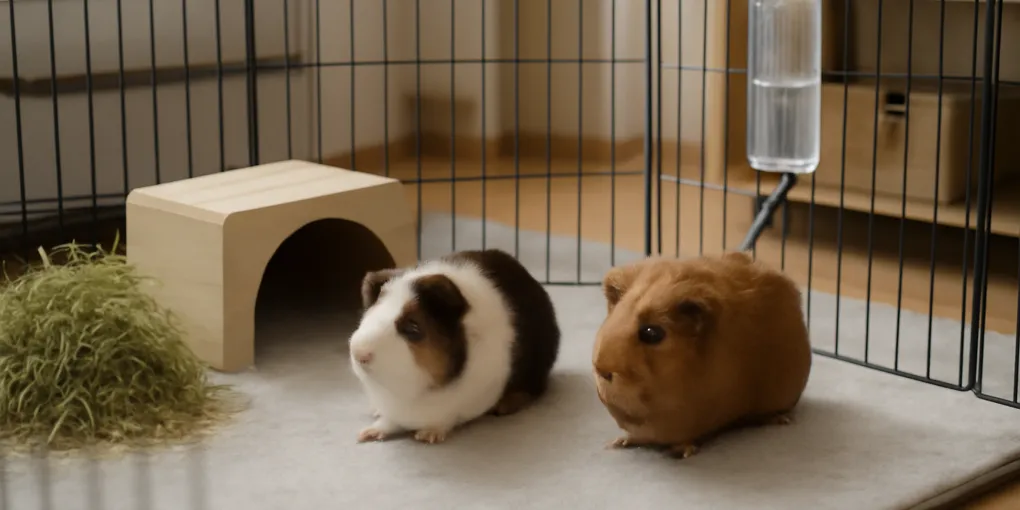
Guinea Pig Floor Time Playpen Setup: Safer Exercise Without Escape Routes
ProtocolQuick picks
Modular small-pet playpen panels
★ Top pick Best boundary- Note: Choose panels with gaps too small for heads to wedge through and enough height that the pen stays upright.
Washable waterproof fleece playpen liner
Best floor protection- Note: A grippy, absorbent liner protects floors and gives better traction than slick tile or hardwood.
Two-exit guinea pig hideout tunnel
Best stress reducer- Note: Multiple exits reduce blocking when two pigs share the same floor-time setup.
Direct answer
A safe guinea pig floor-time setup is a contained exercise area, not a random open room. Use a secure playpen, a non-slip washable liner, at least one hide per pig, hay, water, and a five-minute hazard check before the guinea pigs leave their cage. The goal is movement and foraging without escape routes, blocked exits, chewed cords, or slippery footing.
RSPCA guinea pig housing guidance stresses space, hiding places, companionship, and protection from hazards (RSPCA guinea pig environment). RSPCA behavior guidance also notes that guinea pigs are prey animals that need safe places to retreat (RSPCA guinea pig behaviour). Floor time should support those needs instead of turning exercise into a chase around the living room.
Quick picks for a floor-time station
- Use Search Amazon for guinea pig playpen panels when you need a repeatable boundary that keeps pigs away from cords, furniture gaps, and other pets.
- Add a Search Amazon for washable guinea pig playpen liners when the floor is slick, cold, absorbent, or hard to clean after urine spots.
- Put in Search Amazon for two-exit guinea pig hideouts so one pig cannot trap another inside a single-door shelter.
Step 1: choose the room before the pen
Pick a room you can close off from dogs, cats, toddlers, open doors, and heavy foot traffic. Avoid kitchens, laundry rooms, garages, and areas with cleaning chemicals or dropped food. A quiet living room corner or spare room usually works better than the center of a busy hallway.
Check temperature and drafts. Guinea pigs can overheat in direct sun and can become chilled on cold floors. Do not place the playpen against a heating vent, radiator, fireplace, sunny glass door, or exterior draft. If the floor feels slippery under your sock, it is probably poor footing for small paws.
Step 2: build a boundary that cannot fold or trap
A guinea pig playpen should be stable enough that a running pig, curious child, or nudged hideout does not collapse it. Modular panels are useful because you can change the shape, but inspect the wire spacing. Heads should not fit through gaps, and sharp connector ends should not point into the pen.
Bigger is better only if the area remains safe. A huge open pen with no hides can make prey animals freeze along the edges. A moderate rectangle with cover, hay, and clear paths often gets more useful movement than a bare oversized circle. For pairs, leave enough width for both pigs to pass without shoulder-checking each other.
Step 3: protect the floor and the feet
Use a washable liner, fleece over absorbent pads, or another grippy surface that lies flat. Slick hardwood, laminate, and tile can make pigs scramble, strain, or refuse to move. Towels can work for short sessions if they do not bunch up into trip ridges.
Avoid loose plastic sheet as the top layer. It is chewable, slippery, and noisy. If you need waterproof protection, put it under fleece or a fabric liner where teeth cannot easily grab it. Check for threads, holes, or frayed edges after washing because chewing can turn a liner into an ingestion hazard.
Step 4: add hides before toys
Guinea pigs need cover first. Put at least one hide per pig in the pen, and choose two-exit shelters when possible. Single-door houses can become conflict points if one pig blocks the entrance. Cardboard tunnels, fleece forests, bendable bridges, and low hideouts all work if they are clean, stable, and not treated with unsafe finishes.
Place hides around the pen rather than stacking everything in one corner. That creates short protected routes for exploring. A pig that dashes from hide to hay to tunnel is still exercising; it does not need to run laps in the open to benefit.
Step 5: make hay and water part of the setup
Floor time goes better when the pen has a small hay pile or hay box. Hay encourages normal foraging, keeps the session familiar, and gives shy pigs a reason to leave the first hide. Keep hay away from wet spots and remove it after the session if it has been soiled.
Water matters for longer sessions. A heavy low bowl can work if your pigs do not tip it, while a bottle may need a stand or panel mount. Test the bottle angle before placing pigs in the pen. A bottle that leaks onto the liner can create a wet, cold patch; a bottle mounted too high is not useful.
Step 6: remove the hazards guinea pigs actually find
Before every session, get down to floor level and look for cords, charger cables, curtain hems, plant leaves, dropped snacks, staples, rubber bands, plastic bits, carpet fringe, and furniture gaps. Guinea pigs chew first and ask questions later. Move the hazard or move the pen; do not assume supervision alone will stop a fast nibble.
Block access under sofas, recliners, appliances, and low cabinets. Recliners are especially dangerous because moving parts can crush a hidden animal. If floor time happens near furniture, the pen boundary should keep pigs away from the furniture instead of relying on someone to notice where they ran.
Step 7: supervise without chasing
Sit nearby and let the pigs explore. Do not repeatedly pick them up, grab them from hides, or herd them around for exercise. Chasing teaches that floor time is unsafe. Use gentle food lures, familiar tunnels, or a carrier to move pigs back to the cage when the session ends.
Watch the pair dynamic. Rumblestrutting, mild chasing, and brief nose-offs can happen, but persistent biting, cornering, teeth chattering, or one pig blocking all resources means the layout needs more space, more hides, or separate sessions. Merck’s guinea pig overview notes that guinea pigs are social animals with specific housing and handling needs (Merck Veterinary Manual guinea pigs). Floor time should not force a bullied pig into a smaller conflict zone than the cage.
Reader checklist before the first session
- The pen panels are stable, gap-safe, and tall enough for the pigs using them.
- The floor has a flat, non-slip liner with no loose plastic top layer.
- There is at least one hide per pig, preferably with two exits.
- Hay is available, and water is available for longer sessions.
- Other pets and children are outside the room or behind a closed door.
- Cords, houseplants, food scraps, furniture gaps, vents, and recliners are blocked.
- The return plan uses a tunnel, carrier, or calm lure instead of chasing.
Guinea pig floor time FAQ
Do guinea pigs need floor time if their cage is large?
A large, enriched cage reduces the need for long extra sessions, but many guinea pigs still benefit from a safe change of space. Treat floor time as supervised enrichment, not compensation for an undersized cage.
What should I do if my guinea pig just hides?
Start smaller and quieter. Add hay near the hide entrance, sit farther away, and keep the session short. Some pigs need repeated calm sessions before they explore. Do not remove all hides to force movement.
Can I use an outdoor playpen for floor time?
Outdoor time adds weather, predators, parasites, pesticides, escape gaps, and unsafe plants. This article is about indoor floor time. Use outdoor pens only with species-safe grass, shade, predator protection, and constant supervision.
How do I clean the playpen after floor time?
Shake hay and droppings into the trash, spot-clean urine, and wash liners before odor builds. Wipe plastic panels if they are soiled. Let everything dry before storage so mold and mildew do not develop.
Related Pet Science Review guides
If the floor-time area doubles as a feeding or bedding refresh zone, pair this setup with our guinea pig fleece bedding setup and guinea pig hay rack setup guides. Those pieces cover daily cage materials; this one keeps the temporary exercise space safer.
Frequently Asked Questions
- Start with short supervised sessions and extend only if the pigs are eating, exploring, and moving calmly. Stop if they freeze, fight, overheat, or keep trying to escape.
- Only in a fully pig-proofed room under supervision. Most homes need a pen because cords, baseboards, vents, furniture gaps, pets, and dropped objects create real hazards.