Guinea Pig Fleece Liner Laundry Setup: Absorbency, Hay, Drying, and Odor
ProtocolQuick picks
| Product | Key Specs |
|---|---|
| See price on Amazon |
|
| See price on Amazon |
|
Product availability, certifications, and retailer details can change; check the current Amazon page before buying.
Fleece liners can make a guinea pig enclosure easier to reset, but they only work when liquid passes through the top layer into something absorbent below. A liner that feels dry on top but is saturated underneath still needs changing. A liner that smells strongly after a quick sweep is not asking for perfume; it is telling you that urine, wet hay, or a poorly dried layer is still in the system.
Start with a washable fleece liner sized for the enclosure; See price on Amazon. Add reusable absorbent pads where the group drinks, sleeps, or carries hay; See price on Amazon. This is a maintenance article, not a claim that fleece is right for every household. If you cannot keep a spare liner clean and completely dry, paper bedding may be the more dependable option.
Build the layers from dry floor upward
The cage base must be clean and dry. Lay the absorbent layer flat so there are no loose folds or seams where a foot can catch. Put the fleece liner on top with the smooth side facing up. If the liner slides, use a fitted size rather than improvised clips or exposed fasteners.
Before first use, wash a new liner repeatedly until water moves through the top rather than beading on it. A simple test is to place a spoonful of water in one corner: it should pass through promptly without leaving a wide puddle. Do that test away from the guinea pigs, then dry the liner before installation.
Make the hay zone easy to remove every day
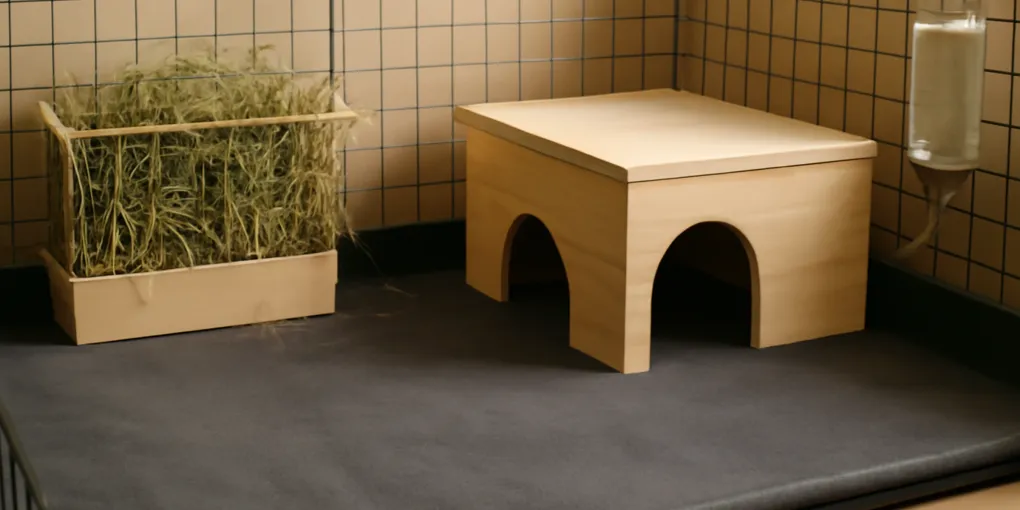
Most odor problems begin where hay, urine, and food collect together. Give hay its own tray or bounded area so loose strands do not become a damp carpet across the liner. Sweep or hand-pick wet hay daily. A guinea pig hay tray can reduce how much hay is ground into the sleeping surface; See price on Amazon, but it needs the same daily inspection.
Put a small washable pad beneath the hay or water area if that is where the group urinates. Replacing one pad between full laundry days is less disruptive than leaving a wet zone for everyone to walk through. Do not use scented sprays, essential oils, or heavily perfumed detergent to mask the smell; guinea pigs live close to the substrate and groom their feet.
Wash for function, not fragrance
Shake or brush off hay, feces, and loose hair outdoors before loading the washer. Wash the liner according to its care label with a fragrance-free detergent. Avoid fabric softener, dryer sheets, and scent boosters because they can coat fibers and interfere with wicking. An extra rinse can help if detergent remains noticeable.
Dry the liner completely. A partly damp liner can cool the floor and make odor return quickly even when it looks clean. If the liner has a waterproof backing, use the manufacturer instructions for heat; overheating can damage laminates. Keep a spare set so the enclosure is never waiting on a damp load.
The RSPCA notes that guinea pigs need clean, dry accommodation and a suitable environment; see its guinea pig housing guidance. Their feet and underside are the practical test: a clean enclosure should not leave them sitting on wet bedding.
Read odor as a cleaning signal
Ammonia-like odor, a wet top surface, stained backing, or clumped hay means the change interval is too long or the absorbent layer is insufficient. Increase spot cleaning first, then increase the size or number of pads in the wet zones. If every section is saturated, improve enclosure space and change the whole liner more often.
Watch the guinea pigs as you reset. Normal eating, hay access, dry resting zones, and clear paths to water matter more than making the enclosure look staged. Strong urine odor alongside changed drinking, straining, blood, reduced appetite, pain sounds, or lethargy is a reason to call an exotics veterinarian, not simply wash more often.
A practical two-liner rotation
For a pair or small group, a two-liner rotation is usually the minimum workable system: one liner is in the enclosure while the other is fully washed and dried. Add a third only if laundry cannot be completed between scheduled changes or if a medical or weather-related delay can leave fabric damp. Store the clean liner in a dry closed bin, not beside hay or litter, so it starts without dust and moisture.
On change day, take a quick look at the backing and the cage base before installing the fresh layer. If the backing is wet over a broad area, increase absorbency or shorten the interval. If only the hay corner is wet, move the pad or tray rather than replacing the whole enclosure layout. Those observations make fleece maintenance specific to the cage instead of a fixed calendar rule.
Guinea pig fleece liner FAQ
Should fleece feel wet after the guinea pigs use it?
The top should usually feel dry after liquid wicks through. Any persistent wetness where guinea pigs rest or eat means the liner, absorbent layer, or change schedule needs adjustment.
Can I line the entire cage with pee pads?
Only if the pads lie flat, stay dry enough, and have no chewable or loose edges. A fitted liner plus targeted pads is often easier to inspect and replace.
How do I remove hay before washing fleece?
Shake it out outdoors, then use a dedicated brush or handheld vacuum. Removing hay before the washer protects the machine drain and makes the wash more effective.
Sources
- RSPCA, guinea pig environment guidance: https://www.rspca.org.uk/adviceandwelfare/pets/rodents/guineapigs/environment
- VCA Animal Hospitals, guinea pig feeding guidance: https://vcahospitals.com/know-your-pet/guinea-pigs-feeding
Frequently Asked Questions
- Many fleece surfaces need several washes before they wick reliably. Test a small wet spot before putting it in the enclosure and keep an absorbent layer underneath.
- Avoid fragrance additives and fabric softener. They can reduce wicking and leave residue where guinea pigs walk, eat hay, and groom.
- Remove wet hay and spot-clean high-use areas daily. Replace the full liner when it is damp, smells after spot cleaning, or no longer keeps the surface dry; the interval depends on enclosure size, number of guinea pigs, and absorbency.