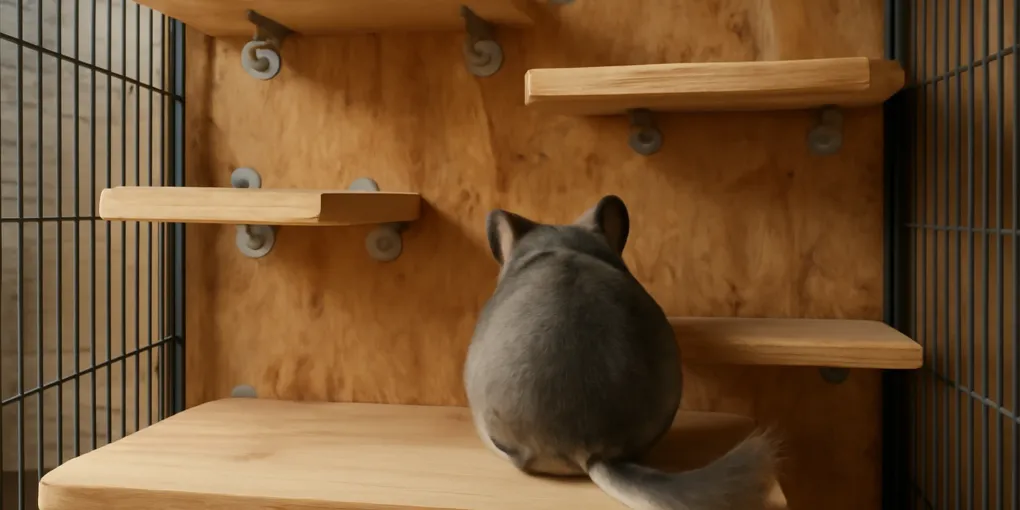
Best Chinchilla Cage Ledges: Safer Spacing, Surfaces, and Mounting Hardware
Buyer's GuideQuality Cage Crafters kiln-dried pine chinchilla ledges
Best modular starting pointBest for: Building a staggered route with several short jumps
Quick picks
| Product | Key Specs |
|---|---|
| See price on Amazon |
|
| See price on Amazon |
|
| See price on Amazon |
|
Product availability, certifications, and retailer details can change; check the current Amazon page before buying.
Quick Picks by Job
The best chinchilla cage ledges create a route, not a climbing wall. Start by checking current Quality Cage Crafters chinchilla ledges on Amazon, compare their listed dimensions with a current Quality Cage Crafters 12 x 6 shelf search on Amazon, and use the cage layout to interrupt long falls.
Buy by dimensions and mounting design. A 12-piece bundle can still be a poor value if every piece is too shallow, the bolts are too short for your bars, or the package does not identify the wood and finish.
| Cage job | Best shape | Key dimension to confirm | Main failure to avoid |
|---|---|---|---|
| Short hop | Medium-depth rectangular ledge | Enough depth for all four feet | Tiny perch that forces a quick rebound |
| Direction change | Wide platform | Space to turn without backing off an edge | Corner with no landing below |
| Rest area | Wide solid shelf | Full-body support | Narrow shelf beside a long open drop |
| Lower clean-up zone | Solid metal or sealed-by-design removable tray | Folded edge and secure brackets | Exposed wire grid or sharp edge |
| Chewing outlet | Replaceable untreated wood ledge | Known wood species and no finish | Painted, glued, aromatic, or unknown wood |
The Three Shopping Checks That Matter Most
1. The maker identifies the material
“Natural wood” is not specific enough. Ask what species the ledge uses, whether it is kiln dried, and whether any stain, paint, glue, preservative, fragrance, or sealant touches the chewing surface. Chinchillas investigate with their teeth, so a decorative finish is not merely cosmetic.
Kiln-dried pine is a common bounded search target when the seller clearly identifies it as untreated. Apple and some other accepted woods may also appear in cage accessories, but species identification and processing still matter. Do not use plywood, particleboard, MDF, pressure-treated lumber, aromatic cedar, or mystery scraps.
2. The ledge supports a landing, not just a photo
A chinchilla should be able to place all four feet on a routine landing. A broader platform is especially important where the animal turns, waits for food, or exits a hammock or hide.
Measure the interior cage width and bar spacing before ordering. Product photos often make platforms look deeper than they are. Record the actual depth and width from the listing, then sketch the route on paper.
3. The hardware fits your cage
Look for a bolt, metal washer, and wing nut or locking nut arrangement that spreads pressure across the bars. Two mounting points help keep wide platforms from rotating. Bolt length must account for bar thickness and spacing without leaving a hazardous projection.
After installation, press down and sideways with more force than the chinchilla’s landing is likely to create. The platform should not rotate, sag, scrape a sharp edge against the bars, or expose threads where the animal moves.
Wood Ledges vs Metal Platforms
Untreated wood gives useful grip and can support normal chewing, but it absorbs urine and eventually needs replacement. Metal is easier to wipe and does not disappear under heavy chewing, but a slick or wire-grid surface can be a poor landing.
A mixed layout often works best:
- replaceable wood ledges for the main staggered route;
- one broad solid platform for resting;
- a wipe-clean lower shelf near a litter area;
- no long uncovered vertical shaft through the cage.
Named shopping paths and fit limits
Quality Cage Crafters is the first search target for replaceable kiln-dried pine ledges. Confirm the current listing still identifies the wood, dimensions, and included hardware because marketplace bundles can change. Its wider 12 x 6 inch shelf is the named rest-platform comparison, but the product name alone does not prove that every cage bar pattern or individual chinchilla is a safe fit. Measure twice, including washer clearance and the usable interior depth.
A Bass Equipment metal pan is a different tool: it can create a broad wipe-clean lower level in compatible Critter Nation-style cages. It is not a substitute for the wood hop route, and compatibility depends on the exact cage model and pan dimensions. Check current Bass Equipment pan listings on Amazon, then confirm fit with the manufacturer’s specifications before ordering.
Reject any marketplace listing that merges reviews across different sizes or species without making the selected variant clear. Save the dimensions you ordered so a future replacement does not accidentally create a narrower landing.
Do not coat wood with a household sealant to make it washable. If urine penetrates the ledge and odor remains after surface cleaning and complete drying, replace it.
Build a Route Before You Tighten the Hardware
Lay the ledges on the floor in their planned order. The route should let the chinchilla move up and down through short, visible transitions. Avoid placing every ledge on alternating opposite walls if that creates repeated long leaps over open space.
Use broad platforms under:
- cage doors where the animal pauses;
- food or water access points;
- sharp route turns;
- hammock or hide exits;
- any area where two ledges overlap poorly;
- the lower edge of a taller section.
A ledge directly above another can become soiled. Offset surfaces enough to reduce contamination while still interrupting a fall.
Fall-Risk Layout Checklist
Before introducing the animal, view the cage from the front, side, and top.
- Can the chinchilla fall from the top to the bottom without hitting a broad platform?
- Does each common jump have a landing deep enough for four feet?
- Can a ledge rotate if landed on near one end?
- Are washers wider than the gaps they span?
- Do bolts, sharp edges, or threads project into a travel path?
- Is any ledge directly over a food bowl or water source?
- Can hay, fur, or waste become trapped behind a platform?
- Is there a low route for an older or recovering animal?
If the answer reveals a long drop, add a broad shelf or change the route. Do not rely on the chinchilla’s normal agility as the only safety control.
Fit by Chinchilla, Not Just Cage Size
Young, active adult
Use multiple short jumps and broad turn platforms. Activity does not justify large gaps. Fast animals can misjudge a landing or collide with a cage mate.
Older chinchilla
Lower the route, shorten jumps, and increase platform depth. Watch for hesitation, repeated missed landings, changed posture, less jumping, reduced appetite, or weight change. Those signs deserve veterinary attention, not only a cage remodel.
Chinchillas housed together
Create more than one route to food, water, hides, and resting areas. A single narrow ledge can become a blocking point. Observe whether one animal guards a platform or forces the other into risky jumps.
Chinchilla with a foot or mobility problem
Ask an exotics veterinarian about substrate, platform height, movement limits, and wound protection. Do not add abrasive surfaces or improvise bandages based on a product listing.
Cleaning and Replacement
Spot-clean dry debris daily. Wipe metal surfaces with a product and method appropriate for the cage, then rinse and dry as directed. For wood, remove surface debris and allow damp areas to dry completely outside the cage when possible.
Replace a ledge when it has:
- a split that can catch a toe;
- a loose bolt hole;
- a sharp chewed edge;
- exposed glue or unknown inner material;
- persistent urine odor;
- dark moisture damage;
- hardware corrosion;
- enough chewing loss that four-foot landings are no longer secure.
Keep one spare ledge in the same dimensions as the busiest landing. That lets you replace damage without leaving a gap in the route.
Recheck every mounting point after the first week, then during routine cage cleaning. Check nuts from outside the cage as well. A washer that shifts or a platform that begins rotating needs correction before the route is used again.
What Not to Buy
Skip painted rainbow ledges unless the maker provides a clear, species-appropriate material and coating statement. Skip bundles that omit dimensions. Skip tiny decorative steps as the only route. Skip exposed wire shelves, loose fabric sleeves, sandpaper covers, and any platform that mounts with one small hook and rotates under load.
Also skip DIY lumber of unknown species or treatment history. Pallet wood and construction scraps may contain preservatives, contamination, glue, or fasteners that are not visible at first inspection.
Chinchilla Ledge FAQ
How many ledges does a chinchilla cage need?
The correct count depends on cage height and platform size. Buy enough to create a continuous staggered route and interrupt long falls, not enough to cover every wall with tiny steps.
Are lava ledges a replacement for wood platforms?
A small mineral ledge may add texture or chewing interest, but it is usually too small to serve as the main landing and rest system. Build the route with full-foot platforms first.
Can I place a ledge above the water bottle?
Avoid it. Waste and wood debris can contaminate the nozzle or bottle area, and a leak can soak the ledge.
Sources
- Merck Veterinary Manual, Management of Chinchillas: https://www.merckvetmanual.com/exotic-and-laboratory-animals/rodents/chinchillas
- RSPCA, Creating a Good Home for Chinchillas: https://www.rspca.org.uk/adviceandwelfare/pets/rodents/chinchillas/environment
- PDSA, The Ideal Home for Chinchillas: https://www.pdsa.org.uk/pet-help-and-advice/looking-after-your-pet/small-pets/the-ideal-home-for-chinchillas
Frequently Asked Questions
- Use untreated, properly dried wood from a species accepted for chinchilla use, with no paint, stain, glue exposure, fragrance, or preservative. Product labels can be incomplete, so confirm the exact wood and finish with the maker.
- There is no single safe number for every animal. Build short staggered routes, place broad landings under direction changes, and prevent an unobstructed fall through the full cage height. Age, vision, mobility, and cage dimensions change the layout.
- Fabric can trap urine, hide chewing damage, and create loose threads. Use solid cleanable surfaces and remove any cover that becomes wet, frayed, or chewed.