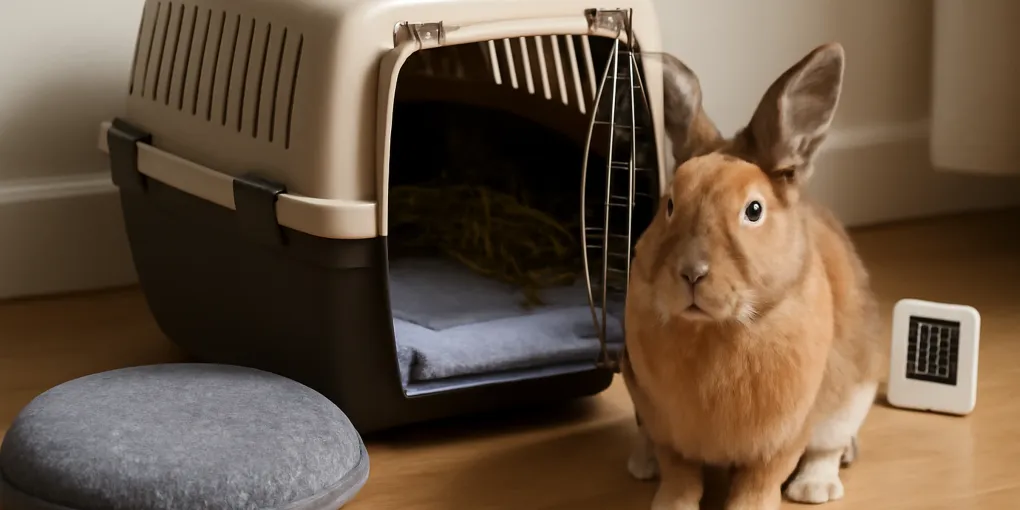
SnuggleSafe Microwave Heat Pad Review for Rabbits and Small Pets
ReviewSnuggleSafe microwave heat pad
Best cord-free heat sourceBest for: Cord-free supplemental warmth in carriers or supervised cool-room setups
$25-$40
Quick picks
| Product | Key Specs |
|---|---|
| See price on Amazon |
|
| See price on Amazon |
|
| See price on Amazon |
|
Product availability, certifications, and retailer details can change; check the current Amazon page before buying.
SnuggleSafe microwave heat pad review for rabbits and small pets
The SnuggleSafe microwave heat pad is useful because it is cord-free. That matters around rabbits, guinea pigs, ferrets, and carriers where electrical cords can be chewed or tangled. It is not useful because it is magically safe. The safety comes from exact heating, a cover, room-temperature judgment, and giving the animal a cooler place to move.
The product is a hard disc that is heated in a microwave, covered, and used as supplemental warmth. The manufacturer describes it as a microwave heating pad intended to provide hours of warmth when used as directed (SnuggleSafe). For rabbits specifically, RSPCA housing guidance emphasizes dry, comfortable shelter and protection from weather extremes rather than forced heat in a confined space (RSPCA).
If you are building emergency supplies, pair this review with our rabbit emergency kit setup protocol. If the main issue is everyday habitat, fix hay, water, hiding, and flooring before buying warming accessories.
Quick verdict
Buy it if you need a cord-free warmth source for a carrier, supervised cool room, or short-term comfort station and you are willing to follow the microwave chart every time. Skip it if you want unattended heat, a way to warm an outdoor hutch without weatherproof housing, or treatment for a sick animal.
- Search Amazon for SnuggleSafe microwave heat pads for the main disc.
- Search Amazon for SnuggleSafe heat pad covers if you need washable spares.
- Search Amazon for ThermoPro TP50 room thermometers to stop guessing at room or carrier temperature.
- Search Amazon for Kaytee Come Along small animal carrier if the use case is vet-trip transport.
What it does well
The big advantage is no cord inside the animal’s space. Many small pets chew, dig, rearrange bedding, or panic in a carrier. A corded heating pad can become a chew hazard or a setup mistake if routed through bars. A microwave disc avoids that one problem.
The hard shape also makes temperature checks easier than with a crumpled hot-water bottle. You can cover it, place it under part of the bedding, and leave a clear escape zone. In a carrier, it can create a warm side and a neutral side.
It is especially practical for short situations: pre-warming a carrier before a winter vet trip, supporting a supervised recovery space after your veterinarian has given instructions, or adding warmth during a brief power outage when the room is cool but not dangerously cold.
Where it can go wrong
Microwaves vary. Heating too long can make a surface too hot. Heating unevenly can create hot spots. A cover can slip. A rabbit can dig bedding away and sit directly on the disc. A guinea pig can chew the cover. A ferret can drag or wedge the pad where you did not intend it.
The other risk is false reassurance. A cold, limp, bloated, painful, or non-eating small pet needs veterinary help. Rabbits and guinea pigs can decline quickly when appetite or droppings change. Merck’s rabbit management guidance highlights diet, housing, sanitation, and attentive care as core management issues, and appetite changes should not be handled as a shopping problem (Merck Veterinary Manual).
Safe-use checklist
- Read the current heating chart for your microwave wattage.
- Heat only for the specified time.
- Shake or rotate only if the instructions say to.
- Put the pad inside its cover before animal contact.
- Test the covered surface against your inner wrist.
- Place it under only part of the resting area.
- Confirm the pet can move fully away.
- Inspect for chew marks after use.
- Clean or replace the cover when soiled.
- Stop using it if the animal guards, chews, overheats, or cannot move normally.
Do not use the pad under a pet that cannot reposition. Do not put it in a sealed carrier without temperature checks. Do not combine it with multiple other heat sources unless a veterinarian gives a specific plan.
Best use cases by pet
For rabbits, the strongest use case is transport or a supervised indoor area, not permanent outdoor heating. Rabbits need dry bedding, wind protection, space, hay, water, and safe housing. A heat pad cannot fix a damp hutch or a poor winter shelter.
For guinea pigs, use the same partial-area rule. They need a cooler zone and should not be trapped on warmth by cage mates, hideouts, or high-sided bedding.
For ferrets, chewing and dragging are the main concerns. Use the pad only when you can supervise behavior and remove it if the cover becomes a toy.
For cats or small dogs, a microwave pad can be convenient in a bed, but mobility and overheating still matter. Senior animals that cannot move away need a veterinarian-approved warming plan.
SnuggleSafe microwave heat pad FAQ
How long does it stay warm?
The manufacturer markets it as providing hours of warmth, but the useful window depends on room temperature, cover, bedding, and how it is used. Check the actual setup rather than assuming the maximum claim.
Can I put it under the whole carrier floor?
No. Cover only part of the floor so the animal can choose warmth or move off it. Choice is a safety feature.
Is a hot-water bottle better?
Usually not for chewers or carriers. Hot-water bottles can leak, cool faster, and create soft chewable edges. A hard microwave disc is simpler, but only if heated correctly.
Bottom line
The SnuggleSafe microwave heat pad is a useful cord-free warmth tool for prepared owners, especially for carriers and supervised cool-room support. It is not a medical device, not an unattended outdoor-hutch solution, and not safe unless the animal can move away from it.
Sources
- SnuggleSafe. “Microwave Heatpad.” https://snugglesafe.com/products/snugglesafe-microwave-heatpad
- RSPCA. “Creating a good home for rabbits.” https://www.rspca.org.uk/adviceandwelfare/pets/rabbits/environment
- Merck Veterinary Manual. “Management of Rabbits.” https://www.merckvetmanual.com/exotic-and-laboratory-animals/rabbits/management-of-rabbits
Frequently Asked Questions
- It can be useful when heated exactly as directed, fully covered, and placed so the rabbit can move away. It is not safe as forced heat or a substitute for veterinary care.
- Some pets chew covers or hard edges. Inspect before and after use, use a cover, and remove the pad if chewing starts.
- Call a veterinarian urgently if a small pet is cold, weak, not eating, bloated, or producing abnormal droppings. Supplemental warmth may be part of transport, not home treatment.