Leopard Gecko Humid Hide Cleaning: Mold, Moisture, and a Safe Reset
ProtocolQuick picks
| Product | Key Specs |
|---|---|
| See price on Amazon |
|
| See price on Amazon |
|
Product availability, certifications, and retailer details can change; check the current Amazon page before buying.
A leopard gecko humid hide is a small, enclosed retreat with damp—not saturated—substrate. Its job is narrow: provide a stable local pocket that can help with normal shedding. It is not a substitute for a sound enclosure gradient, a correctly controlled heat source, or a response plan for stuck shed around toes and eyes.
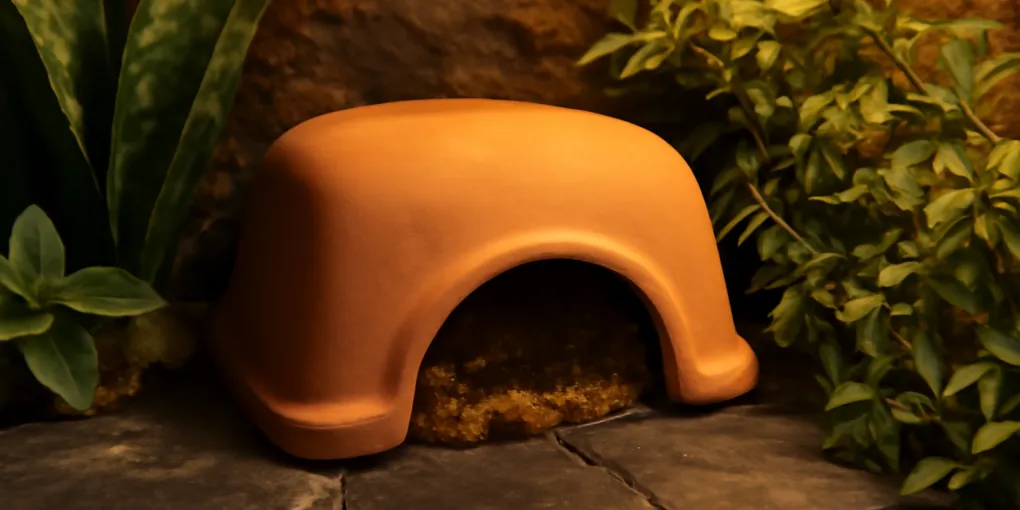
For most adult leopard geckos, start with a low, opaque hide that lets the animal enter and turn around without rubbing its spine. See the current price for a humid hide cave; See price on Amazon. Choose by usable floor area and entrance shape rather than outside dimensions alone. Fill it with a light layer of sphagnum moss; See price on Amazon after confirming it has been rinsed and squeezed until it is moist but cannot drip.
Choose a hide that is dark, stable, and easy to inspect
A suitable humid hide has one smooth entrance, a roof that will not collapse, and enough floor space for the gecko to rest fully inside. A clear plastic box can work only if its edges are made safe, ventilation is appropriate, and it cannot trap the animal; a purpose-made cave avoids many sharp-edge and lid problems. Avoid decorative resin hides with narrow slots, rough seams, or a top that cannot be lifted for cleaning.
The entrance should be low enough for routine access but not so large that the hide loses its sheltered feel. Watch the gecko use it before assuming the size is right. Backing out repeatedly, rubbing the hips at the opening, or refusing the hide can mean the entrance or footprint is wrong.
Use moisture that does not create a swamp
Long-fiber sphagnum moss is common because it can hold moisture while remaining loose. Paper towel is easier to monitor and may be the safer temporary choice for a gecko that mouths substrate. Neither material should be packed so tightly that it stays cold, dirty, or difficult to replace.
Wet moss is not better moss. After soaking, squeeze it firmly over the sink. The finished substrate should feel cool and damp in the hand, with no standing water at the bottom of the hide. If condensation beads on the walls, the substrate smells earthy or sour, or the gecko comes out with wet belly scales, remove it and reset with clean material.
Veterinary guidance on reptile shedding stresses that incomplete sheds can have husbandry and health causes; do not pull shed from toes, tail tips, or eyelids at home. The Association of Reptile and Amphibian Veterinarians has a find-a-vet directory for a reptile-experienced examination when shed is retained or the gecko is unwell.
Put the hide where it stays usable
Place the humid hide around the middle or cool side of the enclosure, away from direct lamp radiation and away from the water dish. A hide pressed against a heat source may dry within hours, while one under a misting outlet can become wet enough to foul quickly. Confirm the local surface and air conditions with the same independent checks used for the rest of the enclosure; a room reading does not prove the hide is safe.
The humid hide is one choice within a full setup. Your gecko should still have a separate warm hide, a separate cool hide, drinking water, and a gradient appropriate to its species and life stage. For heat-control details, see our leopard gecko heat-mat thermostat protocol.
Check it on a schedule, especially before a shed
Inspect the hide daily during a shed and at least several times each week otherwise. Lift the roof rather than poking through the entrance. Look for feces, urates, uneaten insects, mold, mites, and compressed wet spots. Replace the substrate immediately when soiled. Wash and dry the hide between refills using a reptile-safe cleaning approach, then allow it to cool fully before returning it.
A gecko may use the hide more often before shedding and ignore it at other times. That pattern can be normal. Constant hiding, appetite loss, weight loss, wheezing, loose stool, swelling, or a repeated shedding problem deserves veterinary assessment rather than another change of moss.
Common setup errors
- Placing the hide under the heat lamp: moisture disappears quickly and the enclosed surface can overheat.
- Using a dripping substrate: the gecko cannot choose a dry spot inside the hide.
- Leaving soiled moss in place: humidity turns waste and shed skin into a sanitation problem.
- Offering only one hide: a humid hide cannot replace separate warm and cool security zones.
- Peeling retained shed: skin around toes and eyes is easy to injure; involve a reptile veterinarian.
Leopard gecko humid hide FAQ
Can I use coconut fiber in a leopard gecko humid hide?
Only use a medium you can keep clean, replace promptly, and that your individual gecko does not ingest. Loose material is not mandatory; damp paper towel can be easier to manage during a shedding concern.
What if the moss dries out every day?
Move the hide away from direct heat and check whether the lid or entrance is overly open. Re-wet by removing and squeezing the substrate, rather than pouring water into the hide around the gecko.
When is retained shed urgent?
Shed constricting toes or the tail tip, material around an eye, swelling, pain, weakness, or repeated incomplete sheds should prompt a reptile-veterinary call. Do not wait for a humid hide alone to resolve those signs.
Sources
- Association of Reptile and Amphibian Veterinarians: https://arav.org/
- RSPCA, leopard gecko care overview: https://www.rspca.org.uk/adviceandwelfare/pets/other/leopardgecko
- Merck Veterinary Manual, reptile husbandry: https://www.merckvetmanual.com/exotic-and-laboratory-animals/reptiles/management-of-reptiles
Frequently Asked Questions
- A humid hide gives a leopard gecko a controlled, optional place to use during sheds. It does not replace species-appropriate enclosure humidity, fresh water, or veterinary care for retained shed.
- Put it in the middle to cool portion of the enclosure unless your reptile veterinarian gives species-specific guidance. A hide beside the hottest source can dry too quickly or become uncomfortably warm.
- It should hold moisture without dripping, pooling, or making the gecko sit on a wet surface. Squeeze excess water out before adding it.