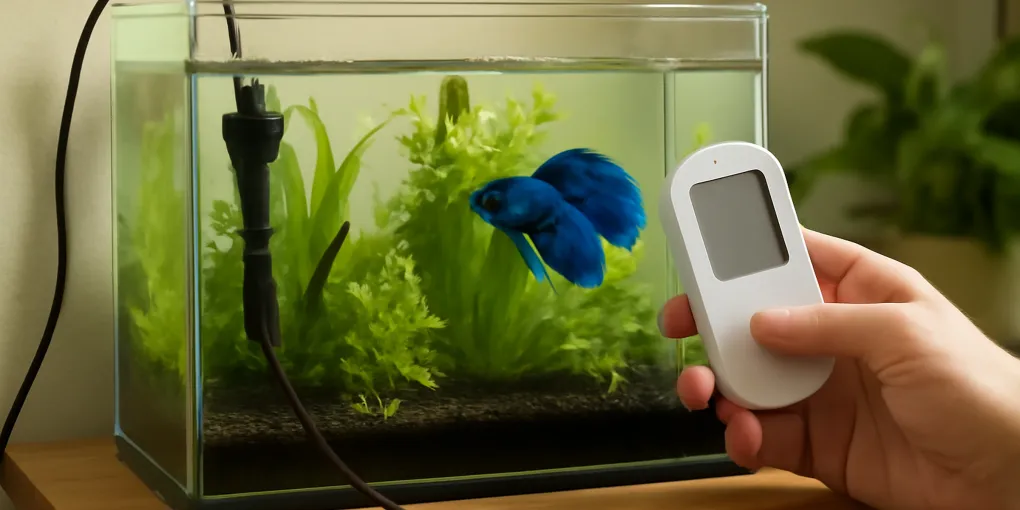
Best Aquarium Thermometers for Betta Tanks: Cheap Tools That Prevent Big Mistakes
Buyer's GuideZacro LCD Digital Aquarium Thermometer
Best budget digital probeBest for: Most 3–10 gallon heated betta tanks
$7–$12
Quick picks
| Product | Key Specs |
|---|---|
| See price on Amazon |
|
| See price on Amazon |
|
| See price on Amazon |
|
Product availability, certifications, and retailer details can change; check the current Amazon page before buying.
Best Aquarium Thermometers for Betta Tanks: Cheap Tools That Prevent Big Mistakes
A betta tank thermometer should be boring, readable, and checked often. For most heated betta aquariums, a small digital probe thermometer is the best first buy because the display is easy to read without tapping the glass or guessing between tiny marks; start with a current Zacro LCD-style digital aquarium thermometer search if you want a low-cost probe display. Keep a simple in-tank thermometer as a backup if the tank houses a valuable fish or if your room temperature swings.
Betta owners often focus on heaters and overlook the thermometer. That is backwards. A heater without an independent thermometer is just a promise. The thermometer is how you find out whether the promise is true.
For related small-pet setup decisions, see our puppy playpen setup protocol for the same principle: a cheap monitoring tool is often what prevents the expensive mistake.
Quick picks for betta tank temperature checks
- Search Amazon for Zacro LCD Digital Aquarium Thermometer if you want an easy-to-read probe display for a small heated tank.
- Search Amazon for JW SmartTemp aquarium thermometer if you want a cheap no-battery backup.
- Search Amazon for Marina floating thermometer with suction cup if you prefer a traditional in-tank check.
- Search Amazon for adjustable betta aquarium heater if your current heater cannot be adjusted or verified.
PSR G6 score for aquarium thermometers
| Factor | Weight | What we prioritized |
|---|---|---|
| Research fit | 30% | Stable tropical-fish husbandry and realistic home monitoring |
| Evidence quality | 25% | Aquarium care fundamentals from veterinary and extension-style resources |
| Value | 20% | Low-cost devices that prevent heater errors |
| User signals | 15% | Readability, suction cup reliability, battery complaints |
| Transparency | 10% | Clear limits on strip thermometers and single-device trust |
Temperature tools score well when they are easy enough that owners actually check them daily. In a small heated tank, the winning thermometer is less about advanced features and more about whether the number is visible during feeding, water changes, and evening lights-out checks.
Best overall: Zacro LCD Digital Aquarium Thermometer
A digital probe thermometer solves the biggest problem with small tanks: readability. Betta tanks are often on desks, counters, or bedroom stands where lighting is inconsistent. A clear external display makes it easier to notice a heater failure before the fish shows obvious stress.
Place the probe away from the heater body and away from direct filter outflow. If the probe sits directly beside the heater, it may show a warmer reading than the water where the betta spends time. If the tank has very low circulation, check more than one location for the first few days after setup.
The weak points are simple: batteries, probe wires, and suction cups. During water changes, make sure the probe remains submerged and the wire is not kinked under a lid.
Best simple backup: JW Pet SmartTemp
A low-cost in-tank thermometer is useful because it does not need a battery. It is not as precise-looking as a digital display, but it can warn you when a digital unit drifts or dies. In a small betta tank, a second independent reading is more useful than many decorative accessories.
Use a backup thermometer when changing heaters, moving the tank, treating illness, or bringing home a new fish. Those are the moments when assumptions about temperature cause harm.
Best glass-style option: Marina Floating Thermometer
Traditional glass-style thermometers remain useful when handled carefully. They are cheap, widely available, and easy to cross-check. The drawback is breakage risk and lower convenience. If you have children, large snails, rough aquascaping tools, or a habit of bumping equipment during cleaning, choose a sturdier design.
Do not let a floating thermometer hide behind plants where nobody reads it. A thermometer that is technically present but visually ignored is not protecting the fish.
Why betta temperature stability matters
Bettas are tropical fish. Cold water can slow digestion, reduce immune resilience, and increase lethargy. Overheated water can reduce dissolved oxygen and stress the fish. The exact safe range depends on the species, tank, and husbandry context, but common betta guidance centers around warm, stable water rather than room-temperature bowls.
Small tanks change temperature quickly. A sunny window, cold night, heat vent, or failed preset heater can move a few gallons faster than a larger aquarium. That is why a thermometer belongs on even a beginner setup.
Adhesive strip thermometers: when they are not enough
Stick-on strip thermometers can be better than no check at all, but they read glass temperature and ambient influence as much as water temperature. They are also hard to read precisely. For a heated betta tank, use a submerged probe or in-tank thermometer instead of relying on a strip alone.
If you keep a strip, treat it as a rough warning indicator, not the number you use to adjust a heater. Strips can be especially misleading on tanks near sunny windows, exterior walls, desk lamps, or warm electronics because the outside glass is not always the same temperature as the water. They also become less useful when algae, mineral spots, or condensation make the color blocks hard to read. A probe costs little more and gives a clearer daily habit.
If a new tank already has a strip attached, leave it in place as a secondary clue, then add a real water thermometer before adjusting the heater.
Placement checklist
Put the thermometer where it answers the real question: what temperature is the water where the fish lives? Avoid placing the probe against the heater, above the water line, behind a dense plant mat, or directly under a hot light. Check it after water changes and after topping off evaporated water.
For new heaters, monitor several times the first day and at least daily for the first week. Preset heaters can be inaccurate, and adjustable heaters can be bumped.
How to cross-check a new thermometer
When you install a new thermometer, compare it with a second aquarium thermometer or a clean kitchen thermometer in a cup of tank water. You are not trying to run a laboratory calibration. You are looking for obvious disagreement. If one device says the tank is comfortable and another says it is several degrees colder or hotter, do not adjust the heater until you know which device is wrong.
Check the number at the same times for a few days: morning before lights, afternoon after the room warms, and after a water change. This pattern tells you more than a single perfect-looking reading. Small tanks near windows or exterior walls often show daily swings that owners miss when they check only at feeding time.
Water-change mistakes to avoid
Many betta temperature problems happen during maintenance, not ordinary days. Replacement water should be close to the tank temperature before it is added. A thermometer makes this simple: check the bucket or jug, not just the tank. Do not pour very warm water directly near the fish, and do not assume your hand can judge safe temperature accurately.
After a water change, verify that the heater is fully submerged according to the manufacturer’s markings and that the thermometer probe did not end up above the water line. A probe stuck to wet glass but exposed to air can display a misleading number while the tank cools.
When the reading means you should act
A single unusual reading deserves a calm recheck. Look at the fish, check the heater light, confirm the probe is in the water, and compare with a backup thermometer if you have one. If the water is genuinely too cold, warm it gradually; sudden correction can be stressful. If the tank is too warm, look for sunlight, a stuck heater, a hot room, or a lid/light combination trapping heat.
Behavior can support the equipment reading. A betta that is clamped, lethargic, gasping, hiding unusually, or refusing food may need a broader husbandry review, including water quality, not only temperature.
Betta thermometer buying questions
Do betta tanks need a thermometer if the heater has a light?
Yes. A heater light usually tells you the heater is on, not whether the tank is at the right temperature. The independent thermometer is the safety check.
Where should I put the thermometer in a betta tank?
Place it away from the heater and in normal water circulation. For a probe model, keep the probe submerged in the tank area where the fish spends time, not pressed against warm equipment.
Are digital aquarium thermometers accurate enough?
Most inexpensive models are accurate enough for routine monitoring if you cross-check them when new and replace them when readings become erratic. For a critical tank, keep a second thermometer as a backup.
Is a thermometer more important than a better heater?
You need both, but the thermometer is how you verify the heater. A premium heater can still fail, and a bargain heater can run too hot or too cold.