Best Battery Backup Air Pumps for Aquariums: Outage Gear That Protects Oxygen
Buyer's GuideUSB rechargeable aquarium air pump
Best for short outagesBest for: Apartments and small tanks where quiet backup oxygen matters
$18–$40
Quick picks
| Product | Key Specs |
|---|---|
| See price on Amazon |
|
| See price on Amazon |
|
| See price on Amazon |
|
Product availability, certifications, and retailer details can change; check the current Amazon page before buying.
Best Battery Backup Air Pumps for Aquariums: Outage Gear That Protects Oxygen
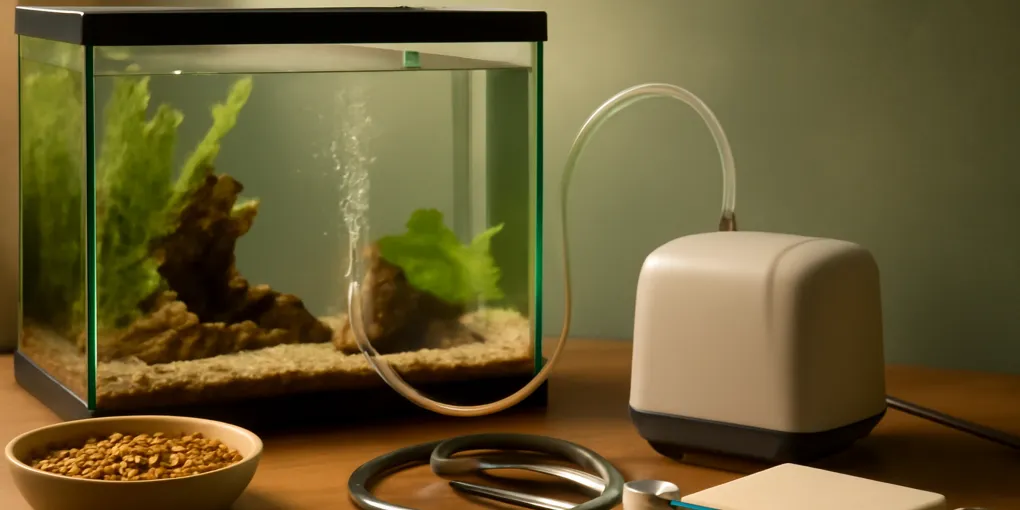
The best battery backup air pump for an aquarium is the one you have tested before the outage. For most home tanks, that means a USB rechargeable or D-cell air pump paired with airline tubing, a check valve, and a sponge filter or air stone that moves the water surface.
A backup air pump does not make a tank disaster-proof. It does not heat tropical water, remove ammonia by magic, or replace water changes. Its job is narrower and important: keep oxygen exchange moving when filters and powerheads stop.
For feeding risk during travel, see our automatic fish feeder vacation guide. For disease-control setup, see our new fish quarantine tank protocol.
Quick picks for outage oxygen
- Search Amazon for USB rechargeable aquarium air pump if you want a quiet pump that stays charged near the tank.
- Search Amazon for D-cell battery aquarium air pump if you prefer disposable batteries in an emergency drawer.
- Search Amazon for aquarium sponge filter check valve kit because a pump without tubing, a valve, and a diffuser is an incomplete plan.
- Search Amazon for aquarium digital thermometer to monitor the second outage problem: temperature drift.
PSR G6 score for the backup setup
| Factor | Weight | Score | Weighted contribution |
|---|---|---|---|
| Research fit | 30% | 4.4 | 1.32 |
| Evidence quality | 25% | 4.0 | 1.00 |
| Value | 20% | 4.6 | 0.92 |
| User signals | 15% | 4.1 | 0.62 |
| Transparency | 10% | 4.3 | 0.43 |
| Composite | 100% | 4.3/5 |
Backup aeration scores high because dissolved oxygen can fall when circulation stops, especially in warm, stocked tanks. The score assumes the pump is tested and accessories are already attached.
USB rechargeable air pumps
USB rechargeable pumps are the best fit for many small and medium aquariums. They are usually quieter than emergency-only pumps and can be topped up monthly. Some models can run while plugged into a USB power bank, which gives you a second layer of runtime.
The weak point is maintenance. A rechargeable pump left dead in a drawer is worse than a noisy pump with fresh batteries. Put a calendar reminder on the same day you change filter media or test water.
Choose a model with adjustable flow if the tank is small, shrimp-heavy, or stocked with fish that dislike violent bubbling. Stronger is not always safer; surface movement matters more than blasting fish around the tank.
D-cell emergency pumps
D-cell pumps are simple and often cheap. They make sense for storm-prone homes because spare batteries store well and can be replaced quickly. The downside is noise, bulk, and uncertain runtime under real load.
Open the pump before you need it. Install batteries, connect tubing, and confirm air reaches the tank. Then remove batteries for storage if the manufacturer recommends it, so corrosion does not ruin the contacts.
Sponge filter, air stone, or both?
A sponge filter is the most useful companion because it turns air into circulation through a biological surface. If the sponge has been running in the tank before the outage, it can preserve some filtration capacity. A brand-new dry sponge is still useful for oxygen movement, but it is not mature biological filtration.
An air stone is smaller and easier to hide. It works for simple oxygen exchange, but it does not provide the same surface area as a sponge. For an emergency kit, many fish keepers keep both.
Always use a check valve when the pump sits below the tank waterline. It helps prevent back-siphoning into the pump.
How much backup do you need?
A lightly stocked 10-gallon betta tank has different risk than a warm, crowded community tank or goldfish setup. Warmer water holds less oxygen, and active or messy fish consume more. Tanks with heavy feeding, high stocking, or limited surface area deserve more backup capacity.
If your home loses power for days, oxygen is only one problem. Temperature, ammonia, and filter bacteria also matter. Reduce feeding during outages, keep the lid secure, avoid unnecessary water disturbance, and follow local safety guidance for heating or cooling the room.
Setup test before storm season
Once a month, unplug the main filter for a short supervised test. Turn on the backup pump, verify bubbles, listen for rattles, and check that tubing does not kink when the lid closes. Confirm the check valve faces the right direction. Label the pump with the tank it belongs to.
Test in normal conditions, not during an emergency. If fish crowd the surface during the test, the setup needs more movement, less stocking risk, or a second pump.
Common mistakes
The biggest mistake is buying only the pump. You also need airline tubing, a check valve, and a diffuser or sponge filter. The second mistake is undersizing for a warm, stocked tank. The third is trusting claimed runtime without a home test.
Another mistake is overfeeding during an outage. Fish can usually handle a skipped meal better than an ammonia spike in a low-circulation tank.
Do not put the air pump where it can fall into water or wick water down the cord. Keep drip loops on powered equipment, and keep battery pumps dry even when the tank area is humid. If children feed the fish, label the emergency pump clearly so it is not mistaken for a toy or spare household gadget.
Runtime expectations by outage type
For a one-hour outage, almost any tested pump is better than stirring the tank by hand. For a half-day outage, battery capacity and airflow adjustment start to matter. For overnight or multi-day outages, you need a rotation plan: spare batteries, a charged power bank, or a safe way to recharge devices without running generators indoors.
Do not trust marketing runtime as a guarantee for your aquarium. Air depth, stone resistance, battery age, temperature, and flow setting all change performance. The practical test is to run the pump on the actual tank for a supervised hour, then check battery drain and fish behavior.
Match pump strength to tank style
Small betta, shrimp, and nano tanks need gentle surface movement from a fine air stone or small sponge filter, not a rolling boil. Too much bubbling can shove floating plants around, stress long-finned fish, or create a current the tank was not designed for. Choose adjustable flow, add a simple inline air valve, and test whether the fish can rest away from the bubble column.
Goldfish, warm community tanks, and heavily stocked tanks need more emergency capacity: stronger surface agitation, spare batteries, and often a second pump for tanks over roughly 30 gallons or with messy fish. These systems consume oxygen quickly and produce waste quickly when filtration slows. A single tiny pump may move bubbles without giving enough surface agitation for the biomass in the tank.
What to store in the outage kit
Keep the pump, spare tubing, check valves, air stones, a sponge filter, batteries or charging cable, and a thermometer in one labeled container. Add a towel because airline changes almost always drip. If the pump uses a proprietary cable, store that cable with the pump rather than assuming you will find it during a storm.
For USB pumps, add a charged power bank and test whether the pump keeps running when the bank’s low-current shutoff logic activates. For disposable-battery pumps, rotate batteries before their expiration date and inspect for corrosion twice a year.
After power returns
Do not celebrate by dumping in a large meal. Check temperature, observe fish breathing, restart filters, and confirm water is flowing through the normal equipment. If filter media sat stagnant for a long time, monitor ammonia and nitrite closely over the next day.
Rinse air stones only as needed and leave mature sponge filters wet. If fish were stressed, keep the lights low and delay nonessential maintenance. The goal is a gradual return to stable water, not a sudden round of cleaning while the tank is recovering.
FAQ
Will a battery air pump keep my aquarium filter alive?
It can keep oxygenated water moving, especially through a mature sponge filter, but it does not power a hang-on-back or canister filter. Protect filter media from drying out and monitor water quality after power returns.
Do I need one backup pump per tank?
Ideally yes for important tanks. Splitting one pump across multiple tanks reduces airflow and adds failure points. At minimum, keep enough tubing, valves, and stones to serve your highest-risk tanks first.
Can I use a power bank instead?
A power bank can help with USB pumps, but test the exact pairing. Some power banks shut off under low draw, and some pumps do not run while charging.
Should I feed fish during a power outage?
Usually feed less or not at all during short outages. Less food means less waste while filtration and oxygen are compromised. Resume carefully after checking temperature and water quality.
Sources and aquarium references
- University of Florida IFAS. Dissolved oxygen in fish ponds and water systems: https://edis.ifas.ufl.edu/publication/FA002
- University of Florida IFAS. Ammonia in aquatic systems: https://edis.ifas.ufl.edu/publication/FA031
- University of Florida IFAS. Oxygen depletion in aquatic systems: https://edis.ifas.ufl.edu/publication/FA055
- University of Florida IFAS. Stress and fish health: https://edis.ifas.ufl.edu/publication/FA005