How to Set Up a Quarantine Tank for New Fish: A Practical Biosecurity Protocol
ProtocolQuick picks
| Product | Key Specs |
|---|---|
| See price on Amazon |
|
| See price on Amazon |
|
| See price on Amazon |
|
Product availability, certifications, and retailer details can change; check the current Amazon page before buying.
How We Score This Protocol
| Criterion | Weight | Score | Weighted | Why it matters here |
|---|---|---|---|---|
| Research | 30% | 7.5 | 2.25 | Aquatic biosecurity guidance supports separation, observation, and dedicated equipment to reduce disease introduction. |
| Evidence Quality | 25% | 7.5 | 1.88 | The protocol uses conservative husbandry steps and avoids blanket medication claims. |
| Value | 20% | 8.5 | 1.70 | A small quarantine setup can protect a much larger display aquarium investment. |
| User Signals | 15% | 8.0 | 1.20 | New fish losses and disease outbreaks are common reasons aquarists search for quarantine help. |
| Transparency | 10% | 9.0 | 0.90 | The buying advice prioritizes correct tank volume, adjustable heat, separate equipment, and clear current instructions for fish quarantine use. |
| Composite Score | 7.9/10 | High-value protocol for hobbyists willing to maintain a separate stable tank. |
Why Quarantine Matters
A new fish can look healthy at the store and still carry parasites, bacterial disease, or stress-related problems that show up days later. If that fish goes straight into the display aquarium, every fish and shared surface becomes part of the risk. Quarantine gives you time to observe, stabilize, and respond without exposing the whole tank.
Quarantine is also less stressful than emergency treatment in a crowded display. A bare, simple tank is easier to inspect, clean, and adjust. The goal is not to punish the new fish. The goal is to give it a controlled landing zone.
Basic Quarantine Kit
Start with practical gear:
- Search Amazon for small aquarium tank kit
- Search Amazon for aquarium sponge filter
- Search Amazon for adjustable aquarium heater
- Search Amazon for aquarium water test kit
- Search Amazon for aquarium fish net set
These marketplace product-search links help you compare current pricing, sizes, and availability. Confirm the current label, size, seller, and return policy before buying. Check size, wattage, species fit, seller details, and current instructions before buying.
Step 1: Choose a Simple Separate Tank
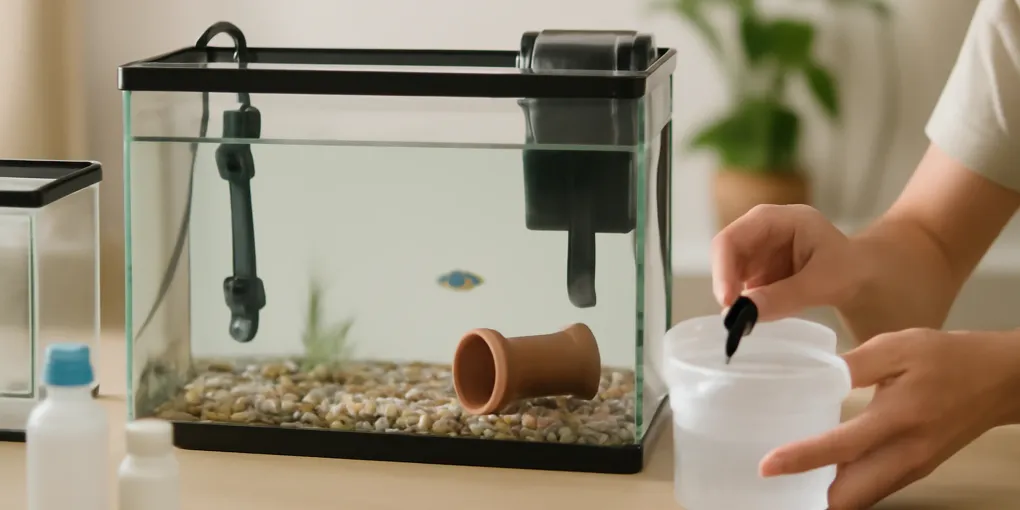
A quarantine tank should be separate from the display system. A breeder box hanging inside the main aquarium does not count because water is shared. For many small community fish, a simple 10 to 20 gallon tank works, but species size and stocking density matter. Large fish need larger accommodations.
Use a lid because stressed fish jump. Use simple hiding places such as PVC elbows, ceramic caves, or inert decor that is easy to disinfect. Avoid gravel if you need to watch waste, uneaten food, or parasites.
Step 2: Stabilize Filtration and Temperature
A sponge filter is popular because it provides biological filtration and gentle flow. Ideally, keep extra sponge media seeded in a healthy system so the quarantine filter is ready. If you cannot seed media, monitor ammonia and nitrite closely and be prepared for water changes.
Set the heater for the species, then confirm with a thermometer. Do not assume the dial is accurate. Match pH and temperature reasonably to the source water and display plan, but prioritize stability over chasing perfect numbers.
Step 3: Keep Tools Dedicated
Use separate nets, siphon tubing, buckets, towels, algae scrapers, and feeding tools for quarantine. Label them. Do not dip a quarantine net into the display tank. Do not pour bag water into any aquarium.
Wash hands and avoid moving wet equipment between systems. Biosecurity is mostly boring repetition, but boring is cheaper than treating a display outbreak.
Step 4: Acclimate and Observe
Acclimate the fish according to species needs and source-water differences. Dim the lights, offer hiding places, and give the fish time. During quarantine, watch breathing rate, appetite, swimming posture, fin condition, spots, flashing, clamped fins, stringy waste, lesions, and weight loss.
Record dates and observations. A notebook helps you notice whether a fish is improving, declining, or simply shy.
Step 5: Feed Lightly and Protect Water Quality
New fish are often stressed, so overfeeding is risky. Offer small amounts and remove uneaten food. Test ammonia and nitrite frequently, especially in the first week. Water quality problems can look like disease because fish may gasp, clamp fins, or become lethargic.
If ammonia or nitrite appears, do a water change with conditioned water matched for temperature. Do not rely on medication to solve a filtration problem.
Should You Medicate Preventively?
Aquarists disagree on prophylactic medication. Some experienced keepers use species-specific protocols from trusted sources. Others observe first and treat only diagnosed problems. For a general pet owner, the safest advice is to avoid random medication stacks. Wrong medication, wrong dose, or poor water quality can harm fish and the biofilter.
If disease signs appear, identify the likely issue and seek aquatic-veterinary or experienced aquarium guidance. Some problems need different treatments, and some symptoms are water-quality emergencies rather than infections.
How Long to Quarantine
Many hobbyists quarantine for several weeks, but the right duration depends on species, supplier reliability, observed symptoms, and risk tolerance. Do not move fish into the display just because a calendar says so if they are not eating, swimming, and breathing normally.
The end point should be healthy behavior, stable water, and no concerning signs during the observation window.
Breaking Down the Tank Afterward
After quarantine, clean and dry equipment before storage. If illness occurred, follow appropriate disinfection guidance for that pathogen and material. Some media or porous items may need to be discarded. Keep dedicated equipment dedicated even after cleaning.
Do not move quarantine filter media into the display after treating sick fish unless you have expert guidance. Protecting the display is the whole point.
Product Features That Matter
Choose equipment for reliability and easy cleaning. A simple rectangular tank is better than a decorative shape that is hard to siphon. A sponge filter should be sized for the tank and powered by an air pump with a check valve. A heater should be adjustable and appropriate for water volume.
For test kits, ammonia and nitrite are essential. Nitrate, pH, and temperature tracking help too. If you keep sensitive species, expand testing based on their requirements.
Related Reading
- If automation is part of your fish room, review our automatic fish feeder guide before leaving quarantined fish unattended.
Species-Specific Planning
Quarantine is not one-size-fits-all. A betta, goldfish, cichlid, marine clownfish, and delicate schooling tetra do not have identical space, temperature, salinity, or social needs. Before buying the fish, write down adult size, preferred temperature, pH tolerance, oxygen needs, diet, aggression risk, and whether the species is sensitive to common medications.
Schooling fish create a special tradeoff. A single isolated fish may be stressed, but adding a large group to a small uncycled quarantine tank can damage water quality. Plan tank size and filtration before the purchase, not after the bag is floating on the counter.
For marine aquariums, salinity, copper sensitivity, invertebrate safety, and separate equipment become even more important. Do not use medication in a system that contains invertebrates, live rock, or media you plan to reuse in a reef without expert guidance.
Water Quality Schedule
During the first week, test ammonia and nitrite daily if the filter is not mature. Also check temperature every day. If ammonia or nitrite appears, change water promptly with conditioned, temperature-matched water. Keep feeding light until the biofilter can process waste.
A quarantine tank can crash faster than a display because it is smaller and often bare. That is why a seeded sponge filter is so valuable. If you keep an aquarium long term, storing extra sponge media in the display sump or filter can make future quarantine setups faster.
Observation Checklist
At each feeding, look for appetite, breathing speed, swimming balance, fin position, body weight, spots, ulcers, flashing, rubbing, clamped fins, cloudy eyes, frayed fins, and abnormal waste. Check whether the fish hides constantly or is being pushed around by tankmates.
Use a simple log: date acquired, source, acclimation notes, water tests, food offered, food eaten, and visible signs. If you need help from an aquatic veterinarian or experienced keeper, a log turns vague concern into actionable information.
Preventing Cross-Contamination
Place quarantine tools in a separate bin. Color-code the bucket or write “QT only” on it. Keep towels separate too, because wet towels can move water between tanks. If you maintain several aquariums, do quarantine maintenance last so you do not carry water from the quarantine system back into healthy tanks.
Do not share plants, rocks, filter media, or decor from quarantine to display unless you are intentionally doing so after a disease-free period and appropriate cleaning. If illness occurred, assume porous items may be contaminated.
Budget Setup Versus Permanent Hospital Tank
A budget quarantine setup can be simple: plain tank, sponge filter, air pump, heater, lid, thermometer, hiding place, test kit, and dedicated bucket. That is enough for many freshwater hobbyists if the tank is sized correctly and monitored carefully. Spending more on decorative substrate, lights, or complex aquascaping usually makes observation and cleaning harder.
A permanent hospital tank is useful for serious hobbyists who buy fish often or keep expensive display systems. In that case, keep spare equipment ready, label everything, and maintain seeded filtration. The cost is easier to justify when one outbreak could threaten years of livestock and aquascaping work.
Buying Fish With Quarantine in Mind
Good quarantine starts before checkout. Look at the seller’s tanks. Avoid fish from systems with dead fish, clamped fins, visible spots, ragged fins, gasping, or cloudy water. Ask when the fish arrived and whether they have been eating. Shipping and store transfers can be stressful, so a fish that arrived that morning may still be adjusting.
Do not buy more fish than your quarantine tank can safely hold. The display aquarium may have room, but the quarantine tank is the bottleneck. If you want a large school, consider staged purchases or a larger quarantine system. Patience is cheaper than ammonia spikes and disease confusion.
When to Ask for Expert Help
Ask for aquatic-veterinary or expert aquarium help when fish die during quarantine, symptoms spread quickly, water tests look normal but fish decline, or you are considering strong medication. Bring photos, videos, water-test results, species names, and purchase dates. Clear evidence helps someone separate parasites, bacterial disease, compatibility stress, and water-quality problems.
Frequently Asked Questions
How long should new fish stay in quarantine?
Many aquarists use several weeks, but the right duration depends on species, source, disease risk, and observed health. Do not rush fish into the display while symptoms, poor appetite, or water-quality instability remain.
Can I quarantine fish in the display tank breeder box?
No. A breeder box in the display shares water with the display, so pathogens can still spread. It may separate aggression, but it is not true quarantine.
Do I need medication in every quarantine tank?
Not automatically. Observation, water quality, and diagnosis matter. Blind medication can stress fish, harm biofilters, and create new problems if the original issue was poor water quality.
Bottom Line
A quarantine tank is one of the least glamorous and most useful aquarium purchases. Keep it separate, stable, bare enough to inspect, and supported by dedicated tools. Observe first, protect water quality, and treat illness based on evidence instead of guesswork.
Sources
- Merck Veterinary Manual. Production medicine and biosecurity in aquaculture: https://www.merckvetmanual.com/exotic-and-laboratory-animals/aquaculture/production-medicine-and-biosecurity-in-aquaculture
- University of Florida IFAS. Introduction to fish health management: https://ask.ifas.ufl.edu/publication/FA099
- American Veterinary Medical Association. Aquatic veterinary medicine overview: https://www.avma.org/resources-tools/avma-policies/aquatic-veterinary-medicine
- World Organisation for Animal Health. Aquatic animal health code, biosecurity principles: https://www.woah.org/en/what-we-do/standards/codes-and-manuals/aquatic-code-online-access/