We may earn a commission if you buy through our links.
Quick picks
| Product | Key Specs |
|---|---|
| See price on Amazon |
|
| See price on Amazon |
|
| See price on Amazon |
|
| See price on Amazon |
|
Best Cat Scratching Posts
The best cat scratching post for most households is the SmartCat Ultimate Scratching Post, which provides a 32-inch natural sisal fiber post on a 16 × 16-inch stable base — meeting the minimum height requirement for full-extension scratching in adult cats and offering the most consistent cat acceptance of the picks here. For homes where a furniture-adjacent low-profile scratcher is also needed, pairing with the PetFusion 3-Sided Vertical Scratcher covers both horizontal and vertical scratch preferences.
TL;DR
- Best Overall: SmartCat Ultimate — 32-inch natural sisal, 16 × 16-inch base, consistently accepted by adult cats
- Best Cardboard: PetFusion 3-Sided Scratcher — premium recycled cardboard, angled design, multi-cat appropriate
- Best Budget: FUKUMARU 33-inch Sisal — tallest budget option, jute-wrapped
- Best with Perch: Catit Vesper High Base — 38-inch height, perch platform, modern design
- Key Stat: In a survey of 4,331 cat owners, inappropriate scratching decreased as the number of different post types and styles in the home increased (Wilson C et al., 2016, PMID: 26179574)
Scratching is hardwired cat behavior — it serves claw maintenance, territorial marking, and full-body stretching functions that cannot be suppressed, only redirected. The AAFP (2017) considers declawing inhumane and specifically recommends appropriate scratching post provision as the primary furniture protection strategy. Providing the right post in the right location is the most effective way to redirect scratching away from household furniture.
What Makes a Good Cat Scratching Post?
Three design factors predict whether a cat will actually use a scratching post:
1. Height: Measure your cat stretched out against a wall and choose a post that clears that height, so your cat can extend fully without the post tipping or running out.
2. Stability: An unstable post that wobbles under scratching pressure is quickly abandoned — the wobble creates a negative association and the cat returns to stable furniture. A base of at least 16 × 16 inches prevents tip-over under the force of a large cat’s full-extension scratch.
3. Substrate: Natural sisal rope or sisal fabric is a strong default: in a large owner survey, rope was the substrate cats used most often when it was offered (Wilson C et al., 2016, PMID: 26179574). Cardboard horizontal scratchers suit cats that like to scratch at floor level and work well as a second option.
SmartCat Ultimate Scratching Post Review: Best Overall
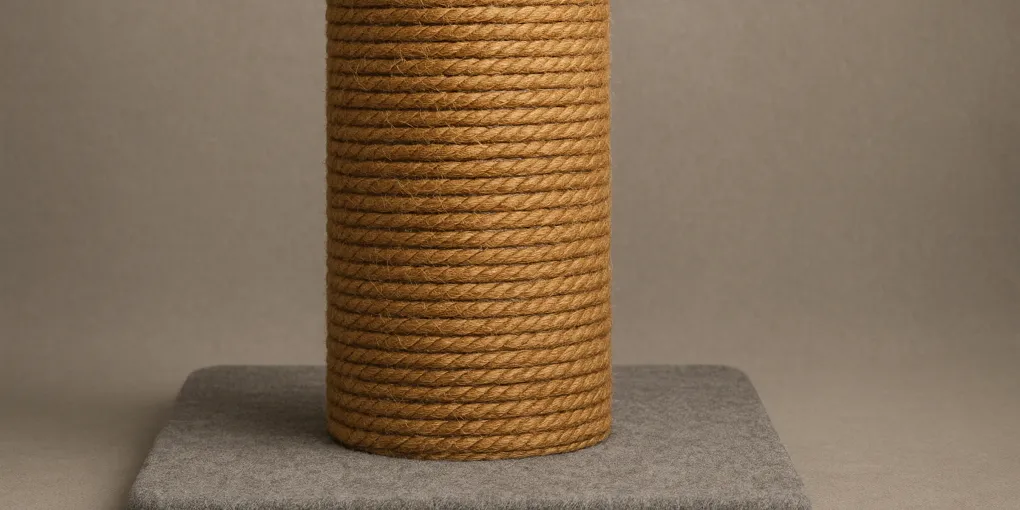
SmartCat’s Ultimate Scratching Post is a tall, heavy-based, sisal-covered post built for full-stretch vertical scratching.
Key specifications:
- Height: 32 inches
- Base: 16 × 16 inches — stability-tested for cats up to 20 lbs
- Material: Woven natural sisal fiber (not rope — flat woven sisal)
- Construction: Solid post, not hollow (prevents vibration during scratching)
- No carpet — reduces the risk of carpet-material generalization
Safety: Natural sisal fiber with no synthetic chemical treatments. The 16 × 16-inch base meets the stability threshold for large-cat full-extension scratching without wall anchoring.
Comfort and acceptance: Its simple upright design and sisal surface are both favored in owner-survey data (Wilson C et al., 2016, PMID: 26179574).
Value: SmartCat is moderately priced for a post of this quality. The woven sisal construction outlasts rope-wrapped alternatives — rope eventually unravels from the post core, while woven sisal wears more evenly.
Pros:
- 32-inch height meets full-extension requirement
- Natural woven sisal (longer-wearing than rope)
- CCBC-recommended for furniture scratching redirection
- Stable 16 × 16-inch base
- No carpet materials — no household carpet association risk
Cons:
- Single post (no perch)
- Woven sisal surface requires periodic vacuuming of shed fibers
- Not suitable as the sole post in households with cats over 20 lbs (borderline base size)
We may earn a commission if you buy through our links.
PetFusion 3-Sided Vertical Scratcher Review: Best Cardboard Scratcher
PetFusion’s three-sided design covers multiple scratch angles — vertical sides for cats who scratch upward, angled surfaces for those who prefer a 45-degree scratch, and a horizontal option for low scratchers.
Key specifications:
- Height: 10 inches vertical rise; 22.5 × 8.5-inch footprint
- Material: Compressed recycled cardboard (premium density)
- Catnip: Organic catnip included for initial introduction
- Reversible: Flip for extended surface life
- No chemical dyes
Build quality: Cardboard scratchers wear faster than sisal — expected replacement every 2–4 months with active use. The three-sided design extends surface life by distributing wear across multiple faces.
Comfort and acceptance: Some cats prefer horizontal or angled cardboard surfaces, and offering more than one post type is linked to less inappropriate scratching (Wilson C et al., 2016). The included catnip improves initial introduction success.
Pros:
- Covers vertical, angled, and horizontal scratch preferences
- Recycled materials — environmentally preferable
- Included organic catnip
- Reversible for doubled surface life
- Strong value
Cons:
- Cardboard wears faster than sisal
- Lower height limits vertical stretch to partial extension only
- Cardboard debris requires more frequent vacuuming
We may earn a commission if you buy through our links.
FUKUMARU 33-Inch Sisal Post Review: Best Budget Tall Post
FUKUMARU delivers the tallest height of the picks here at the lowest price point — the practical choice for owners who need adequate post height without the SmartCat premium.
Key specifications:
- Height: 33 inches
- Base: 14 × 14 inches
- Material: Natural jute and sisal rope combination
- Base: Plush-covered weighted base
Safety: The 14 × 14-inch base is at the lower end for large cats, so it may be less stable for heavy cats scratching at full force.
Value: FUKUMARU is the lowest-cost tall post reviewed.
Pros:
- Tallest reviewed at 33 inches
- Lowest price reviewed for a tall post
- Natural materials (jute/sisal)
Cons:
- Smaller base (14 × 14 in) — marginal for large cats
- Rope wrapping wears faster than woven sisal
- Less durable than SmartCat at approximately half the price
We may earn a commission if you buy through our links.
Catit Vesper High Base Scratcher Review: Best Modern Design with Perch
The Catit Vesper combines a tall sisal scratching post with an elevated perch platform — a space-saving solution for apartments where a separate cat tree isn’t practical.
Key specifications:
- Height: 38 inches to top of perch
- Base: 17.7 × 17.7 inches
- Material: Sisal post + wood/MDF perch structure
- Perch capacity: 22 lbs
- Design: Contemporary black and white aesthetic
Comfort and acceptance: The perch adds an elevated resting spot that motivates sustained post engagement — cats approach to scratch and stay to rest.
Pros:
- Tallest reviewed (38 inches) including perch
- 22-lb perch capacity
- Contemporary design
- Combined post and perch saves floor space
Cons:
- Higher price
- Complex assembly
- Perch limits the top of the scratching surface to approximately 28 inches
We may earn a commission if you buy through our links.
Scratching Post Comparison Table
We may earn a commission if you buy through our links.
| Product | Height | Base | Material |
|---|---|---|---|
| SmartCat Ultimate | 32 in | 16 × 16 in | Natural sisal fiber |
| PetFusion 3-Sided | 10 in | 22.5 × 8.5 in | Recycled cardboard |
| FUKUMARU 33-inch | 33 in | 14 × 14 in | Jute/sisal rope |
| Catit Vesper High Base | 38 in | 17.7 × 17.7 in | Sisal + MDF |
Who Should Choose Which Scratching Post?
SmartCat Ultimate is the right choice for most owners seeking to redirect furniture scratching — the most consistently recommended option by cat behavior professionals.
PetFusion 3-Sided is best as a secondary scratcher for cats who prefer horizontal and angled surfaces, or as a first scratcher in households with kittens.
FUKUMARU 33-inch suits budget-conscious owners with cats under 15 lbs who want a tall post at low cost.
Catit Vesper High Base is the premium solution for small apartments where combining a scratcher and perch in one unit is a practical space-saver.
For complete cat environmental enrichment, pair scratching posts with a cat tree for elevated resting (which provides scratching plus climbing), interactive toys for predatory play enrichment, and a cat grooming brush for the complementary bonding routine of regular brushing. See also our guides to self-cleaning litter boxes and wet cat food for comprehensive cat home setup.
Frequently Asked Questions
Why do cats scratch furniture instead of scratching posts?
Furniture scratching typically indicates the post is too short, too unstable, or placed in the wrong location. In an owner questionnaire, Mengoli M et al. (2013, PMID: 23492353) found that when a scratching post is present in a cat’s living area, the cat appears to use it. Place posts where the cat currently scratches and use catnip or silver vine to encourage initial engagement.
How tall should a cat scratching post be?
A scratching post should be tall enough for the cat to scratch at full stretch, so measure your cat stretched out and choose a post taller than that. In an owner survey, cats scratched their preferred surface more often on simple upright posts or on cat trees with two or more levels at least 3 ft high (Wilson C et al., 2016, PMID: 26179574).
Is sisal or carpet better for a scratching post?
Sisal is usually the better choice. Carpet can encourage cats to associate the scratching texture with household carpet, counterproductive for furniture protection. In an internet survey of 4,331 owners, Wilson C et al. (2016, PMID: 26179574) found rope was the substrate cats used most often when it was offered, although carpet was offered most commonly.
Where should I place a cat scratching post?
Place posts near sleeping areas (cats scratch upon waking), near entry/exit points, and next to furniture the cat currently scratches. After consistent post use begins, gradual relocation (1–2 feet per week) can reposition it aesthetically if needed.
Do cats need both vertical and horizontal scratching surfaces?
Many cats prefer one orientation, and preferences vary between cats. Wilson C et al. (2016, PMID: 26179574) found inappropriate scratching decreased as the number of different post types and styles in the home increased, so offering both a tall vertical sisal post and a cardboard horizontal scratcher covers more preferences.
Final Verdict
SmartCat Ultimate Scratching Post is the Best Overall for furniture-scratching redirection — a tall, stable sisal post for full-stretch scratching. Catit Vesper High Base is the premium choice for owners combining a scratcher and perch in one modern-design unit. PetFusion 3-Sided is the best cardboard option for cats with horizontal and angled scratch preferences. FUKUMARU 33-inch is the budget pick for a tall post.
Citations: Mengoli M et al. (2013) J Feline Med Surg 15(10):886-92 (PMID: 23492353); Wilson C et al. (2016) J Feline Med Surg 18(10):791-7 (PMID: 26179574); AAFP Position Statement: Declawing (2017); Overall KL (2013) Manual of Clinical Behavioral Medicine for Dogs and Cats