Best Dog Puzzle Toys for Enrichment: A Behavior-First Buying Guide
Buyer's Guidebeginner dog puzzle toy treat slider
Best fitBest for: .
Varies
Quick picks
| Product | Key Specs |
|---|---|
| See price on Amazon |
|
| See price on Amazon |
|
| See price on Amazon |
|
Product availability, certifications, and retailer details can change; check the current Amazon page before buying.
How We Score Puzzle Toys
| Criterion | Weight | Score | Weighted | Why it matters here |
|---|---|---|---|---|
| Research | 30% | 8.0 | 2.40 | Enrichment is well supported in animal-welfare science, though individual toy models rarely have clinical trials. |
| Evidence Quality | 25% | 7.5 | 1.88 | The evidence supports foraging, problem solving, and environmental complexity more strongly than any single product claim. |
| Value | 20% | 8.5 | 1.70 | Good puzzles turn normal food into enrichment, but the wrong difficulty level is wasted money. |
| User Signals | 15% | 8.5 | 1.28 | Reviews are useful for durability and cleaning feedback when filtered by dog size and chewing style. |
| Transparency | 10% | 9.0 | 0.90 | This guide recommends categories and search links rather than pretending one toy fits every dog. |
| Composite Score | 8.2/10 | Strong buy for bored food-motivated dogs when matched to skill and safety. |
What Makes a Puzzle Toy Good?
A good dog puzzle toy does not merely hide treats. It creates a solvable foraging problem at the right level of difficulty. The dog should be curious, engaged, and successful. If the toy is too easy, it becomes a bowl with extra steps. If it is too hard, the dog learns to bark, chew, paw aggressively, or quit. The sweet spot is calm effort followed by frequent wins.
Behavior-first selection matters because enrichment is not the same as entertainment. Enrichment should let the animal perform natural behaviors in a safe way. For dogs, that often means sniffing, licking, chewing, seeking, manipulating objects, and working for food. A puzzle that channels those behaviors is valuable. A puzzle that creates frustration or conflict is not.
Choose puzzle toys by your dog’s size, chewing style, food motivation, and current problem-solving skill. The right option should be easy to clean, sturdy enough for supervised use, and adjustable enough that your dog can keep succeeding as the challenge increases.
Best Overall First Puzzle: Beginner Treat Slider
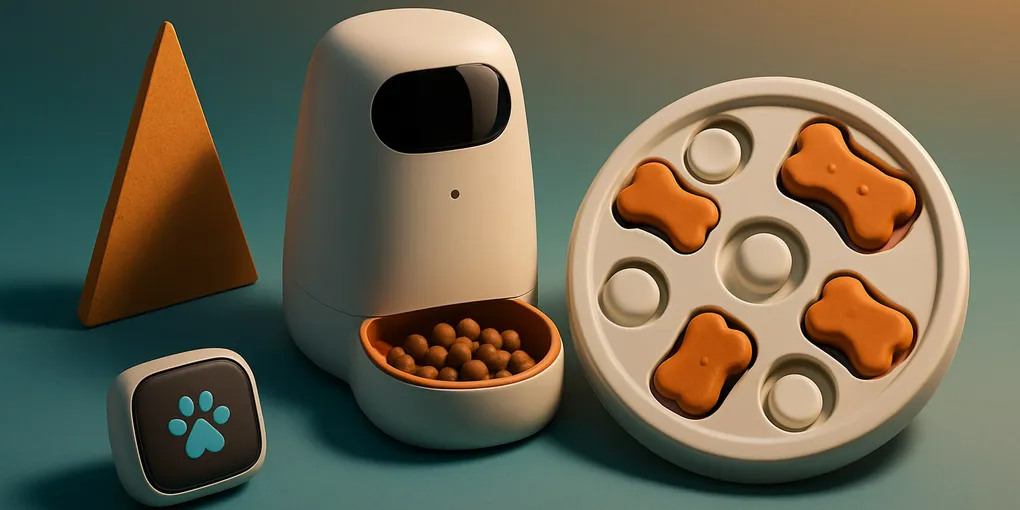
A beginner slider puzzle uses shallow compartments and movable lids. It teaches the basic rule: nose or paw movement reveals food. This is a better first puzzle than a complex tower because the dog can succeed quickly. Look for rounded parts, removable pieces large enough not to swallow, non-slip feet, and dishwasher-safe or easy-rinse construction.
Best for: puppies, adult beginners, small to medium dogs, and owners who want a supervised five-minute activity.
Avoid if: your dog flips objects violently, chews loose pieces, or resource guards high-value treats.
Search: Search Amazon for beginner dog puzzle toy treat slider.
Use it with part of the regular meal, not a pile of extra treats. If the dog empties it in one minute, that is still a useful confidence-building start. Increase difficulty later by covering fewer scent cues, adding a second puzzle, or rotating toy types.
Best for Sniffing: Washable Snuffle Mat
A snuffle mat hides kibble in fabric folds so the dog has to search by scent. It is excellent for dogs that enjoy sniff walks, seniors that need low-impact engagement, and dogs that become too frantic with hard plastic puzzles. Sniffing tends to be calming for many dogs because it encourages slower movement and sustained focus.
Best for: seniors, shy dogs, post-surgery low-activity days, and dogs that eat dry kibble.
Avoid if: your dog shreds fabric, swallows strings, or marks soft surfaces.
Search: Search Amazon for washable dog snuffle mat.
Washability is the key feature. Food oils build up quickly, and mats that cannot be washed become unpleasant. Choose a mat with secure stitching and no tiny detachable decorations. Supervise until you know your dog searches rather than chews.
Best for Wet Food: Silicone Lick Mat
A lick mat turns wet food, canned diet, plain pumpkin, veterinary-approved spread, or soaked kibble into a longer activity. Licking is naturally repetitive and can be soothing for some dogs. A mat is also easier for flat-faced dogs than a deep maze bowl.
Best for: wet-food meals, grooming distraction, crate settling, and brachycephalic breeds.
Avoid if: your dog bites and tears silicone, has dietary restrictions that make spreadable treats risky, or guards food near people.
Search: Search Amazon for silicone dog lick mat suction cups.
Use thin layers. A heavily loaded mat can add hundreds of calories. For dogs on prescription diets, ask your veterinarian whether you can soak and mash the prescribed food rather than adding peanut butter or yogurt.
Best for High-Energy Dogs: Food-Dispensing Wobbler
A wobbling dispenser releases kibble as the dog nudges it. It adds movement and problem solving, so it works well for dogs that need more physical engagement than a stationary puzzle provides. The tradeoff is noise and excitement. Use it on a washable floor, not near stairs or fragile furniture.
Best for: sturdy adolescent dogs, active adults, and dogs that enjoy batting objects.
Avoid if: you live below noise-sensitive neighbors, your dog becomes frantic, or your dog tries to crack hard plastic.
Search: Search Amazon for dog food dispensing wobbler toy.
Choose a size too large to fit fully in the mouth. If the dog picks it up and drops it hard, switch to a softer rolling dispenser or snuffle mat.
Best for Power Chewers: Chew-Rated Stuffable Rubber Toy
For power chewers, many puzzle toys are unsafe because the dog solves them by destruction. A chew-rated stuffable rubber toy is often the better enrichment tool. It is not a complex puzzle, but it supports licking, chewing, and persistence. Stuff with soaked kibble, canned food, or a veterinarian-approved filling and freeze for longer duration.
Best for: supervised chewing, crate settling, and dogs that need oral activity.
Avoid if: the dog can remove chunks, has a history of foreign-body ingestion, or resource guards stuffed toys.
Search: Search Amazon for chew resistant stuffable dog toy.
Inspect after every use. No toy is indestructible. Replace when cracks, missing pieces, or sticky degraded rubber appear.
Best Budget Option: The Towel Scatter
The cheapest puzzle is a clean towel. Scatter kibble across it, rumple the towel lightly, and let the dog sniff out the pieces. For beginners, keep folds shallow. For advanced dogs, roll the towel loosely with food inside and supervise. This is not suitable for towel shredders, but it is excellent for testing whether your dog enjoys scent-based feeding before buying a mat.
Cost matters because enrichment should be sustainable. A household that uses one washable mat, one beginner puzzle, and occasional towel scatter is often better served than a household that buys ten complicated toys the dog cannot solve.
How to Match Difficulty
Use the 80 percent success rule. The dog should succeed often enough to stay engaged. If the dog fails more than a few times in a row, make the puzzle easier. Show one compartment open. Use smellier food. Put the toy on a non-slip surface. Reduce moving parts. If the dog empties everything instantly, increase difficulty gradually.
Rotate puzzles rather than escalating difficulty endlessly. Dogs benefit from variety: sniffing one day, licking the next, nudging a dispenser later. Rotation also keeps novelty without forcing frustration. A low-sided dog toy organizer can keep the current rotation reachable while the rest stays out of sight.
Safety Rules
Supervise new puzzles. Count puzzle pieces before and after. Feed dogs separately in multi-dog homes. Deduct puzzle calories from meals. Wash food-contact surfaces. Avoid hard toys for dogs with dental disease. Stop if the dog guards, panics, or tries to swallow pieces.
Puzzle toys are not a cure for separation anxiety. Leaving a highly distressed dog alone with a food puzzle may help mild boredom, but true panic needs a behavior plan and often veterinary support.
Bottom Line
The best dog puzzle toy is the one your dog can solve safely with relaxed persistence. Start easy, use real meal calories, supervise, and choose materials for the dog you actually have: sniffer, licker, nudger, chewer, senior, puppy, or flat-faced companion.
A Simple Rotation Plan
Use a weekly rotation rather than leaving every puzzle available all the time. Monday can be a snuffle mat breakfast, Tuesday a lick mat dinner, Wednesday a beginner slider with half the kibble, Thursday a training-meal session, Friday a food-dispensing wobbler, and the weekend a stuffed rubber toy during quiet time. Rotation keeps novelty high and shows you which activity actually changes your dog’s behavior.
Track three signals: how long the activity lasts, how the dog behaves afterward, and whether the toy survives. A useful puzzle produces settled behavior after use: sniffing, resting, or normal play. A poor match produces frantic barking, destructive chewing, guarding, or a dog that seems more wound up. Duration alone is not the goal. Ten calm minutes are better than thirty minutes of stress.
For households with children, make puzzle time a managed event. Children should not take food toys away, reach into a dog’s mouth, or tease the dog while it works. Pick up the puzzle when empty, wash it, and store it out of reach. That routine prevents both bacterial buildup and conflict over a toy that still smells like food.
Calories Count
Puzzle toys often fail because humans forget that enrichment food is still food. Use the dog’s measured daily ration as the default puzzle filling. If you add training treats, reduce the bowl meal slightly. For overweight dogs, ask your veterinarian for a target calorie plan and use low-calorie options such as soaked kibble, part of a prescription diet, or tiny vegetable pieces only if they are safe for that dog.
Puppy, Senior, and Rescue-Dog Adjustments
Puppies need easy puzzles with large parts and close supervision. Their job is to learn that problem solving is fun, not to master a complicated board. Keep sessions short, use normal kibble, and end while the puppy still wants more. If the puppy starts chewing the puzzle itself, trade for food, remove the toy, and choose a softer or simpler format next time.
Senior dogs often need lower physical demand. A snuffle mat, lick mat, or shallow slider may be better than a wobbler that rolls across the room. For dogs with vision loss, use scent-rich food and keep the puzzle in a predictable location. For dogs with arthritis, raise the puzzle slightly or put it on a non-slip surface so they do not strain the neck or slide their front feet.
Newly adopted dogs may treat food puzzles as high-stakes resources because they do not yet trust the household routine. Feed them separately, use easy wins, and avoid taking the toy away while they are still engaged. When empty, toss a treat away from the puzzle, then pick it up calmly. That pattern teaches the dog that humans approaching food objects predict more good things, not loss.
What Not to Buy
Avoid puzzles with tiny removable caps for large dogs, brittle plastic for power chewers, felt pieces for fabric shredders, and designs that cannot be cleaned. Avoid difficulty labels that sound impressive but do not match your dog. The best Level 4 puzzle is useless if your dog needs Level 1 confidence. Buy for temperament, mouth style, and cleaning reality before buying for novelty.
Sources
- AVMA guidance on dog enrichment, preventive care, and weight management.
- WSAVA Global Nutrition Committee resources on body condition and feeding.
- RSPCA and shelter-medicine enrichment guidance for companion animals.
- Applied animal behavior texts on foraging, environmental enrichment, and frustration thresholds.
Frequently Asked Questions
- Start with a simple food-dispensing ball, snuffle mat, or beginner slider puzzle. The first puzzle should be easy enough that the dog succeeds in under a few minutes.
- No. Puzzle toys provide mental enrichment, but dogs still need movement, sniffing, social contact, training, and rest. They are a supplement, not a complete welfare plan.
- Only under supervision unless the product is specifically chew-rated. Many puzzle toys are food-access tools, not chew toys, and can break if a dog uses force instead of problem solving.
- Most dogs can use a puzzle daily if calories are counted and difficulty rotates. Stop if the dog becomes frustrated, guards the toy, or gains weight from untracked treats.