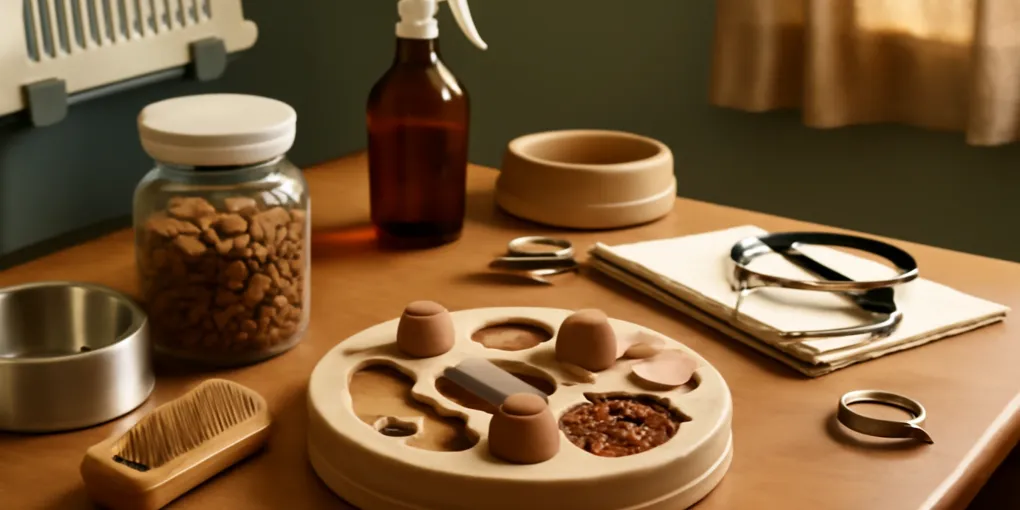
Do Dog Puzzle Feeders Actually Help? Evidence, Risks, and How to Use Them Safely
Evidence ExplainerQuick picks
| Product | Key Specs |
|---|---|
| See price on Amazon |
|
| See price on Amazon |
|
| See price on Amazon |
|
Product availability, certifications, and retailer details can change; check the current Amazon page before buying.
Do dog puzzle feeders actually help?
Dog puzzle feeders can be useful, but they are not magic calming devices. The strongest case for them is practical: dogs are scavenging, scent-driven animals that often eat from a bowl in less than a minute, then spend the rest of the day with very little food-related work to do. A well-matched puzzle feeder turns part of the ration into sniffing, pawing, licking, nudging, and problem solving. That can slow meals, add predictable enrichment, and give owners a structured way to observe appetite and frustration tolerance.
The evidence base is better for the underlying welfare principles than for any single product style. Veterinary behavior and animal welfare guidance consistently supports species-appropriate enrichment, controlled feeding plans, and reducing long periods of inactivity. Direct trials comparing every commercial feeder are limited, so claims should stay modest. A puzzle feeder may help a dog spend more time eating, practice calm foraging, and settle after a short session. It should not be sold as a cure for separation anxiety, aggression, compulsive behavior, pain, nausea, or destructive chewing that appears suddenly.
If you want a broader framework for tracking home routines, compare this approach with our senior dog care protocol. The same principle applies: small daily observations are more valuable when they are specific, repeatable, and reviewed when something changes.
What counts as a puzzle feeder?
In this guide, dog puzzle feeders include slow feeder bowls, snuffle mats, lick mats, rolling treat dispensers, sliding-panel puzzles, wobble toys, scatter-feeding setups, and frozen food trays. They differ in difficulty and in which canine behaviors they invite.
A slow feeder bowl mainly changes eating speed. Raised ridges make the dog take smaller mouthfuls and reposition the tongue and muzzle. That can be useful for dogs that gulp dry food, but it is still a bowl, not a full enrichment session.
A snuffle mat emphasizes scent work. Food is hidden among fabric folds so the dog searches with the nose. This can be calming for many dogs because sniffing is naturally reinforcing and usually lower impact than chasing or tugging. It is not ideal for dogs that shred fabric or swallow threads.
A lick mat uses soft food spread thinly over grooves. Licking can encourage a slower rhythm and may help with short handling tasks when the dog is already comfortable. It is not a substitute for desensitization if the dog fears grooming, nail care, or veterinary handling.
Rolling and wobbling dispensers add movement. They can be engaging for dogs that enjoy batting objects, but they also add noise, chasing, and possible frustration. They are better for dogs with enough mobility and enough impulse control to work without crashing into furniture or guarding the toy.
Multi-step puzzles require the dog to slide, lift, rotate, or open pieces to uncover food. These can be fun for experienced dogs, but they are often introduced too quickly. For a novice dog, an expensive puzzle with many compartments may create confusion rather than confidence.
G6/composite scoring section
Use this G6/composite scoring model before buying or recommending a feeder. A high score does not mean the item is right for every dog; it means the choice is easier to justify and easier to monitor.
| Factor | Weight | What earns points | What loses points |
|---|---|---|---|
| Research | 30% | The recommendation is tied to established enrichment, feeding, welfare, or behavior principles. | The claim depends on brand hype or promises of instant behavior change. |
| Evidence Quality | 25% | Benefits are stated in proportion to what is actually known about dogs, feeding speed, and enrichment. | Broad medical or behavior claims are made without direct support. |
| Value | 20% | The feeder is durable, appropriately sized, easy to clean, and useful for more than one routine. | The design is expensive, fragile, or so specialized that it will rarely be used. |
| User Signals | 15% | Common owner reports support realistic durability, cleaning, noise, and ease of setup. | Reviews repeatedly mention broken pieces, trapped food, tipping, or dogs solving it in seconds. |
| Transparency | 10% | Limits, safety concerns, materials, and cleaning expectations are easy to understand. | The seller hides materials, overstates benefits, or makes supervision needs unclear. |
For a household score, rate each factor from 0 to 5, multiply by the weight, and compare the total against your actual dog. A stainless slow bowl may score higher for a deep-chested gulper than an elaborate plastic puzzle. A washable snuffle mat may score higher for a scent-motivated senior with mild arthritis than a rolling dispenser that bangs into walls.
When puzzle feeders are most likely to help
They are most useful when the target problem is narrow and observable. “My dog eats a cup of kibble in thirty seconds” is a good target. “My dog is bored from 4 p.m. to dinner and starts stealing socks” is also workable if the feeder is part of a larger routine. “My dog panics when left alone” is not a puzzle-feeder problem by itself.
For fast eaters, a slow feeder can extend meal time and reduce the size of each mouthful. Owners often notice less coughing or gagging during meals, though any repeated coughing, retching, bloating, or unproductive vomiting is a veterinary concern. For dogs on weight plans, puzzle feeding can also make a measured ration feel more substantial because the dog spends longer earning it.
For high-energy adolescent dogs, feeders can create a useful transition between active exercise and rest. A short sniffing or licking session after a walk may help the dog downshift. The key is to choose a format that lowers arousal. Scatter feeding in grass, a towel roll, or a snuffle mat often works better than a noisy ball that turns dinner into indoor soccer.
For seniors, puzzle feeders should protect comfort. Low, stable mats and shallow slow bowls are usually easier than tall wobblers. Dogs with vision loss may do well with scent-heavy designs and consistent placement. Dogs with dental pain, neck pain, elbow arthritis, or neurologic weakness need veterinary input and a feeder that does not require hard chewing, awkward postures, or prolonged standing.
For dogs recovering from restricted activity, food puzzles can provide mental work when running and jumping are limited. Use small, quiet, supervised sessions. Avoid hard plastic toys that invite pouncing if the veterinarian has limited movement.
Safety limits and dogs who need caution
Do not leave a new puzzle feeder unsupervised. Watch the first several sessions closely enough to see whether the dog licks, paws, chews, flips, guards, or tries to swallow parts. A feeder that is safe for a gentle Labrador may be unsafe for a terrier that removes rubber feet or a shepherd that cracks plastic lids.
Use caution with resource guarding. If a dog stiffens, freezes, growls, hovers over the item, blocks another pet, or snaps when a person approaches, stop using shared enrichment and get qualified help. Food puzzles can intensify guarding because the dog has to work for the food and may value the object as well as the contents. Feed pets separately, pick up the device only after trading for something better, and do not test the dog by taking food away.
Use caution with brachycephalic dogs, dogs with swallowing disorders, dogs with previous bloat risk, and dogs that vomit or regurgitate around meals. Slowing eating can be helpful, but a feeder that makes breathing harder or causes frantic gulping is the wrong tool. Dogs with medical diets also need careful setup so the feeder does not introduce treats, oils, or leftovers that undermine the plan.
Puppies need easy wins. Their attention span, jaw control, and frustration tolerance are still developing. Start with a few pieces of kibble visible in a muffin tin, towel fold, or shallow mat. Retire damaged items immediately, because puppy teeth can turn soft parts into foreign-body risks.
Households with multiple animals should avoid competition. Puzzle feeding is not enrichment if one dog steals the other dog’s ration or a cat is cornered near the mat. Separate spaces, gates, crates used positively, or closed doors can make the routine fair and calm.
A step-by-step setup protocol
Start with the dog’s normal food, not a pile of rich treats. Measure the ration first. If you add peanut butter, cheese, canned food, or training treats, subtract calories elsewhere and confirm the ingredients are safe for dogs. Avoid xylitol-containing products and avoid hard items that can crack teeth.
Session one should be almost too easy. Put the feeder on a nonslip surface. Add a small amount of visible food. Let the dog investigate without commands. Praise calmly when the dog sniffs or eats. End while the dog is still successful, not after the dog has become frustrated.
Session two can add a little difficulty. Tuck kibble slightly deeper into a snuffle mat, spread wet food a little thinner on a lick mat, or close one panel on a puzzle while leaving others open. If the dog paws gently, sniffs, licks, and returns to the task, the level is probably suitable. If the dog barks sharply, bites the puzzle, carries it away, or looks at you repeatedly in confusion, reduce the challenge.
Keep early sessions to five to ten minutes. Enrichment should not exhaust the dog or replace exercise, training, social contact, sleep, or outdoor sniffing. Rotate the format two or three times a week rather than constantly buying harder toys. Novelty helps, but predictable success helps more.
For wet or frozen feeders, test texture carefully. Frozen food can extend licking time, but a rock-hard block may frustrate the dog or stress sensitive teeth. Softer frozen smears, diluted canned food, soaked kibble, or plain pumpkin in small amounts can be easier. Wash thoroughly after every wet session.
Choosing the right feeder type
Choose by behavior, not by trend. If the dog gulps meals, begin with a slow feeder bowl or scatter feeding. If the dog loves sniffing outdoors, try a snuffle mat or cardboard box search with large, safe pieces that cannot be swallowed. If the dog needs a calm station during brief household activity, a lick mat may be appropriate. If the dog is confident and enjoys manipulating objects, then a sliding puzzle or wobble feeder may fit.
Material matters. Stainless steel is often easier to sanitize and less likely to retain odor, but it offers fewer puzzle shapes. Silicone can be useful for lick mats if it is sturdy and not easily chewed. Hard plastic should be smooth, thick enough to resist cracking, and free of sharp seams. Fabric mats should be machine washable and inspected for loose strips.
Size matters too. A puzzle meant for a small dog can be a choking or destruction risk for a large dog. A deep maze designed for a long muzzle may be frustrating for a flat-faced dog. A lightweight toy may be fine on carpet but intolerably loud on tile. Read dimensions, not just breed suggestions.
Avoid overbuying. Many dogs thrive with three simple options: a washable snuffle surface, a slow bowl, and a lick mat or shallow tray. You can add variety with placement, food texture, and difficulty level rather than purchasing a new device every month.
Cleaning and maintenance schedule
Food residue is the unglamorous part of puzzle feeding. Dry kibble crumbs attract pests and can turn rancid. Wet food, saliva, and dairy-based smears can support bacterial growth if left in grooves or fabric. A feeder that is hard to clean will eventually stop being used or become unhygienic.
After each dry-food session, shake out crumbs and check for cracks, missing feet, loose panels, fabric tears, or tooth marks. Wash when residue is visible or at least several times a week for frequent use. After each wet-food session, wash immediately with hot water and dish soap, using a brush that reaches corners and grooves. Let the item dry completely before storage.
Fabric snuffle mats need a stricter inspection routine. Look for unraveling strips, knots, and hidden damp spots. If the dog is a fabric chewer, use scatter feeding on a clean floor, grass, or a washable tray instead. Plastic puzzles need panel checks because small covers and sliders can loosen over time. Rolling toys need special attention around openings where food dust accumulates.
Store feeders away between sessions. Constant access can reduce novelty and gives chewers more time to dismantle the device. Putting the feeder away also makes it easier to use as a planned routine rather than background clutter.
How to tell whether it is working
Track three numbers for two weeks: meal duration, post-session behavior, and problem frequency. Meal duration is simple: how long does the dog take to finish the measured portion? Post-session behavior asks whether the dog settles, seeks more activity, guards the area, drinks excessively, vomits, or seems frustrated. Problem frequency records the target issue, such as sock stealing, barking before dinner, or gulping.
A good result might look like this: dinner changes from forty seconds in a bowl to six minutes in a slow feeder, the dog walks away relaxed, and there is no increase in coughing, guarding, or chewing the bowl. Another good result could be a ten-minute snuffle session after work followed by resting while the owner prepares dinner.
A poor result is equally useful information. If the dog becomes frantic, breaks pieces, ignores the food, guards the puzzle, or has digestive upset after richer fillings, the plan needs adjustment. Make the task easier, use regular food, shorten the session, change the material, or stop and ask for professional guidance.
Common mistakes
The first mistake is making the puzzle too hard. Dogs do not need to be challenged to the edge of failure to benefit. For many dogs, low-pressure sniffing is more valuable than a complicated device that requires repeated human hints.
The second mistake is using too many high-calorie fillings. A lick mat loaded with peanut butter may keep a dog busy, but it can also add a meal’s worth of calories. Use thin smears, soaked kibble, canned diet food approved for that dog, or part of the normal ration.
The third mistake is using a puzzle during an emotional crisis. If the dog is already panicking, guarding, or reacting at the window, food may not solve the problem and can become linked with stress. Use feeders during calm practice periods, not as the only response to severe distress.
The fourth mistake is ignoring posture. A dog with arthritis may struggle if the feeder slides away or requires crouching. Use a nonslip mat, choose a stable shape, and place the feeder where the dog can stand comfortably.
The fifth mistake is assuming one dog’s favorite puzzle is universally safe. Chewing style, muzzle shape, bite strength, prior training, health status, and household competition all change the risk profile.
Red flags that mean stop
Stop the session if you see repeated coughing, gagging, retching, unproductive vomiting, belly distension, sudden refusal to eat, broken teeth, bleeding gums, pawing at the mouth, limping, panic, intense barking at the device, or attempts to swallow pieces. Stop if the dog freezes over the item, growls when approached, or starts blocking other pets.
Also stop if the feeder changes the household in a bad direction. More conflict, more frantic activity, more guarding, or more cleanup than you can maintain means the routine is not a good fit. Enrichment should make life easier for the dog and the owner.
Practical buying shortlist
| Check price | Need | What to search | Why it matters |
|---|---|---|---|
| View on Amazon | General comparison | dog puzzle feeders | Shows slow bowls, snuffle mats, wobblers, and multi-step puzzles so you can match the format to the dog. |
| View on Amazon | Simple slow meals | slow feeder dog bowl | Best first step for dogs that gulp dry food but do not need a complex puzzle. |
| View on Amazon | Scent-based enrichment | washable snuffle mat for dogs | Encourages sniffing and foraging with lower arousal than many rolling toys. |
| View on Amazon | Calm licking station | dog lick mat silicone | Useful for thin smears of wet food when the dog does not chew the mat. |
| View on Amazon | Cleaning support | small cleaning brush set pet bowls | Grooves, seams, and treat openings need more than a quick rinse. |
Bottom line
Dog puzzle feeders are most defensible when they are used as measured enrichment, not as a cure-all. Pick a feeder that fits the dog’s body, chewing style, diet, and emotional state. Start easy, supervise, clean thoroughly, and track whether the original problem improves. The best routine is boring in the right way: the dog understands it, the owner can maintain it, and the feeder adds calm food-related work without creating new risks.
FAQ
Can I use a dog puzzle feeder every day?
Yes, if the dog stays relaxed, the feeder is cleaned properly, and the calories come from the measured daily ration. Rotate difficulty and format so the dog does not become frustrated or bored.
Are puzzle feeders good for separation anxiety?
They may be one small part of a behavior plan, but they do not treat separation anxiety by themselves. Dogs that panic when alone need a structured plan from a veterinarian or qualified behavior professional.
What is the safest first puzzle feeder?
For many dogs, the safest first option is a simple slow feeder bowl, scatter feeding on a clean surface, or an easy snuffle mat used under supervision. The right answer depends on chewing style, muzzle shape, mobility, and whether the dog guards food.
How long should a session last?
Early sessions can be five to ten minutes. Longer is not automatically better. End while the dog is successful and calm, then adjust future sessions based on appetite, frustration, and cleanup burden.
What should I put in a puzzle feeder?
Start with the dog’s normal kibble or approved wet food. Use richer fillings sparingly, avoid unsafe ingredients, and account for calories. Dogs on prescription or elimination diets should only use foods allowed by that plan.
How does Pet Science Review score recommendations?
We use a G6/composite model with Research at 30%, Evidence Quality at 25%, Value at 20%, User Signals at 15%, and Transparency at 10%. Items lose points when they are hard to clean, poorly documented, unsafe for common chewing styles, or promoted with claims beyond the evidence.
Sources and evidence notes
- American Veterinary Medical Association pet care resources: https://www.avma.org/resources-tools/pet-owners/petcare
- Merck Veterinary Manual dog behavior, nutrition, and preventive health chapters: https://www.merckvetmanual.com/
- American Animal Hospital Association life stage and preventive care guidance: https://www.aaha.org/
- RSPCA dog welfare and enrichment guidance: https://www.rspca.org.uk/adviceandwelfare/pets/dogs