Do Cat Litter Attractants Work? Evidence, Limits, and Safer Buying Choices
Evidence ExplainerQuick picks
Dr. Elsey's Cat Attract Litter Additive
★ Top pick Best known attractant trial- Designed specifically for litter-box retraining
- Can be tested without changing the whole box
- Works with unscented clumping litter
- Not a medical fix
- Some cats dislike added scent
Unscented clumping clay litter
Best baseline reset- Matches many cats' texture preferences
- Low fragrance burden
- Easy to scoop daily
- Dust varies by brand
- Heavy bags
Open extra-large litter box
Best box-design upgrade- Room to turn around
- Easy entrance
- No hood trapping odor
- Needs floor space
- May need a litter mat
Cat litter attractants can help some cats investigate a box they have started ignoring, but they are easy to overcredit. A cat that urinates on the rug may be dealing with urinary pain, constipation, arthritis, intimidation by another pet, a dirty box, or a litter texture problem. A scented herbal additive cannot solve those causes by itself.
The practical answer is this: use a litter attractant only as one piece of a controlled litter-box reset. Keep one familiar box available, add one improved test box, and watch whether the cat chooses the new setup. If there are medical red flags, skip the experiment and call your veterinarian.
Quick picks for a fair litter-box trial
- Search Amazon for Dr. Elsey’s Cat Attract additive: the most focused first search if the cat is medically stable and you want to test an attractant in one controlled box. Use it as directed, not as a scent layer over every box in the home.
- Search Amazon for unscented clumping cat litter: the better baseline buy when the current litter is perfumed, dusty, pellet-style, or recently changed. A familiar, scoopable texture gives the attractant a fairer test.
- Search Amazon for extra-large open cat litter boxes: the higher-impact upgrade when the existing box is hooded, cramped, high-sided, or hard for an older cat to enter.
What litter attractants are trying to do
Most cat litter attractants add a plant-based scent to the litter. The product idea is not that the powder trains the cat like a command. It is that the smell may make a clean, diggable substrate more interesting and may help a cat choose that box over a soft carpet, laundry pile, or plant soil.
That distinction matters. The attractant is not the primary product in a good litter-box plan. The primary products are the box, the litter texture, and the cleaning routine. The attractant is a nudge.
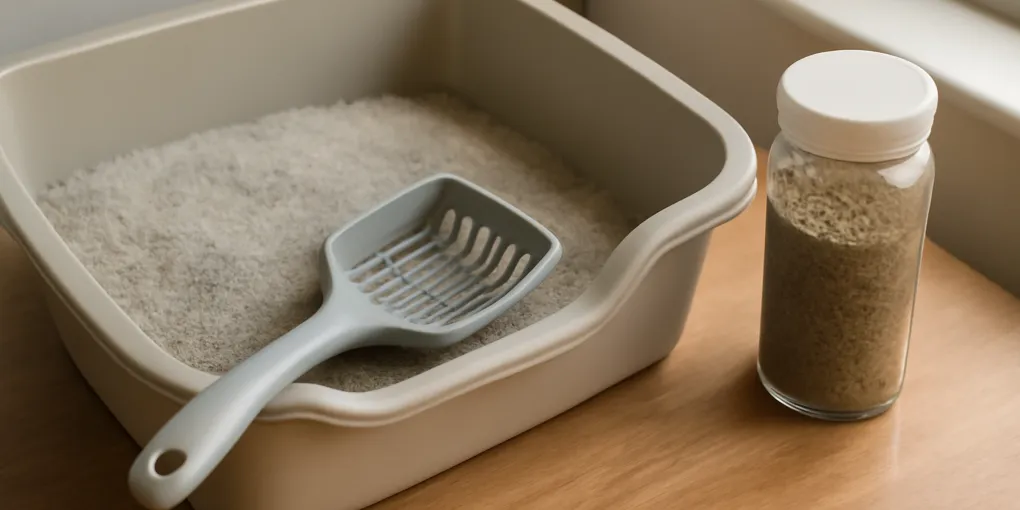
For a low-risk trial, start with an open, roomy box filled with unscented clumping litter. Mix the attractant only into that test box. Do not suddenly scent every box in the home. Cats that dislike the additive need a safe fallback, and a forced whole-house change can make avoidance worse.
When a veterinary check comes first
Litter-box avoidance is sometimes a behavior problem, but it is also a common way cats show discomfort. The Cornell Feline Health Center notes that changes in urination, straining, blood, and frequent trips to the box can point to lower urinary tract disease and deserve prompt veterinary attention (Cornell Feline Health Center: feline lower urinary tract disease). Male cats that cannot pass urine are an emergency.
Pain from arthritis can also change box use. A cat may still want to use litter but avoid a high wall, top-entry box, or basement location because stepping in hurts. International Cat Care recommends easy access, enough boxes, and quiet locations as part of feline environmental care (International Cat Care: litter trays).
Use this rule: if the problem is sudden, intense, or paired with pain signs, buy a vet appointment before buying a product. If the cat is medically stable and the pattern looks like preference or location, a product trial makes more sense.
The box reset that gives attractants a fair test
A fair test removes the common reasons cats reject a box. Put a new open box in the problem area or along the route the cat already uses. Choose a box long enough for the cat to enter, turn, dig, and posture without touching every wall. For many adult cats, that means an extra-large storage-bin style pan with one low entrance cut into it, or a large open litter pan.
Fill it with two to three inches of unscented clumping litter. If you are also replacing the pan, use the sizing and entry-height checks in our cat litter box guide before buying. Scoop daily. Wash the box with mild soap when residue builds up. Avoid citrus cleaners, ammonia odor, and strong fragrances around the box. Then add the attractant according to the package directions.
Do not add a hood, liner, deodorizing crystals, automatic rake, or perfumed litter during the same test. If the cat improves, you want to know which change helped. Too many changes make the result impossible to interpret.
What to buy first
If you want one attractant to try, Dr. Elsey’s Cat Attract Litter Additive is the most specific first choice because it is designed for mixing into litter rather than simply masking odor. Check the current package size, directions, seller, and return policy before buying: Search Amazon for Dr. Elsey’s Cat Attract additive.
If the current box is covered, small, scented, or hard to enter, spend the same budget on an open extra-large box and unscented litter. Those products fix more root causes. Search Amazon for extra-large open litter boxes and search Amazon for unscented clumping cat litter.
How long to trial it
Give a stable cat seven to fourteen days with the improved test box. Track where accidents happen, which box gets urine clumps, and whether stool use changes separately from urine use. If the cat uses the attractant box reliably, keep the setup stable for several more weeks before reducing any part of it.
If nothing changes after two weeks, do not keep adding more powder. Revisit medical causes, household stress, box count, and cleaning. The American Association of Feline Practitioners’ feline-friendly handling guidance emphasizes reducing stress and giving cats predictable choices; the same principle applies at home (AAFP/ISFM feline-friendly principles).
Reader test: should you buy it?
Buy a litter attractant if your cat is medically stable, already has enough boxes, and you want a controlled one-box trial. Do not buy it as a shortcut around a vet visit, a too-small box, dirty litter, or inter-cat conflict. The best outcome is not a magic powder; it is a cat choosing a clean, roomy, low-stress place to eliminate.
FAQ
Do cat litter attractants work for every cat?
No. Some cats investigate the scent and use the box more readily; others ignore it or dislike it. That is why the safest test uses one new box while keeping the old option available.
Can I use litter attractant with scented litter?
It is better to start with unscented litter. Layering fragrances can make the box less appealing and makes it harder to know what the cat is responding to.
What if my cat is peeing right beside the box?
That often points to pain, box entry trouble, cleanliness, or box design rather than ignorance about where the box is. Try a low-entry open box and call your veterinarian if the change is sudden or urine volume looks abnormal.