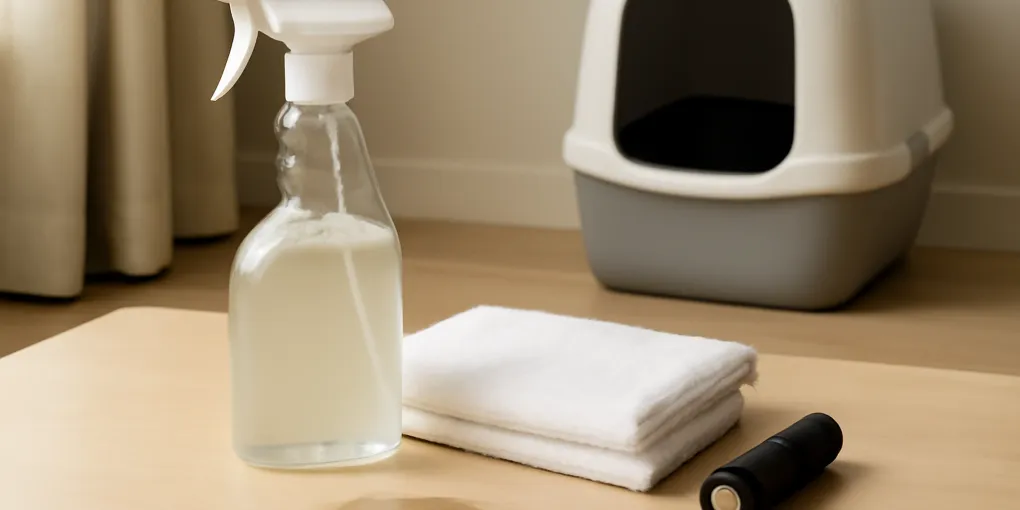
Cat Urine Enzyme Cleaner Protocol: Remove Odor Without Making the Spot More Attractive
ProtocolQuick picks
| Product | Key Specs |
|---|---|
| See price on Amazon |
|
| See price on Amazon |
|
Product availability, certifications, and retailer details can change; check the current Amazon page before buying.
Direct answer
A cat urine enzyme cleaner works best when you treat the accident like a depth problem, not a perfume problem. Blot wet urine, apply enough enzyme cleaner to reach the full contaminated layer, keep the cat away while it dries, and then solve the reason the cat skipped the litter box. Spraying a scented mist over the carpet surface often leaves the deeper odor available to the cat.
This is also a behavior and health issue. ASPCA litter-box guidance notes that house-soiling can be linked to medical issues, box cleanliness, location, substrate preference, stress, and territorial marking (ASPCA). The Humane Society recommends ruling out medical causes and keeping boxes clean, accessible, and appropriate for the cat (Humane Society). Cleaning the spot matters, but it is only half the fix.
Step 1: blot before adding cleaner
If the spot is fresh, press plain white towels into it until the towel stops picking up moisture. Stand on the towel for carpet if needed. Do not rub. Rubbing spreads urine sideways and can push it into fibers. Colored towels can bleed dye, and scented wipes can leave residues that complicate later cleaning.
For hard floors, check seams, baseboards, and the edge where flooring meets the wall. Cat urine often travels farther than the visible wet area. If the cat sprayed vertically, clean the wall, trim, and floor line rather than only the puddle.
Step 2: use enough enzyme cleaner
Search Amazon for cat urine enzyme cleaners when you need a product made for pet urine rather than a general deodorizer. It still has to contact the urine residue. On carpet, that can mean saturating past the fiber into the backing. On washable mats, it may mean soaking before laundering if the label allows it. Follow the product label for surface testing, pet exclusion, and dwell time.
Do not judge success while the spot is still wet. Many enzyme products need slow drying. Cover the area with an upside-down laundry basket or another breathable barrier so the cat cannot walk through it, groom it, or re-mark while the cleaner is active.
Step 3: find the full accident zone
Search Amazon for pet urine UV flashlights if the smell map does not match the visible stain. A light can help you inspect baseboards, wall corners, furniture skirts, and the carpet perimeter. Use it in a dark room and mark suspect areas with removable tape. UV is not proof by itself; lint, cleaners, and old stains can glow. Use it to guide a nose check and a cleaning map.
If the smell returns only on humid days, the deeper pad or subfloor may still hold residue. If the spot is near an exterior door, another animal’s scent outside may be part of the trigger. If it is near the box, check whether the entrance is too high, the box is too small, or the litter is painful for an older cat.
Step 4: fix the litter-box side
Clean the box daily, add a second box in a different location when households have conflict, and avoid sudden litter changes. Many cats prefer a large uncovered box with unscented clumping litter, but the right answer depends on the cat. A senior cat may need a low-entry box. A timid cat may need a box away from a noisy washer, dog gate, or ambush hallway.
Call a veterinarian promptly for straining, blood, frequent small trips, crying, sudden accidents, or a cat that seems unwell. Male cats with urinary blockage signs need emergency care. Do not keep buying stronger cleaners while ignoring a possible urinary problem.
When to replace instead of re-clean
Some items are not worth repeated rescue attempts. Thin cardboard scratchers, cheap foam mats, and urine-soaked cushion inserts can hold odor deep enough that cleaning costs more than replacement. Washable covers are different: treat the cover, inspect the insert, and replace only the part that still smells after drying.
If the accident reached carpet padding or subfloor, a surface cleaner may improve the room but still leave a target for the cat. That is when you may need to lift a corner, treat the backing, or ask a flooring professional what can be sealed or replaced.
What to avoid
Avoid ammonia-based cleaners, because ammonia-like odors can resemble urine cues. Avoid steam cleaning before enzyme treatment; heat can make some residues harder to remove. Avoid punishing the cat at the spot. Punishment increases stress and does not teach the cat that the clean litter box is safe.
Also avoid moving the litter box immediately after an accident unless the current location is clearly unsafe. Sudden relocation can create a second problem. Add a better box first, then phase changes gradually.
Cat urine enzyme cleaner FAQ
How long should enzyme cleaner sit on cat urine?
Follow the product label. For carpet and repeated spots, the important part is full-depth contact and slow drying, not a fixed minute count. If you blot it dry immediately, it may not reach the residue.
Can I wash a cat-urine blanket in the machine?
Usually yes if the fabric allows it, but pretreat with an enzyme product labeled for laundry or pet fabrics first. Use an unscented detergent when possible and air-dry until you are sure the odor is gone; dryer heat can set remaining smell.
When is cleaning not enough?
Cleaning is not enough when accidents repeat, the cat strains, the box setup is poor, another pet blocks access, or the urine reached padding or subfloor. At that point you need both veterinary/litter-box troubleshooting and deeper surface remediation.
Internal next step
If the accident pattern started after medication changes or a stressful treatment routine, review the cat medication station setup protocol. If the cat also avoids drinking stations, the cat water bowl placement protocol can help separate hydration access from litter-box stress.
Sources
- ASPCA: Common cat behavior issues: litter box problems
- Humane Society: How to help your cats use the litter box
Frequently Asked Questions
- Avoid layering household mixtures before reading the enzyme product label. Residues can reduce contact with the urine salts the cleaner needs to reach.
- The cleaner may not have reached the pad, subfloor, wall edge, or repeated spray area. Slow drying and full-depth saturation matter more than surface fragrance.