Quick picks
Pet pill organizer with locking lid
★ Top pick Best for multi-dose routines- Reduces missed doses
- Keeps human and pet meds separated
- Easy caregiver handoff
- Must be filled from original label carefully
- Not childproof by default
Cat pill pockets or soft medication treats
Best first low-stress attempt- Can avoid forced handling
- Useful for some tablets
- Easy reward pairing
- Not for every diet
- Some cats eat around pills
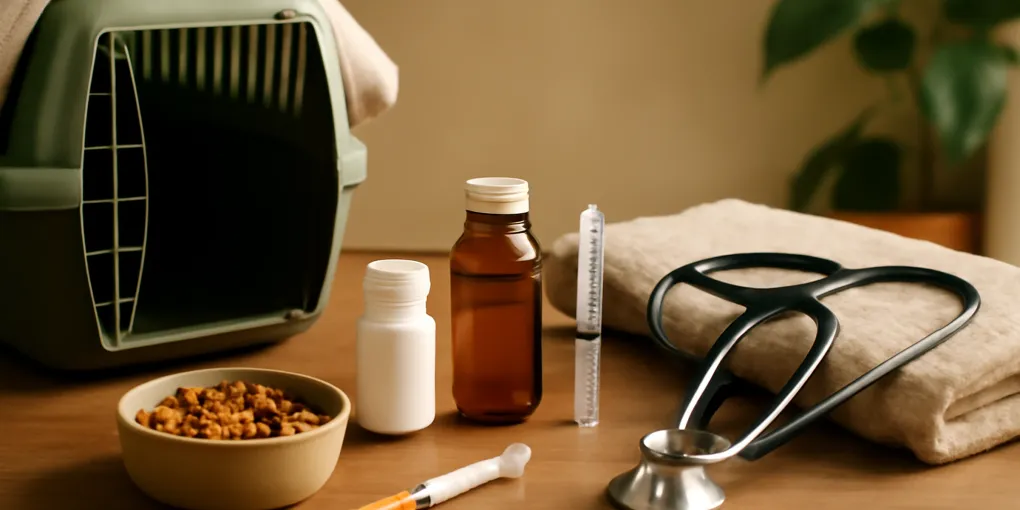
A cat medication station is not a fancy cabinet. It is one predictable place where the prescription label, dose log, tools, towel, and reward all live. That matters because most missed doses happen when the routine depends on memory during a rushed morning or a stressed evening.
The station should make the correct action easier than the wrong one: right medication, right cat, right time, right storage, and a calm exit after the dose.
Quick comparison: cat medication station tools
Start with a small bin or drawer that closes securely. Add:
- the medication in its original labeled container
- a written dose schedule and vet contact number
- a locking pill organizer only if the label and dose schedule are clear. Search Amazon for locking pet pill organizer.
- oral syringes or pill tools provided or approved by the clinic
- a washable towel for gentle wrapping
- cat-safe treats or a lickable reward if allowed. Search Amazon for cat medication treats.
- a small flashlight for checking whether a pill was swallowed
For cats that also resist carriers, use the same low-pressure training style as our cat carrier training protocol: short sessions, rewards, and no surprise wrestling unless the medication is urgent and the veterinary team has told you it cannot wait.
Step 1: separate pet medication from human medication
Do not store cat tablets in the same pill case as human medication. The AVMA medication safety page warns pet owners to follow veterinary directions and keep medications safely handled (AVMA medications and pets). A simple labeled pet-only bin prevents look-alike mistakes.
If the prescription says refrigerate, the station becomes a labeled fridge container plus a small counter kit for tools. If it says protect from light or keep at room temperature, follow that instead. Convenience should never override the label.
Step 2: choose the least stressful delivery method that works
Try the lowest-stress option first when the medication allows it:
- a plain treat with no medication
- a treat with the medication hidden
- a lickable reward after the dose
- towel support plus a pill tool or syringe if needed
International Cat Care’s tablet guidance explains that some cats can take tablets in food while others need direct pilling, and that the method should suit the individual cat (International Cat Care tablet advice). The station should support both paths without turning every dose into a chase.
Step 3: write the dose log before the first dose
Use a paper card, whiteboard, or shared note. Record date, time, dose, caregiver initials, and any problem such as vomiting, drooling, hiding, or a missed swallow. For twice-daily drugs, write the next dose window before closing the station.
A log is especially useful in multi-cat homes, for antibiotics with a set course, and for senior cats taking more than one medication.
Step 4: use a handling sequence
Bring the cat to a quiet room before opening pills or syringes. Place the towel on a stable surface. Give one tiny treat, dose, then give the reward and release. Do not keep inspecting the cat after every successful dose unless the medication requires monitoring. Ending quickly protects trust.
If you use a liquid, measure at eye level and avoid squirting fast into the back of the throat. Aim for the cheek pouch as your veterinary team demonstrates. If your cat coughs, gags, or struggles hard, stop and call the clinic for a better plan.
Step 5: clean and reset
Wash syringes as directed, throw away food residue, and close the medication container immediately. Refill treat supplies away from the cat so the station does not become a place where the cat learns to steal or avoid.
Product fit notes
Locking pill organizer: Use this only as a dose-management aid, not as the source of truth. Fill it in a quiet moment, one prescription at a time, with the original bottle beside it. If tablets change color, dose, or schedule, empty and relabel the organizer before the next caregiver uses it. In homes with children or pets that open drawers, the organizer still belongs inside a latched cabinet.
Pill pockets and soft medication treats: These are best for cats that already accept treats and for tablets the veterinary team says can be hidden in food. Give one empty treat first, then the medicated treat, then another empty treat so the cat does not learn that every treat has a bitter center. For cats on urinary, kidney, allergy, or weight-loss diets, ask before adding treat calories or new ingredients.
Towel and syringe setup: A towel should support the body, not pin the cat in panic. Fold it before bringing the cat into the room. If you are using a liquid, draw the measured dose before pickup so the handling period is short.
When to call the veterinary team
Call before changing the schedule, crushing tablets, mixing medicine into a full meal, or skipping a dose because the cat resisted. Also call for facial swelling, repeated vomiting, breathing changes, collapse, severe drooling, or if a second pet may have eaten the medication.
VCA’s cat pilling guidance is a useful owner-facing reminder that technique and follow-up matter when tablets are difficult (VCA giving pills to cats). The most important home rule is not to improvise around a failed dose without professional instructions.
Cat medication station FAQ
Can I crush a cat pill into food?
Only if your veterinarian or pharmacist says that exact medication can be crushed. Some tablets have coatings, flavors, or release patterns that should not be changed.
What if my cat hides as soon as I touch the bottle?
Move the prep step out of sight and rebuild the routine with treat-only visits to the station. If the medication is urgent, ask about compounded liquids, transdermal options, or clinic demonstrations.
Should I use a weekly pill organizer?
A locking organizer can help when it is filled carefully from the original label, but keep the original bottle and instructions. Do not mix different cats’ medications in one unlabeled case.
Bottom line
A good medication station lowers error risk and stress. Keep the original label, use a written log, separate pet meds from human meds, and choose the gentlest delivery method that still gets the prescribed dose into the cat.
Frequently Asked Questions
- Store it exactly as the prescription label says, away from heat, moisture, children, and other pets. Do not combine unknown tablets in an unlabeled container.
- No. Check the ingredients against your cat's diet and medical restrictions, and ask your veterinarian before hiding any medication that must be given on an empty stomach.
- Do not double-dose automatically. Confirm whether the tablet was swallowed, note the time, and call the veterinary team for instructions when you are unsure.