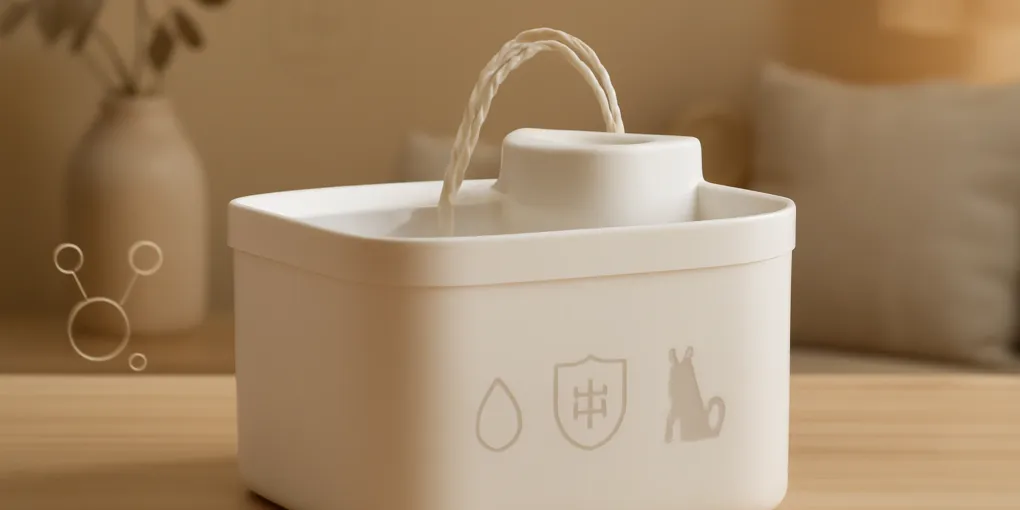
Do Cats Need a Water Fountain? Hydration Science Explained
Evidence ExplainerQuick picks
| Product | Key Specs |
|---|---|
| See price on Amazon |
|
| See price on Amazon |
|
| See price on Amazon |
|
Product availability, certifications, and retailer details can change; check the current Amazon page before buying.
Editorial Transparency
Pet Science Review uses AI tools during drafting support, outline organization, and source review. Human editors review every article for accuracy, clarity, product-link policy, and source quality. We do not fabricate reviewers, veterinary credentials, test results, ASINs, or citations.
Do Cats Need a Water Fountain? Hydration Science Explained
Cats do not universally need a water fountain. Some cats drink more from moving water, some ignore it, and some prefer a wide still bowl placed far from food and litter. The better question is whether a fountain increases your cat’s total water intake enough to justify the cleaning work.
For many cats, especially those eating mostly dry food or with a history of lower urinary tract disease, a fountain can be a useful hydration tool. But it is not magic, and a dirty fountain can become worse than a clean bowl.
TL;DR
- Fountains can help cats that prefer moving, fresh-tasting water.
- Wet food usually changes water intake more reliably than a fountain alone.
- Urinary symptoms need a veterinarian, especially straining or blood in urine.
- Stainless steel or ceramic fountains are easier to keep sanitary.
- Cleaning discipline matters more than the fountain’s feature list.
PSR Composite Score: How We Weighted the Evidence
For hydration explainers, Pet Science Review weights the science more heavily than product preference because the practical outcome is total water intake, not fountain ownership.
| Criterion | Weight | Score | Weighted | Why it matters here |
|---|---|---|---|---|
| Research Depth | 30% | 8.5 | 2.55 | Veterinary nutrition, urinary-health, and feline behavior sources support the framework |
| Evidence Quality | 25% | 7.5 | 1.88 | Stronger for dietary moisture and urine dilution; weaker for product-specific fountain claims |
| Value | 20% | 8.0 | 1.60 | Fountains can be worthwhile but only if the cat uses them and filters/pumps stay affordable |
| User Signals | 15% | 8.5 | 1.28 | Cat preference, noise tolerance, bowl location, and cleaning habits strongly affect results |
| Transparency | 10% | 9.0 | 0.90 | Clearly separates evidence-based hydration strategy from manufacturer claims |
| Composite | 100% | 8.21/10 | Strong practical recommendation with explicit limitations |
The main evidence limitation is product specificity. Hydration science is real; claims that any particular fountain will solve a urinary problem are much less certain.
The Hydration Problem in Cats
Domestic cats evolved from desert-adapted ancestors and often have a lower thirst drive than humans expect. They can concentrate urine effectively, but that adaptation can become a disadvantage in modern indoor life, especially when a cat eats mostly dry kibble.
Dry cat food is often around 8–12% moisture. Canned food is commonly around 70–80% moisture. That difference means diet can have a large effect on total water intake before a fountain enters the picture.
Veterinary nutrition research has repeatedly found that increasing dietary water can increase total water intake and urine volume in cats. More dilute urine is clinically relevant because feline lower urinary tract disease is influenced by urine concentration, stress, diet, and medical factors.
A fountain should therefore be viewed as one part of a hydration system:
- Moisture in food.
- Clean water access.
- Bowl/fountain placement.
- Stress reduction.
- Veterinary monitoring for cats with urinary history.
Why Some Cats Prefer Moving Water
A fountain may appeal to cats for several practical reasons:
- Movement makes water easier to detect. Cats are visually sensitive to motion, so rippling water may attract attention better than a still surface.
- Aeration can improve taste. Moving water may taste fresher, especially if filtered.
- Some cats dislike whisker contact. Many fountains have a broad drinking surface compared with narrow bowls.
- Temperature and odor matter. Freshly circulated water may smell less stale than water sitting in a small bowl.
However, preference is individual. A fountain is not a guaranteed fix for low drinking.
Evidence Quality: What We Know and What We Do Not
| Claim | Evidence strength | Practical takeaway |
|---|---|---|
| Cats eating wet food often consume more total water | Strong | Diet moisture is the most reliable lever |
| Diluting urine can support urinary-risk management | Moderate to strong | Relevant for cats with urinary history, under vet guidance |
| Fountains make all cats drink more | Weak to mixed | Preference varies; measure your own cat’s response |
| Fountain filters replace cleaning | False | Filters do not remove the need to wash the pump and reservoir |
The biggest evidence gap is product-specific. Manufacturers may claim better hydration, but most fountain claims are not supported by independent trials comparing named fountain models in real homes. That does not mean fountains are useless; it means owners should track results instead of assuming benefit.
How to Test Whether a Fountain Helps Your Cat
Use a simple two-week home test.
Week 1 — Baseline
- Keep your current water setup.
- Measure how much water you place in the bowl each morning.
- Estimate remaining water at the same time the next morning.
- Note diet: dry, wet, or mixed.
- Record litter box changes: clump size, frequency, straining, blood, or accidents.
Week 2 — Fountain Trial
- Add the fountain while keeping a regular bowl available.
- Measure refill volume daily.
- Watch which station your cat chooses.
- Keep diet stable so you do not confuse results.
- Clean the fountain before the trial and midweek.
If water intake, urine clump size, or drinking frequency improves and your cat uses the fountain comfortably, it may be worth keeping. If your cat ignores it, try a wide ceramic or stainless bowl in a new location before buying another device.
Fountain Features That Actually Matter
1. Easy Cleaning
The best fountain is the one you will clean. Look for:
- Few parts.
- Dishwasher-safe bowl/reservoir when possible.
- Pump that can be disassembled.
- Smooth surfaces with minimal corners.
Biofilm is the slippery layer that forms when microbes attach to wet surfaces. It can build up in bowls, fountains, and pump housings. Filters reduce debris and odors, but they do not eliminate biofilm.
2. Material
Stainless steel: Durable, easy to sanitize, less likely to scratch.
Ceramic: Heavy, quiet, and easy to clean, but breakable.
Plastic: Lightweight and cheap, but scratches can trap residue and may contribute to chin irritation in some cats.
3. Noise Level
Cats may avoid a loud pump. Humans may unplug it if it hums all night. A quiet pump and stable water level matter more than decorative streams.
4. Capacity
Larger reservoirs reduce refill frequency, but they do not reduce cleaning frequency. Multi-cat homes usually need higher capacity and more than one water station.
Product Search Shortlist
Because availability, seller quality, and model details change frequently, compare the current listing before purchase. Verify the current listing before purchase.
- Search Amazon for Stainless steel cat water fountain — best first search for durability and cleaning.
- Search Amazon for Ceramic cat water fountain — good for quiet operation and heavier bases.
- Search Amazon for Quiet cat fountain replacement pump — check pump availability before choosing a fountain.
- Search Amazon for Cat fountain filters multi pack — recurring filter cost matters.
When a Fountain Is Worth Buying
A fountain is most likely worth trying when:
- Your cat already seeks faucets, sinks, or dripping water.
- Your cat eats mostly dry food and drinks visibly from bowls.
- You can commit to weekly deep cleaning.
- Your cat has a urinary history and your veterinarian wants more water intake.
- You have multiple cats and need water stations in several rooms.
A fountain is less compelling when:
- Your cat eats mostly wet food and has normal litter box habits.
- You know you will not clean the pump and reservoir regularly.
- Your cat is noise-sensitive and avoids appliances.
- The household already struggles to maintain basic bowl hygiene.
Red Flags: Do Not Treat Urinary Symptoms With a Fountain Alone
Call your veterinarian promptly if you notice:
- Straining to urinate.
- Frequent trips to the litter box with little output.
- Crying in the box.
- Blood in urine.
- Urinating outside the box.
- Licking the urinary opening repeatedly.
- Lethargy, vomiting, or hiding.
A male cat that cannot urinate is an emergency. A fountain cannot treat obstruction, infection, bladder stones, or inflammatory urinary disease.
Bowl Placement Often Matters as Much as the Fountain
Before assuming your cat needs a new device, test the environment. Many cats prefer water away from food because food crumbs and odors can contaminate the bowl. Others avoid high-traffic areas where they feel exposed while drinking.
Try this setup for seven days:
- One wide stainless or ceramic bowl in a quiet room.
- One bowl near your cat’s usual resting area.
- One fountain, if you are testing one.
- Food and litter kept away from all water stations.
Watch which station your cat chooses without forcing the decision. If the quiet bowl beats the fountain, you learned something useful without adding pump maintenance.
Cleaning Protocol for Fountains
A fountain should make water more appealing, not dirtier. Use this maintenance schedule:
- Refill with fresh water daily.
- Rinse visible hair or food debris daily.
- Disassemble and wash the bowl, reservoir, and spout weekly.
- Open and clean the pump housing weekly or every other week.
- Replace filters on schedule, but do not treat filters as a cleaning substitute.
- Replace scratched plastic parts that hold grime.
If your cat has acne on the chin, recurrent vomiting after drinking, or sudden fountain avoidance, deep clean the unit and switch temporarily to a plain bowl while you assess the problem.
Diet Still Drives the Biggest Hydration Change
For many cats, adding wet food changes daily water intake more reliably than adding a fountain. That does not mean every cat must eat all wet food, but owners should discuss urinary history, kidney status, weight, and diet preferences with a veterinarian before relying on a fountain alone.
Multi-Cat Homes Need More Than One Station
In multi-cat households, one fountain in one room may not solve water access. Cats can guard resources subtly by sitting near a doorway, staring, or blocking a route. A shy cat may drink less if the only fountain is in a socially busy location.
Use the same rule many feline behaviorists apply to litter boxes and feeding stations: spread resources out so one cat cannot control all access points. Two inexpensive bowls in quiet rooms may outperform one premium fountain in a hallway.
Watch for indirect signs of conflict: one cat drinks only at night, waits until another cat leaves, or uses sinks and bathtubs instead of the shared station. Those patterns are not stubbornness. They may be resource-avoidance behavior.
If your cat has kidney disease, diabetes, hyperthyroidism, or a urinary diagnosis, ask your veterinarian how to monitor water intake without creating stress. Sudden increases in thirst can be a medical sign, not just proof that the fountain is working. Track appetite, weight, litter output, and behavior together.
Sources
- National Research Council. Nutrient Requirements of Dogs and Cats. National Academies Press, 2006. https://nap.nationalacademies.org/catalog/10668/nutrient-requirements-of-dogs-and-cats
- Buckley CMF, Hawthorne A, Colyer A, Stevenson AE. “Effect of dietary water intake on urinary parameters in healthy cats.” Journal of Feline Medicine and Surgery. 2011;13(10):711-718. DOI: 10.1016/j.jfms.2010.10.005. https://doi.org/10.1016/j.jfms.2010.10.005
- Forrester SD, Towell TL. “Feline idiopathic cystitis.” Veterinary Clinics of North America: Small Animal Practice. 2015;45(4):783-806. DOI: 10.1016/j.cvsm.2014.11.006. https://doi.org/10.1016/j.cvsm.2014.11.006
- American Association of Feline Practitioners. “Cat Friendly Homes” health and environment resources for cat owners. https://catfriendly.com/
- Merck Veterinary Manual. “Disorders of the Lower Urinary Tract in Cats.” Owner health reference used for urinary red-flag framing. https://www.merckvetmanual.com/cat-owners/kidney-and-urinary-tract-disorders-of-cats
Bottom Line
A cat water fountain is worth trying if it increases your cat’s voluntary water intake and you will clean it consistently. It is not a substitute for wet food, clean water stations, or veterinary care for urinary symptoms. Choose stainless steel or ceramic when possible, measure whether your cat actually uses it, and treat cleaning as part of the product, not an optional chore.
Frequently Asked Questions
- Some cats do, but not all. Cats vary strongly in drinking preferences. A fountain can help if your cat prefers moving water, but wet food, multiple clean water stations, and bowl placement can be just as important.
- More total water intake can dilute urine, which is relevant for cats with lower urinary tract issues. A fountain is one tool for increasing voluntary drinking, but urinary signs require veterinary diagnosis and a full diet/medical plan.
- Rinse and refill daily, wash the reservoir and pump parts at least weekly, and replace filters on the manufacturer's schedule. Biofilm can build up quickly if fountains are not cleaned.
- Stainless steel and ceramic are generally easier to clean and less prone to scratches that harbor grime. Plastic can work if cleaned diligently, but scratched plastic should be replaced.