Cat Water Fountain Hygiene Protocol: How to Keep Recirculating Water Safe
ProtocolQuick picks
| Product | Key Specs |
|---|---|
| See price on Amazon |
|
| See price on Amazon |
|
| See price on Amazon |
|
Product availability, certifications, and retailer details can change; check the current Amazon page before buying.
Cat Water Fountain Hygiene Protocol: How to Keep Recirculating Water Safe
A cat water fountain can be helpful, but it is not automatically cleaner than a bowl. The motor keeps water moving, the reservoir increases the amount of water available, and some cats drink more readily from a trickle than from still water. Those benefits only hold when the fountain is cleaned on a schedule that matches the real household: number of cats, hair load, food dust, mineral scale, room temperature, and how reliably the pump can be taken apart.
The main hygiene problem is not the visible water line. It is the thin film that forms on plastic seams, stainless basins, ceramic glaze, silicone gaskets, filter trays, and the small cavity around the impeller. That film can trap saliva, food crumbs, hair, and minerals. If the owner only tops off the reservoir and swaps a filter, the fountain may look acceptable while the pump chamber and spout are carrying residue. This protocol treats the fountain as a small recirculating appliance: daily water management, twice-weekly surface washing for most homes, scheduled pump service, and replacement of worn parts before they become impossible to clean.
Use this guide as a practical home routine, not as a diagnosis tool. If a cat suddenly drinks far more or far less, urinates outside the box, strains to urinate, loses weight, vomits, hides, or seems painful, the water station is not the first explanation to chase. Those signs deserve veterinary attention. For older cats, pair fountain observations with a broader home log like the one in our senior cat care protocol, because hydration, appetite, litter habits, and body weight are connected.
How to judge whether a fountain will stay clean
A good fountain hygiene setup is less about the advertised water flow and more about what the owner can inspect, scrub, and replace. The safest choice has a smooth basin, a pump cover that opens without special tools, a visible filter tray, and spare parts that are easy to buy before the first pump starts rattling. Claims about quieter motors or fresher-tasting water are secondary if the impeller cavity traps hair or the basin has tight corners that never dry.
Use the buying decision to stress-test the cleaning routine before the fountain comes home:
- Can you remove the pump cover, impeller, filter tray, spout, silicone gasket, and reservoir without forcing clips?
- Can a bottle brush or small detail brush reach the channels that stay wet between refills?
- Are replacement filters and pumps available as normal parts, not only as a bundled fountain replacement?
- Is the basin stainless steel, glazed ceramic, or another smooth material you can inspect under bright light?
- Will the fountain still be practical during busy weeks, multi-cat hair load, hard-water scale, and travel handoffs?
A beautiful ceramic model with a sealed pump is a hygiene compromise. A cheap plastic model with rough seams is also a compromise, even if the motor is quiet. A stainless steel cat fountain with a wide basin, stable flow, replaceable pump, and dishwasher-safe non-electrical parts can be a strong value if the owner will actually wash it. The best cat fountain hygiene plan is the one that survives ordinary weeks, not the one that looks perfect in a setup photo.
Practical buying shortlist
| Check price | Need | What to search | Why it matters |
|---|---|---|---|
| Check Stainless Steel Cat Fountain Wide Basin on Amazon | Main fountain | stainless steel cat fountain wide basin | Stainless basins are usually less porous than scratched plastic and easier to inspect under bright light. |
| Check Cat Fountain Replaceable Pump Impeller Access on Amazon | Pump access | cat fountain replaceable pump impeller access | A pump with a removable cover lets you clean hair and scale from the impeller chamber. |
| Check Cat Fountain Replacement Filters Multi Pack on Amazon | Filter schedule | cat fountain replacement filters multi pack | Filters should be affordable enough that you do not stretch them far beyond the maker schedule. |
| Check Small Bottle Brush Set Pet Fountain on Amazon | Detail cleaning | small bottle brush set pet fountain | Narrow brushes reach spouts, corners, pump slots, and silicone channels. |
| Check Stainless Steel Cat Water Bowl Non Slip on Amazon | Backup bowl | stainless steel cat water bowl non slip | A plain bowl keeps water available during washing, power outages, or fountain refusal. |
When comparing listings, look for photographs of the underside, pump chamber, filter tray, and spout, not only the front view. If a listing does not show how the pump comes apart, assume cleaning will be harder. Prefer models with smooth basins, rounded interior corners, a stable low-voltage pump, and parts you can buy separately. Avoid fountains with decorative stones, complex towers, non-removable tubing, fragile clips, or deep grooves that collect wet hair.
What a fountain can and cannot solve
A fountain can make water more interesting, keep a larger volume available, and reduce the stale smell that some cats dislike. It may help households where a cat paws at still water, drinks from faucets, or empties small bowls quickly. It can also help owners notice changes: a reservoir that drops faster than usual, a cat that hovers at the stream, or water that becomes cloudy between cleanings.
A fountain cannot make unsafe water safe, replace veterinary care, or compensate for a diet and home layout that discourages drinking. It also cannot clean itself. Carbon filters may improve taste and catch some particles, but they do not remove the need to wash the basin and pump. Foam prefilters catch hair, yet they become dirty objects themselves. A filter is part of the maintenance system, not a substitute for it.
Cats vary in preference. Some like a gentle bubbling surface. Some prefer a falling stream. Others avoid splashing, motor vibration, reflective metal, or a fountain placed too near food or the litter box. A cautious cat may need a week with the fountain unplugged before the pump is introduced. Keep the old water bowl available during the transition so the cat is never forced to choose between thirst and a new object.
Setup protocol: the first day
Before the fountain touches the floor, wash every non-electrical part with warm water and unscented dish soap. Rinse until the surface no longer feels slippery. If the model includes a carbon filter, rinse it separately according to the package directions until loose black dust stops running out. Soak ceramic parts if the maker recommends it, and inspect glazed surfaces for chips or rough edges. Do not submerge the motor unless the instructions explicitly say it is safe; most pumps need external wiping and internal impeller cleaning, not full soaking of the cord or plug.
Choose placement deliberately. Put the fountain on a washable mat away from the litter box, away from heavy foot traffic, and far enough from dry food that crumbs are not falling into the basin. Cats with whisker sensitivity often do better with a wide drinking surface than with a narrow cup. Senior cats and cats with arthritis need a location that does not require jumping, squeezing behind furniture, or leaning at an awkward neck angle.
Fill to the marked line before plugging in the pump. Running a pump low can make it noisy, heat the motor, and concentrate residue. Watch the first hour of use. Confirm that the stream is not splashing onto the floor, the cord is not attractive to chewing, and the cat can approach without being startled by vibration. If the pump hums loudly, unplug it and reseat the impeller cover; noise often means trapped air, low water, hair in the intake, or a poorly seated component.
Keep a plain backup bowl next to the fountain for at least several days. If the cat drinks from the bowl and ignores the fountain, do not remove the bowl to force the issue. Instead, turn the fountain off for a day, let the cat investigate it as a still-water station, and then restart the pump for short periods. Reward calm investigation with a small treat or praise if that is normal for your cat.
Daily water routine
Once each day, empty and refill the drinking water rather than only topping it off. Topping off dilutes visible cloudiness, but it leaves saliva proteins, hair, dust, and minerals cycling through the same surfaces. During the refill, run a finger along the inside wall of the basin. If it feels slick, the fountain needs washing that day even if the schedule says tomorrow.
Check the water level morning and evening in hot weather, multi-cat homes, and homes with long-haired cats. Hair can block the intake and make the pump run dry while the basin still appears to have water. Listen for a new rattle, buzz, or sputter. Sound changes are early warnings that the water is low, the impeller is dirty, or the pump has shifted.
Look at the cat, not just the appliance. A healthy routine should preserve normal drinking access. Note any sudden increase in visits, hovering at the fountain without drinking, pawing without swallowing, drooling, coughing, or avoidance. These are not proof that the fountain is the cause, but they are reasons to pause and reassess the setup.
Twice-weekly washing protocol
For most single-cat households, wash the basin, lid, spout, and filter tray at least twice weekly. In multi-cat homes, warm rooms, homes with messy eaters, or fountains near sunny windows, every other day may be more realistic. If you see slime, cloudy water, floating hair mats, food crumbs, or pink-orange residue, clean immediately.
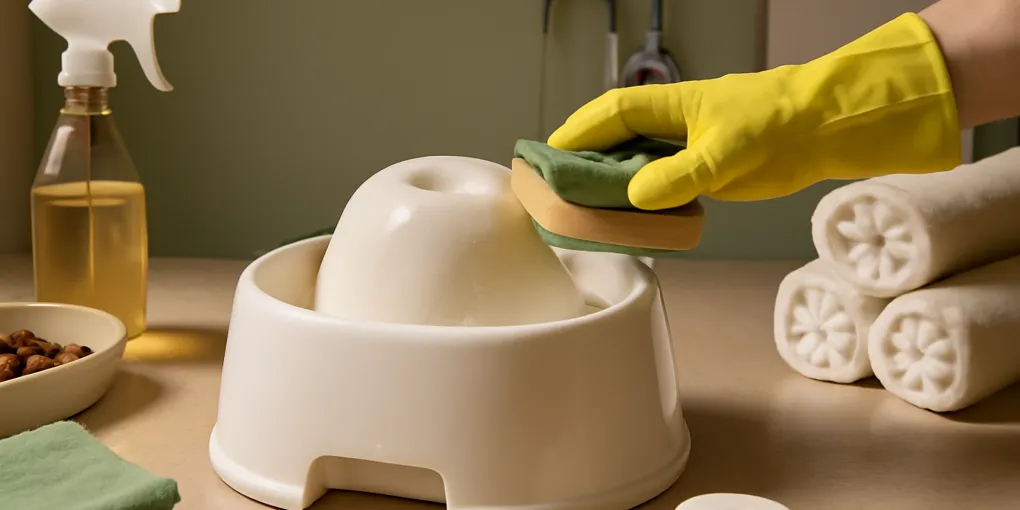
Unplug the unit before disassembly. Remove the filter and set it aside if it is still within its useful period; replace it if it is discolored, smelly, swollen, clogged, or overdue. Wash hard parts with warm water and mild dish soap. Use a dedicated brush for corners, spout openings, and the underside of lids. Scrub until the surface squeaks lightly under your fingers rather than sliding under a slick layer. Rinse thoroughly because soap scent can discourage drinking.
Dry parts before reassembly when possible. A clean towel and a few minutes of air exposure help you spot missed residue. If the basin is dishwasher-safe, the dishwasher can be useful, but it is not magic. Pre-rinse hair and food debris first, place small parts in a basket, and still inspect the spout and pump path afterward. Electrical parts stay out of the dishwasher.
Do not use harsh cleaners, essential oils, scented disinfecting wipes, or strong fragrance products in the water path. If a deeper sanitation step is needed because the fountain was neglected, follow the manufacturer’s approved method and rinse repeatedly. When in doubt, retire damaged plastic, cracked ceramic, or a pump that stays slimy after cleaning.
Pump and impeller hygiene
The pump is the part most owners under-clean. Water may look clear while hair is wrapped around the impeller shaft or gray residue is packed behind the intake cover. Plan a pump service every one to two weeks, and more often for long-haired cats or heavy shedders.
Unplug the fountain, remove the pump, and take off the intake cover according to the instructions. Many small pumps have a second faceplate and a magnetic impeller that lifts out with a fingernail or tweezers. Pull hair from the shaft, wipe the cavity with a cotton swab or tiny brush, and rinse mineral grit away. If the impeller does not spin freely after cleaning, the pump may be worn or scaled.
Hard water leaves white crust on the pump, basin, and spout. Mineral scale narrows openings and gives residue more surface to cling to. If the maker allows a vinegar soak for non-electrical parts, use it sparingly, rinse until no odor remains, and never leave a vinegar smell in the drinking path. For pumps, follow the specific instructions; some tolerate brief cleaning of removable parts, while others should only be wiped and brushed.
A noisy pump is not just annoying. It can make a cat avoid water and may signal mechanical stress. Replace pumps that overheat, smell burnt, shock the water, expose wires, or restart unpredictably. Cord damage is an immediate stop sign.
Filter schedule and realistic expectations
A cat fountain filter schedule should be based on water quality, cat hair, fountain design, and manufacturer guidance. Many carbon filters are changed every two to four weeks, while foam prefilters may need rinsing or replacement sooner. Treat those ranges as a starting point. A filter in a two-cat home with long hair and hard water works harder than the same filter in a quiet single-cat home.
Rinse new filters before use. Loose carbon dust can cloud the reservoir and make owners think the fountain is dirty before it has been used. Seat the filter in the correct direction; backwards filters may bypass the intended flow path. Do not stretch a filter because it still looks mostly white. Odor, reduced flow, slime, swelling, and trapped hair are better indicators than calendar optimism.
Filters improve taste and catch debris, but they do not sterilize the system. If the basin is slick, wash the basin. If the pump is clogged, clean the pump. If the water smells stale after a fresh filter, check hidden surfaces and consider whether the fountain material is scratched or the reservoir is too large for the household’s turnover.
Material choices: stainless, ceramic, and plastic
Stainless steel is often the easiest material to recommend for cat water fountain hygiene because it resists scratching, shows residue clearly, and tolerates frequent washing. Look for smooth welds, no rust spots, and a basin shape that does not trap water under a decorative lip. Low-quality metal can discolor or pit, so inspect it during every wash.
Ceramic can be a good option when the glaze is intact and the fountain is not too heavy to clean safely. It may feel stable and quiet, but chips and crazing lines create places for grime to collect. A cracked ceramic fountain should be retired from water service. Also consider the human factor: if a heavy ceramic basin is awkward to carry, it may be cleaned less often.
Plastic is not automatically unsafe, but it is less forgiving. Scratched plastic, cloudy plastic, and rough seams are hard to clean thoroughly. If you use plastic, replace worn parts promptly and avoid abrasive scrubbing that deepens scratches. Plastic may be acceptable for a temporary or budget setup, but it should not be treated as permanent if the surface is deteriorating.
Red flags that mean stop using the fountain
Stop and switch to a clean bowl if the fountain gives an electrical tingle, the cord is chewed, the pump smells hot, the basin repeatedly grows slime within a day of cleaning, or parts cannot be taken apart enough to remove residue. Also stop if the cat is drinking less because the sound, splash, or location is stressful.
Call a veterinarian promptly if a cat strains in the litter box, produces little or no urine, cries while urinating, has blood in urine, becomes lethargic, or vomits alongside drinking changes. Male cats with urinary blockage signs need urgent care. A fountain may help provide water access, but it does not treat urinary obstruction, kidney disease, diabetes, hyperthyroidism, dental pain, nausea, or anxiety.
For households with immunocompromised people or pets, be stricter. Wear gloves if needed, wash hands after handling the fountain, and avoid letting dirty fountain parts sit in a kitchen sink with human dishes. Clean the sink afterward if it is used for pet equipment.
Common mistakes that create dirty fountains
The first mistake is buying too much reservoir for too little turnover. A huge reservoir can encourage owners to wait several days before emptying it. If one cat barely lowers the water level, choose a smaller capacity or commit to dumping water daily.
The second mistake is judging cleanliness by the top surface. Biofilm often starts where water slows down: under the lid, inside the spout, behind the filter, and around the pump. The third mistake is trusting the filter more than the brush. No filter compensates for a basin that has not been scrubbed.
Another common mistake is placing the fountain beside food. Kibble dust and wet-food splatter quickly become pump debris. Place water a short distance away, ideally in a quiet route the cat already uses. Finally, owners often ignore noise. A fountain that rattles every night may still function, but a cat may silently decide to drink elsewhere or drink less.
Simple two-week audit
Use a short audit before deciding whether a fountain is working. On day one, record the model, material, location, filter date, and pump-cleaning date. Each day, note whether the water was emptied, whether the basin felt slick, and whether the cat drank comfortably. Twice during the audit, take the pump apart and record what you find: hair, grit, scale, odor, or nothing unusual.
At the end of two weeks, ask three questions. Did the cat keep reliable water access? Could the household clean the fountain without resentment or skipped parts? Did the fountain stay cleaner than a bowl would have under the same conditions? If the answer to any question is no, change the setup. That may mean a simpler fountain, a wider bowl, a different location, more frequent washing, or no fountain at all.
FAQ
How often should multi-cat fountain hygiene be reset?
Empty and refill it daily. Wash the basin, lid, spout, and filter tray at least twice weekly for many single-cat homes, and more often if there are multiple cats, long hair, warm rooms, food crumbs, hard water, visible slime, or odor. Clean the pump and impeller every one to two weeks, or sooner if the flow slows or the motor becomes noisy.
Can I just replace the filter instead of washing the fountain?
No. Filters catch some debris and may improve taste, but the basin, spout, pump chamber, and filter tray still collect residue. A fresh filter in a dirty fountain sends water through dirty surfaces.
Are stainless steel cat fountains better than plastic fountains?
Often, yes for cleaning practicality. Stainless steel resists scratches better than plastic and makes residue easier to see. Plastic can work when it is smooth and new, but scratched or cloudy plastic should be replaced because grooves are harder to scrub clean.
Why does my fountain get slimy so quickly?
Fast slime usually means saliva, food dust, hair, warm room conditions, hard-water scale, or hidden residue is feeding biofilm. Move the fountain away from food, wash more often, clean the pump cavity, check the spout and lid underside, and consider whether scratched parts need replacement.
How often should I change cat fountain filters?
Follow the maker’s range, often around two to four weeks for carbon filters, but adjust sooner for odor, discoloration, swelling, reduced flow, trapped hair, or multi-cat use. Foam prefilters may need rinsing or replacement more frequently.
Should I leave a bowl out if I use a fountain?
Yes, at least during transition and whenever the fountain is being washed. A backup bowl protects the cat during power outages, pump failure, cleaning delays, or simple preference changes.
What is the safest way to descale a fountain?
Use only methods allowed by the manufacturer. For many non-electrical hard parts, a brief diluted vinegar soak followed by heavy rinsing can remove mineral deposits. Keep electrical components out of soaking water unless the instructions specifically allow it, and never return parts with a vinegar smell to the drinking station.
Bottom line
Cat water fountain hygiene is a repeatable maintenance routine, not a one-time purchase. Choose a fountain with smooth cleanable materials, a pump you can open, affordable filters, and a basin your cat will approach comfortably. Empty water daily, wash surfaces before they feel slick, service the impeller on a schedule, and keep a backup bowl available. If the fountain adds stress, noise, residue, or skipped chores, a simple clean bowl is the safer choice.
Sources and evidence notes
- American Veterinary Medical Association. General pet care and preventive health resources: https://www.avma.org/resources-tools/pet-owners/petcare
- Cornell Feline Health Center. Cat care, urinary health, and environmental guidance: https://www.vet.cornell.edu/departments-centers-and-institutes/cornell-feline-health-center
- Merck Veterinary Manual. Feline nutrition, urinary disorders, and preventive care overview: https://www.merckvetmanual.com/
- AAHA/AAFP. Feline life stage and handling guidance for veterinary care: https://www.aaha.org/