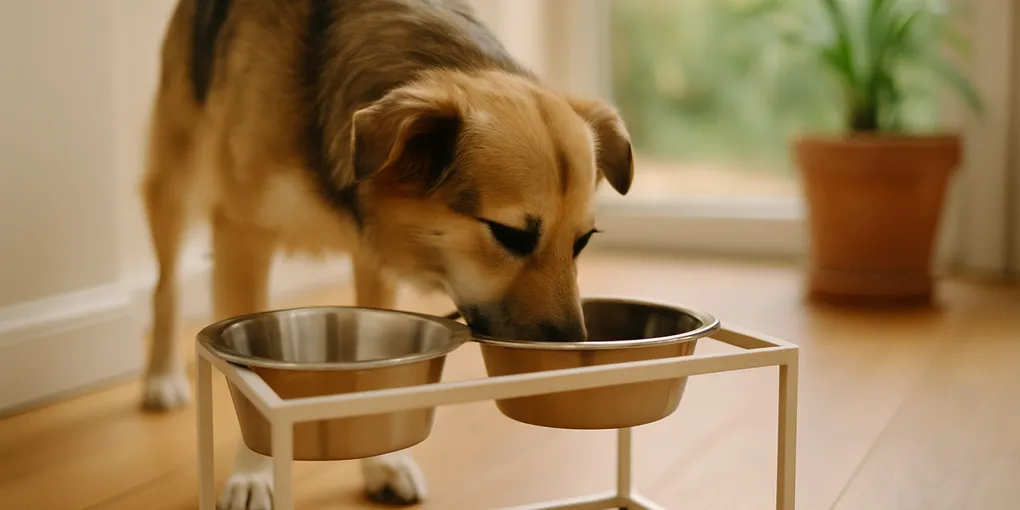
Do Elevated Dog Bowls Help or Hurt? What the Evidence Says
Evidence ExplainerQuick picks
| Product | Key Specs |
|---|---|
| See price on Amazon |
|
| See price on Amazon |
|
| See price on Amazon |
|
Product availability, certifications, and retailer details can change; check the current Amazon page before buying.
How We Score This Evidence
| Criterion | Weight | Score | Weighted | Why it matters here |
|---|---|---|---|---|
| Research | 30% | 8.0 | 2.40 | GDV risk has been studied observationally, and veterinary guidance supports individualized feeding decisions rather than universal bowl claims. |
| Evidence Quality | 25% | 7.5 | 1.88 | Evidence is strong enough to reject simple marketing claims but not strong enough to define one perfect bowl height for every dog. |
| Value | 20% | 8.0 | 1.60 | A raised station can be valuable for comfort or medical access, but only when matched to a real need. |
| User Signals | 15% | 8.0 | 1.20 | Owners report cleaner feeding areas and easier access for seniors, while some dogs gulp faster or knock stands over. |
| Transparency | 10% | 9.0 | 0.90 | This guide clearly separates comfort, medical management, and unsupported bloat-prevention claims. |
| Composite Score | 8.0/10 | Useful for selected dogs, risky as a one-size-fits-all recommendation, and worth discussing with a vet for deep-chested breeds. |
The Short Answer
Elevated dog bowls help some dogs and are unnecessary or potentially counterproductive for others. The clearest use case is access: a dog with neck pain, shoulder arthritis, weakness, tremors, or postural difficulty may eat more comfortably when the food is raised a little. A veterinarian may also prescribe specific feeding positions for certain medical conditions. The weakest use case is generic bloat prevention. Raised bowls should not be marketed as a simple way to prevent gastric dilatation-volvulus, or GDV.
The right question is not “Are elevated bowls good?” It is “What problem am I trying to solve?” If the problem is a senior dog struggling to bend down, a stable raised station may improve quality of life. If the problem is a young Great Dane eating too fast, raising the bowl without addressing speed, meal size, stress, and veterinary GDV planning may create false confidence. If the problem is messy drinking, a raised bowl may reduce splashing for one dog and make another dog gulp more air.
Useful searches if your veterinarian agrees a raised station makes sense:
- Search Amazon for adjustable elevated dog bowl stand
- Search Amazon for non slip raised dog bowls stainless steel
- Search Amazon for senior dog elevated feeding station
- Search Amazon for slow feeder insert elevated dog bowl
Choose by measured shoulder height, bowl diameter, non-tip stability, cleaning access, and your dog’s medical history rather than by style alone.
Why Elevated Bowls Became Controversial
For years, raised bowls were recommended casually for large dogs under the assumption that less bending meant less swallowed air and less bloat. That claim became complicated when observational research suggested raised feeding might be associated with increased GDV risk in some large and giant-breed dogs. Observational studies cannot prove a bowl caused GDV, but they are enough to make blanket prevention claims irresponsible.
GDV is not ordinary gas. It is a life-threatening emergency in which the stomach expands and may twist, compromising blood flow and requiring urgent surgery. Risk varies by breed, chest depth, family history, age, stress, meal pattern, and anatomy. Great Danes, Standard Poodles, Irish Setters, Weimaraners, German Shepherds, Dobermans, and other deep-chested dogs deserve individualized veterinary advice. In some high-risk dogs, preventive gastropexy is a more meaningful discussion than bowl height.
That does not mean raised bowls are always harmful. It means they should be used for a defined benefit, not as folklore.
When a Raised Bowl Can Help
Senior dogs are the most common candidates. Arthritis in the neck, elbows, shoulders, or spine can make floor-level eating uncomfortable. A modestly raised bowl can reduce the depth of the bend and make meals less tiring. Dogs with neurologic weakness may also find a stable raised station easier because they do not have to shift weight forward as far.
Some dogs with amputations, vestibular issues, or muscle loss benefit from a station that reduces awkward posture. Dogs recovering from surgery may need temporary accommodation. Dogs with certain swallowing or esophageal disorders may require a very specific feeding posture, but that should come directly from a veterinarian. Megaesophagus management, for example, often involves upright feeding strategies that are not the same as a normal decorative raised bowl.
Raised water bowls can also help dogs that cough or struggle when lowering the head, but coughing while drinking deserves veterinary attention. Do not solve a symptom with furniture if the underlying issue could be heart disease, laryngeal dysfunction, tracheal collapse, dental pain, or neurologic disease.
When a Raised Bowl May Be the Wrong Move
A raised bowl may be wrong for a fast-eating dog if it makes gulping easier. Some dogs eat more quickly when the bowl is at chest height because they can stand squarely and shovel food without adjusting posture. If the dog already inhales meals, use a slow feeder, scatter feeding, food puzzle, or smaller meals before assuming height will help.
It may also be wrong for a dog that tips stands, guards food, or chews wood and plastic. A raised station can become a heavy object, a splinter risk, or a conflict point in a multi-dog home. If another dog can approach from underneath or the side, the elevated setup may actually increase competition because the bowl is more visible and accessible.
Puppies generally do not need raised bowls. They grow fast, change proportions, and chew. A fixed-height station that seems perfect one month may be wrong the next.
How to Choose Bowl Height
For comfort feeding, aim for neutral posture. The dog should not have to reach upward, crane the neck, or drop the elbows outward. Many owners start with a bowl around lower chest level or below, then adjust based on how the dog stands. Watch the topline, neck angle, and front feet. A dog leaning backward or stretching forward is telling you the height is wrong.
Adjustable stands are useful because they let you test. Start lower than you think. A small elevation can be enough for a senior dog. Very high bowls can be awkward and may encourage gulping. If a veterinarian prescribed a specific height or angle, follow that plan instead of general comfort rules.
Measure the dog while standing naturally, not while excited. If the dog has long ears, choose a bowl diameter and stand design that keeps ears out of wet food without squeezing whiskers or muzzle.
Stability Matters More Than Style
A raised station should not wobble. Wobble changes how a dog eats and can scare cautious dogs. Choose a wide base, non-slip feet, and bowls that lock into the stand. Stainless steel bowls are usually easiest to sanitize. Ceramic can work if heavy and lead-safe, but it chips. Plastic scratches and holds odor.
Avoid stands with sharp corners near the chest or legs. Senior dogs may stumble into furniture. If the stand lives in a kitchen traffic lane, choose rounded edges and a low center of gravity. For large dogs, decorative tall stands with narrow bases are often less safe than plain utility designs.
Raised Bowls and Slow Feeding
Height and pace are separate variables. If a dog benefits from a raised station because of arthritis but also eats too quickly, combine the station with a slow-feeder insert or use a raised snuffle-style mat if the dog can manage it. Do not choose deep maze patterns for dogs with short muzzles, dental pain, or frustration issues.
Time meals before and after the change. If the dog goes from two minutes to thirty seconds, the raised bowl solved one problem and created another. Try a lower height, a wider bowl, or a pacing tool. If the dog becomes calmer and takes the same or slightly longer time, the setup is more promising.
Multi-Dog and Child Safety
Raised bowls can change household traffic. A bowl at toddler height is easier for a child to touch. A bowl at another dog’s head height is easier to steal. Feed dogs separately if there is any guarding, hovering, or rushing. Pick bowls up after meals. For water stations, place them where dogs can drink without being cornered.
If a dog guards an elevated station, do not punish around the bowl. Management is safer: separate feeding, lower arousal before meals, and professional behavior help if guarding is intense.
Cleaning and Hygiene
Raised stands collect drool, food oil, and water under the bowl rims. Remove bowls daily and clean the stand surface. Stainless bowls should be washed frequently, not just refilled. Wet food residue in a raised rim can grow bacteria and attract insects. Wooden stands may look good but need sealed surfaces and careful drying.
Check screw holes, seams, and silicone rings. These are common grime traps. If the stand smells even after washing, replace it or switch materials.
A Practical Trial Plan
Run a two-week trial. For the first three days, use the normal bowl and record meal time, posture, coughing, vomiting, regurgitation, and enthusiasm. Then use the raised station at a modest height for a week. Record the same observations. If the dog eats more comfortably without gulping faster or showing new symptoms, the station may be useful.
Stop the trial and call your veterinarian if you see repeated vomiting, passive regurgitation, coughing, painful swallowing, weight loss, abdominal distension, nonproductive retching, collapse, or sudden restlessness. These are not bowl-shopping problems.
Questions to Ask Your Veterinarian
If you are considering a raised bowl for a dog with health concerns, ask specific questions instead of asking whether raised bowls are good or bad. Ask whether your dog’s breed, chest shape, history, and eating speed change GDV risk. Ask whether the bowl should be lower, higher, angled, or paired with a slow feeder. Ask whether coughing, gagging, or regurgitation means the dog needs diagnostics before any feeding-station change.
For seniors, ask which signs suggest pain rather than preference. A dog that carries food away, lies down to eat, hesitates at the bowl, or spills water may be compensating for arthritis, dental disease, weakness, or vision changes. The bowl can help comfort, but it should not be the only intervention if pain control, nail care, weight management, or floor traction would solve more of the problem.
Bring a short video of your dog eating from the floor and from the raised station. Video lets the veterinarian see neck angle, swallowing, speed, coughing, and balance. That evidence is more useful than guessing from a product photo.
Bottom Line
Elevated dog bowls are comfort tools, not universal health devices. They can make meals easier for seniors, dogs with mobility problems, and some medically managed dogs. They should not be sold as proven bloat prevention, especially for deep-chested breeds. Define the problem, choose a stable adjustable setup, monitor eating speed, and involve your veterinarian when GDV risk or swallowing symptoms are part of the picture.
Sources
- American College of Veterinary Surgeons guidance on gastric dilatation-volvulus.
- Veterinary Partner and Merck Veterinary Manual overviews of GDV risk and emergency signs.
- Purdue University observational research historically discussed in relation to feeding practices and GDV risk.
- American Veterinary Medical Association general guidance on senior pet comfort and veterinary evaluation of eating problems.
Frequently Asked Questions
- No. Elevated bowls should not be described as proven bloat prevention. Some older observational work raised concern that raised feeding could be associated with GDV risk in large and giant breeds. Discuss risk management with your veterinarian.
- A raised bowl can help some dogs with neck pain, arthritis, neurologic weakness, megaesophagus management under veterinary direction, or difficulty reaching floor bowls.
- For comfort feeding, the bowl is usually placed below chest height so the dog can eat with a neutral neck, not stretched upward. Medical cases need veterinarian-specific instructions.
- Usually no, unless a veterinarian recommends it. Puppies grow quickly, chew stands, and do not need a fixed raised station for normal feeding.