Quick picks
| Product | Key Specs |
|---|---|
| See price on Amazon |
|
| See price on Amazon |
|
| See price on Amazon |
|
Product availability, certifications, and retailer details can change; check the current Amazon page before buying.
How We Score This Explainer
| Criterion | Weight | Score | Weighted | Why it matters here |
|---|---|---|---|---|
| Research | 30% | 6.5 | 1.95 | There is good veterinary guidance for senior-cat access and environmental comfort, but limited direct trial evidence on raised bowls. |
| Evidence Quality | 25% | 6.5 | 1.63 | The article separates plausible comfort benefits from unproven digestion and anti-vomiting claims. |
| Value | 20% | 8.0 | 1.60 | Bowl changes are inexpensive and reversible when used as comfort adjustments, not medical treatment. |
| User Signals | 15% | 8.0 | 1.20 | Owners commonly search after seeing vomiting claims, whisker-fatigue claims, or senior cats crouching at meals. |
| Transparency | 10% | 9.0 | 0.90 | shopping links go to current Amazon results instead of unverified direct products, and medical red flags are prominent. |
| Composite Score | 7.3/10 | Worth testing for comfort, but not a stand-alone vomiting solution. |
The Short Answer
Raised cat bowls can help some cats eat in a more comfortable posture. They are most useful for senior cats, cats with arthritis, cats that crouch painfully, and cats that seem to prefer eating from a slightly lifted surface. They are not proven cures for vomiting, hairballs, reflux, or digestive disease.
If your cat vomits often, loses weight, drools, drops food, hides at mealtime, has bad breath, or suddenly changes appetite, call your veterinarian. A bowl swap is not enough.
Why Bowl Height Might Matter
A cat eating from a floor bowl usually lowers the head and flexes the neck. Many cats do this comfortably. But older cats, cats with neck or elbow discomfort, and cats with reduced mobility may find a slightly raised bowl easier. The benefit is access: less crouching, less neck flexion, and a steadier feeding station.
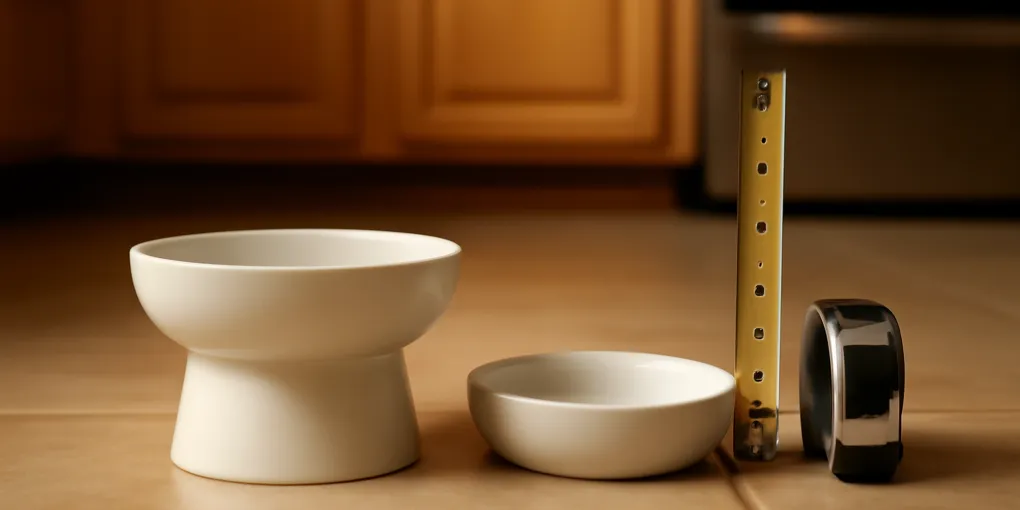
That does not mean taller is better. A bowl that is too high makes the cat reach upward, shift weight awkwardly, or pull food out with the tongue. The best height is usually modest. Watch the cat from the side. The neck should look relaxed, the front feet should stay flat, and the cat should not have to climb, stretch, or lean.
Vomiting Claims Need Caution
Many elevated-bowl listings claim better digestion or less vomiting. Treat those claims cautiously. Cats vomit for many reasons: eating too fast, hair ingestion, food intolerance, parasites, inflammatory bowel disease, kidney disease, hyperthyroidism, dental pain, and more. A raised bowl may reduce awkward gulping for an individual cat, but it cannot diagnose or treat the underlying problem.
If your cat vomits more than occasionally, vomits repeatedly in a day, produces blood, loses weight, stops eating, or seems lethargic, that is a veterinary issue. Bring photos, frequency notes, diet details, and any recent product changes to the appointment.
Whisker-Friendly Matters More Than Fancy Height
Some cats dislike deep narrow bowls because their whiskers touch the sides repeatedly. Whether you call that whisker stress, whisker fatigue, or simple preference, the practical fix is straightforward: use a shallow, wide bowl or plate that lets the cat pick up food without pressing the face into a cup.
Useful product searches:
- Search Amazon for raised cat bowl shallow
- Search Amazon for whisker friendly cat bowl
- Search Amazon for stainless steel elevated cat bowl
- Search Amazon for ceramic raised cat bowl
These marketplace product-search links help you compare current pricing, sizes, and availability. Confirm the current label, size, seller, and return policy before buying. Check current dimensions, materials, stability, and cleaning instructions before buying.
Material and Cleaning
Choose a bowl that is easy to wash thoroughly. Stainless steel and glazed ceramic are common choices because they are durable and less likely to hold scratches than soft plastic. Plastic can still work, but scratched plastic may trap residue and odor. Whatever material you choose, wash the bowl daily and inspect chips, cracks, or rough edges.
A raised stand should be stable. Lightweight stands can slide or tip when a cat pushes food to the edge. Rubber feet, a broad base, and dishwasher-safe inserts are more useful than decorative legs.
How to Test a Raised Bowl
Run a one-week comfort test:
- Keep the same food and feeding schedule.
- Offer one familiar bowl and one slightly raised shallow bowl.
- Put both in quiet, safe locations away from the litter box.
- Watch posture, speed, mess, and whether the cat avoids either bowl.
- Track vomiting separately instead of relying on memory.
Do not change food, treats, bowl height, and feeding location all at once. If vomiting improves, you need to know what changed. If vomiting continues, do not keep raising the bowl and delaying care.
Senior Cats and Arthritis
Senior cats often hide discomfort. A cat that eats less, hesitates to jump, overgrooms a joint, sleeps in lower places, or becomes irritable may be dealing with pain. Feeding stations should be easy to reach without stairs, slippery floors, or competition from other pets. A low raised bowl can be one part of a senior-cat setup alongside ramps, accessible litter boxes, soft bedding, and veterinary pain management when needed.
For multi-cat homes, offer more than one feeding station. A raised bowl does not help if a timid cat has to eat in a hallway where another cat blocks access.
What to Avoid
Avoid bowls that are so tall the cat has to crane upward. Avoid narrow deep bowls for flat-faced cats or cats that dislike whisker contact. Avoid stands that trap wet food in seams. Avoid unsealed wood around wet food unless the bowls lift out and the stand can be cleaned.
Be skeptical of medical promises. A comfortable bowl can support better eating behavior. It cannot cure arthritis, dental disease, nausea, or gastrointestinal illness.
How to Choose a Starting Height
Start lower than the product photos suggest. For most cats, a modest lift of a few inches is enough to test whether the posture looks more relaxed. The cat should not have to reach upward, stand on tiptoe, or brace the front legs. If the cat backs away, paws food onto the floor, or eats less, the new setup may be less comfortable even if it looks ergonomic to you.
A simple home test is to put the same bowl on a stable book or low platform for one supervised meal. If the cat eats normally and seems relaxed, a purpose-built raised bowl may be worth trying. If the cat hesitates, returns to the old bowl, or knocks food out, prioritize a wider shallow bowl instead of height.
Feeding Station Details Owners Miss
Location matters as much as bowl shape. Cats often prefer quiet feeding areas where they can see the room and avoid being ambushed by another pet. Do not place food beside a noisy appliance, litter box, or tight corner where the cat must turn its back on the room. In multi-cat homes, one raised bowl in a contested kitchen corner may make stress worse.
Water should usually be separate from the food bowl. Some cats drink better when water is in a different location, and many prefer wide clean bowls or fountains. If your goal is hydration, observe actual drinking and litter-box output rather than assuming a new bowl solved the problem.
When Bowl Changes Are Not Enough
A raised bowl cannot fix dental pain, nausea, inflammatory bowel disease, kidney disease, hyperthyroidism, or food intolerance. It also cannot make an unsafe diet appropriate. If a cat is losing weight, vomiting frequently, drooling, pawing at the mouth, hiding, or refusing food, the priority is a veterinary exam.
For senior cats, bowl changes should be part of a larger access plan: non-slip mats, easy water access, low-entry litter boxes, resting places away from stairs, and routine health checks. Cats are good at hiding discomfort, so small changes in eating posture can be useful clues.
Related Reading
- For broader senior-cat setup decisions, read our senior cat care protocol.
- If your cat needs a richer home setup, see our guide to cat enrichment stations.
Frequently Asked Questions
Should food and water bowls both be raised?
Not automatically. Test each resource separately. Some cats like raised food but prefer a low wide water bowl or a fountain in a different room.
Are plastic raised bowls okay?
They can work if they are smooth, undamaged, and washed often, but stainless steel or glazed ceramic inserts are usually easier to keep clean. Replace scratched or cracked bowls.
What if my cat pulls food out of the bowl?
The bowl may be too deep, too narrow, too high, or simply not the texture your cat prefers. Try a shallow plate before assuming the cat is being messy on purpose.
Signs the Bowl Is Helping
Look for practical changes rather than assuming the new bowl is better because it is marketed as ergonomic. Helpful signs include steadier eating, less pawing food onto the floor, fewer posture shifts during meals, and easier access for a cat with stiff shoulders or elbows. Less mess can be useful, but it is not the same as better health.
Track appetite for a week after the change. If your cat eats less, vomits more, or avoids the station, go back to the old setup and call your veterinarian if symptoms persist. A feeding station should reduce friction, not create a new barrier.
Bowl Height for Multi-Pet Homes
In homes with dogs or multiple cats, raised bowls can accidentally make food easier for the wrong animal to reach. Place the station where the intended cat can eat without being rushed. Microchip feeders, separated rooms, or timed meals may matter more than bowl height if stealing or guarding is the real problem.
For flat-faced cats, the best answer may be a shallow tilted dish rather than a tall pedestal. Watch whisker contact, neck angle, and whether wet food collects in corners that are hard to reach.
Bottom Line
Raised cat bowls can be a smart comfort adjustment, especially when they are shallow, stable, washable, and only modestly elevated. They may help an individual cat eat in a more relaxed posture. They should not be marketed or used as a cure for vomiting. If symptoms are frequent, sudden, or paired with weight or appetite changes, call your veterinarian.
Sources
- American Animal Hospital Association. 2023 AAHA Senior Care Guidelines for Dogs and Cats: https://www.aaha.org/wp-content/uploads/globalassets/02-guidelines/2023-aaha-senior-care-guidelines/2023-aaha-senior-care-guidelines-for-dogs-and-cats.pdf
- Ellis SLH, et al. AAFP and ISFM Feline Environmental Needs Guidelines. Journal of Feline Medicine and Surgery: https://journals.sagepub.com/doi/full/10.1177/1098612X13477537