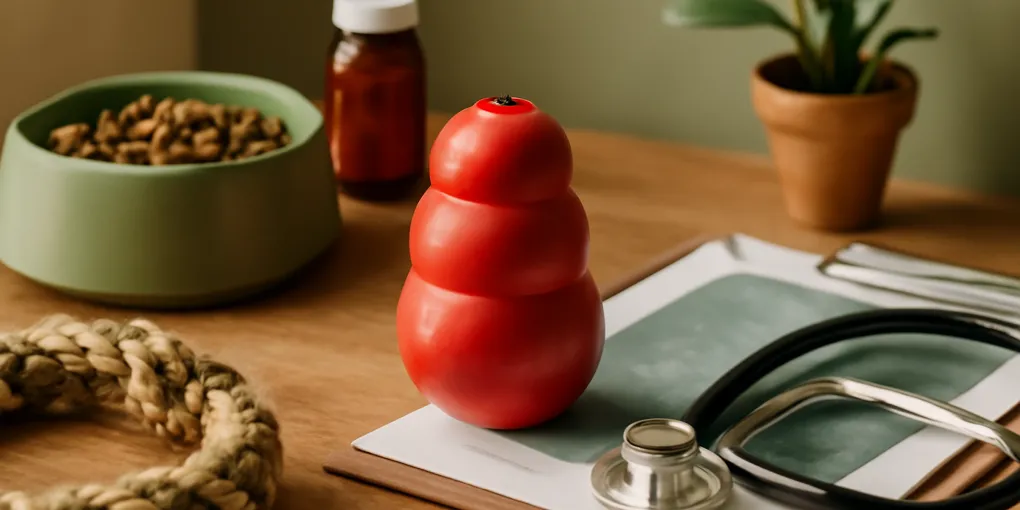
KONG Classic Review: Is the Rubber Treat Toy Still Worth Buying for Dogs?
ReviewKONG Classic Red Rubber Dog Toy
Top PickBest fit: supervised chewing and stuffed-food enrichment
Check current price
Quick picks
| Product | Key Specs |
|---|---|
| See price on Amazon |
|
| See price on Amazon |
|
| See price on Amazon |
|
| See price on Amazon |
|
Product availability, certifications, and retailer details can change; check the current Amazon page before buying.
Quick verdict by pet and setup
The KONG Classic is still one of the better first dog enrichment toys because it is simple, washable, stuffable, and available in many sizes. It is best for dogs that lick, nudge, and chew moderately. It is not a guaranteed boredom cure, a crate-training shortcut, or an indestructible object for dogs that tear rubber and swallow pieces.
If your dog needs a rotating enrichment plan, read this review with our dog chew rotation safety protocol. A KONG is useful only when it fits the dog’s mouth, chewing style, diet, and supervision level.
Quick picks by product type
- Search Amazon for KONG Classic red rubber dog toys if your dog is a moderate chewer and you want a starter stuffing toy.
- Search Amazon for KONG Extreme black rubber dog toys if the red version is too soft but your dog does not ingest rubber.
- Search Amazon for KONG Puppy rubber toys for young puppies that need softer beginner enrichment.
- Search Amazon for bottle brushes for dog treat toys because hygiene determines whether a stuffable toy stays useful.
What the KONG Classic does well
The shape is the strength. The hollow center holds part of a meal, canned food, soaked kibble, or a small smear of dog-safe soft food. The uneven bounce can create brief play, but the more reliable use is licking and problem solving. For many dogs, licking a stuffed toy is calmer than chasing a ball or chewing a hard bone.
The Classic is also easy to scale. You can make it very easy by dropping dry kibble inside. You can make it moderate by adding wet food around the opening. You can make it harder by freezing a partially filled toy. That range lets owners adjust difficulty without buying a new puzzle every week.
Where it disappoints
The KONG Classic is often marketed as if one toy can absorb any dog’s energy. That is not realistic. A dog with separation panic may ignore it, guard it, or finish it and return to distress. A destructive chewer may tear the rim. A dog on a strict weight plan can gain weight if every stuffed toy is treated as extra food instead of part of the daily ration.
Sizing mistakes are common. A too-small toy can become a choking or swallowing risk. A too-large toy may be too hard to empty and clean. Dogs with short muzzles, dental pain, or jaw problems may need easier designs.
Sizing and first-use protocol
Start larger than you think if your dog gulps toys or carries rubber deep in the mouth. The toy should protrude enough that you can see and grab it, and it should not fit fully behind the canine teeth. Use the package weight range only as a screen; then check jaw width, muzzle shape, and how the dog handles the actual size. If the dog can compress the rim into chunks, wedge the opening over the lower jaw, or make tooth marks that lift rubber flakes, remove it and move to a larger size, KONG Extreme, or a different enrichment format.
For the first session, put a few pieces of the dog’s normal kibble inside and set the toy on a washable mat while you watch from a few feet away. Do not start with a frozen, tightly packed plug or sticky peanut-butter cap. The first goal is calm licking and rolling for a few minutes. If the dog guards the toy, pins it and rips at the mouth, coughs, gags, or leaves frustrated, simplify the stuffing or switch to a slower feeder that does not invite chewing.
Stuffing without overfeeding
Use the daily food allowance. Measure kibble or wet food before filling the toy. For weight-prone dogs, the KONG should replace a bowl portion, not add peanut butter on top of a full dinner. Peanut butter, cheese, and commercial pastes are calorie dense and can upset stomachs.
Safer beginner fillings include soaked kibble, canned dog food already in the diet, plain pumpkin in small amounts if tolerated, or a small smear of wet food around the opening. Avoid xylitol-containing peanut butter, cooked bones, tooth-breaking hard items, and foods your veterinarian has restricted.
Cleaning and replacement
A stuffable toy is food-contact equipment. Rinse it after each wet stuffing session, scrub the inside with a bottle brush, and let it dry fully. Inspect the rim, small hole, and inner cavity. Replace the toy if pieces are missing, rubber flakes appear, the opening is torn, or the toy smells sour after washing.
Dishwasher-safe claims vary by product and household dishwasher. Even when the toy can go through a wash cycle, inspect the inside. Greasy food can cling to the deepest cavity.
Better alternatives for some dogs
Dogs that need gentle meal slowing may do better with a slow feeder bowl protocol or a lick mat. Dogs that need scent work may do better with a snuffle mat or scattered kibble search. Dogs that bite hard and swallow pieces may need non-food enrichment, training games, or veterinary behavior guidance instead of tougher rubber.
The KONG Extreme is not a permission slip for unsupervised chewing. It is a stronger option for dogs that use rubber toys appropriately. If the dog has a history of swallowing toy pieces, choose professional guidance over escalation to harder products.
FAQ
Is the KONG Classic safe to leave with a dog alone?
Only after supervised testing proves the dog does not shred, swallow pieces, or get the toy stuck. Many dogs still need supervision, especially with frozen stuffing or new sizes.
What size KONG should I buy first?
Choose a size too large to swallow, with an opening the dog can lick safely. When in doubt, size up and supervise the first several uses.
Can I freeze food inside a KONG?
Yes for suitable dogs, but start with easy stuffing first. Hard frozen plugs can frustrate dogs or add too many calories if overfilled.
Sources
- VCA Animal Hospitals. Brushing teeth in dogs. Used for dental caution around oral discomfort and home-care limits.
- ASPCA Animal Poison Control Center. People foods to avoid feeding your pets. Used for stuffing-safety cautions.
- WSAVA Global Nutrition Committee. Nutrition toolkit. Used for calorie and body-condition framing.
- VCA Animal Hospitals. Dental disease in dogs. Used for oral pain and veterinary-care context around chewing behavior.