Quick picks
| Product | Key Specs |
|---|---|
| See price on Amazon |
|
| See price on Amazon |
|
Product availability, certifications, and retailer details can change; check the current Amazon page before buying.
Medical Disclaimer
This checklist is for observation and home setup. It cannot diagnose your dog or replace veterinary care. Sudden weakness, collapse, dragging limbs, inability to rise, severe pain, new incontinence, or a rapid change in walking should be treated as urgent veterinary concerns.
Direct answer
Use this senior dog mobility checklist before buying another ramp, bed, harness, or comfort tool. The right gear depends on what changed: traction, pain, strength, balance, confidence, or the route itself. If your dog mostly slips on hard floors, start by comparing non-slip mats for senior dogs and mapping the bed-to-door, food-station, and ramp-landing routes. If your dog is stiff, sore, or struggling with daily transitions, use the checklist below and call your veterinarian when red flags appear.
The shortest version:
- Sudden or painful change: call the veterinarian before gear shopping.
- Slipping on slick floors: build continuous traction routes.
- Jumping into cars or onto furniture: reduce the jump with a stable ramp or steps.
- Trouble rising or using stairs: discuss pain control, diagnosis, and safe support with your veterinarian.
- Soreness after activity: ask whether gentle massage, rehab, weight management, or medication changes fit your dog.
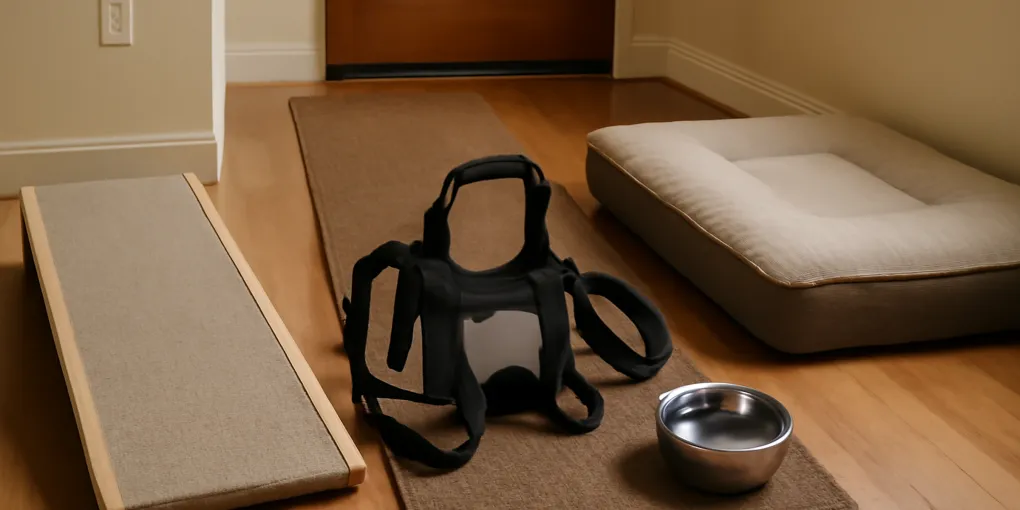
If the checklist points to equipment, start with broad current searches such as senior dog ramps with traction on Amazon and dog support harnesses for hind-leg assistance on Amazon. Match size, weight rating, handle height, ramp angle, and return policy to your dog before using the product daily.
1. Red-flag check: call the veterinarian first if any answer is yes
Do not treat these as normal aging:
- Did the mobility change happen suddenly?
- Is one leg weaker, painful, or held up?
- Is your dog dragging toes, knuckling, crossing legs, or stumbling on grippy surfaces?
- Is your dog unable to rise, collapsing, crying, or refusing to walk?
- Is there new loss of bladder or bowel control?
- Is your dog panting, hiding, growling, or acting unusually anxious when touched?
- Did the change follow a fall, jump, collision, or rough play?
Home changes can reduce hazards, but they do not explain the medical cause. The AVMA’s senior-pet guidance encourages closer veterinary monitoring as pets age, and its pain-management guidance lists movement and behavior changes as possible pain signals (sources: https://www.avma.org/resources-tools/pet-owners/petcare/senior-pets and https://www.avma.org/resources-tools/pet-owners/petcare/pain-management-pets).
2. Daily function checklist
Track what your dog can do on an ordinary day, not only on a good day. Write short notes for one week.
| Function | Watch for | What it may change |
|---|---|---|
| Rising from rest | Rear-end rocking, slipping, slow push-up | Bed height, floor traction, vet pain discussion |
| Walking indoors | Sliding, wide stance, toe dragging | Runners, nail care, neurologic check if abnormal |
| Stairs | Rushing, stopping, missing steps | Gates, support harness, ramp alternative, vet exam |
| Car entry | Refusal, scramble, hard landing | Ramp, lower entry, harness support |
| Toileting | Trouble squatting, falling, accidents | Vet visit, support, route lighting, traction |
| Meals and water | Paws sliding while leaning | Full-stance feeding mat, bowl placement |
| Sleep | Restlessness, changing beds, trouble turning | Pain discussion, bed firmness, route to water |
A pattern matters more than a single awkward step. A dog that avoids the hallway every evening may be telling you the surface, lighting, pain level, or fatigue has changed.
3. Floor and route checklist
Before adding specialized gear, fix the route. A senior dog that cannot trust the floor may avoid walking, rush through slick spots, or tense muscles to stay upright.
Check these areas:
- Bed to door for early bathroom trips.
- Bed to water at night.
- Food station stance.
- Hallway turns.
- Door landing after rain or snow.
- Ramp or stair landing.
- Any place where the dog has to pivot.
The best traction setup is continuous and low edge. A mat island can help at a single plant point, but it can also create step-off moments if the dog must cross bare floor between mats. For product comparisons, use non-slip mats for senior dogs after you know which route needs coverage.
4. Ramp, stair, and furniture checklist
A ramp is helpful only if the dog trusts it and can use it without scrambling. Before buying or keeping one, check:
- Angle: lower is easier, especially for large dogs and dogs with sore joints.
- Width: the dog should not need to place paws at the edge.
- Surface: paws should grip when the ramp is dry and slightly dirty.
- Flex: the ramp should not bounce under the dog’s weight.
- Landing: both ends need traction.
- Training: use slow, positive practice before expecting daily use.
Stable steps can work for some small dogs, but steep steps may be harder than the original jump for a large or arthritic dog. If your dog launches off the top instead of walking down, the setup needs to change.
5. Harness and support checklist
A support harness is a handling tool, not a diagnosis. It can help with stairs, cars, and bathroom breaks when the dog needs a little lift or balance support. It can also be unsafe if it rubs, shifts, compresses the belly, or encourages a handler to lift more weight than they can manage.
Check:
- Chest and belly measurements.
- Handle height for the human helper.
- Rear support position for male dogs during toileting.
- Whether the dog can urinate and defecate normally while wearing it.
- Whether the harness stays centered while turning.
- Whether the veterinarian has ruled out conditions where lifting could worsen pain.
Use a harness for controlled transitions. Do not drag a dog up stairs or force a walk that the dog is refusing.
6. Massage, heat, and recovery checklist
Gentle touch may help some senior dogs relax, but soreness is not always a muscle problem. Before using a massage tool, read the massage tools for senior dogs guide and ask your veterinarian if your dog has cancer, skin disease, open wounds, neurologic signs, acute injury, unexplained swelling, fever, or severe pain.
Safer home rules:
- Use gentle pressure, not deep force.
- Keep sessions short.
- Stop if the dog moves away, licks lips, pants, guards, or tenses.
- Do not use vibration or heat over swollen, injured, or painful areas without veterinary approval.
- Track whether the dog moves better, worse, or the same afterward.
Massage is a comfort tool. It should not delay diagnosis or pain control.
7. Weekly mobility note template
Copy this into a note app or print it:
| Question | This week |
|---|---|
| Best day of movement | |
| Worst day of movement | |
| Any falls or slips | |
| Stairs, car, or furniture changes | |
| Appetite and water changes | |
| Toileting changes | |
| New pain signs | |
| Gear that helped | |
| Gear that failed | |
| Veterinarian follow-up needed |
Bring the notes to veterinary visits. A short log can help separate floor fear, arthritis pain, medication timing, weakness, and fatigue.
Senior dog mobility FAQ
Is it better to buy a ramp or non-slip mats first?
Buy for the first failure point. If the dog slips walking to the door, mats come first. If the dog struggles with a car jump but walks well indoors, a ramp may matter more.
What if my dog refuses the new ramp?
Stop forcing it. Check angle, surface, wobble, landing traction, and training speed. Some dogs need a lower ramp, wider ramp, stable steps, or a different route.
Should I limit walks when my senior dog is stiff?
Ask your veterinarian. Many senior dogs benefit from shorter, steadier activity rather than rare hard outings, but pain, heart disease, neurologic disease, obesity, and heat risk can change the plan.
What should I read next?
Use the non-slip mat guide for traction product selection and massage tools for senior dogs if your veterinarian says gentle comfort work is appropriate.
Frequently Asked Questions
- Check whether the change is sudden, painful, one-sided, or affecting basic functions such as rising, toileting, eating, or stairs. Those signs should be discussed with a veterinarian before buying more gear.
- The most common helpful setup is continuous floor traction, a low ramp or stable steps for jumps, and a support harness for assisted transitions, matched to the dog's diagnosis and body size.
- Massage tools may help some dogs relax around sore muscles when used gently and with veterinary guidance, but they do not treat arthritis, injury, neurologic disease, or severe pain.
- Update it whenever your dog changes medications, has a flare, falls, avoids a route, loses weight or muscle, or has a veterinary recheck. Weekly notes can reveal trends you miss day to day.