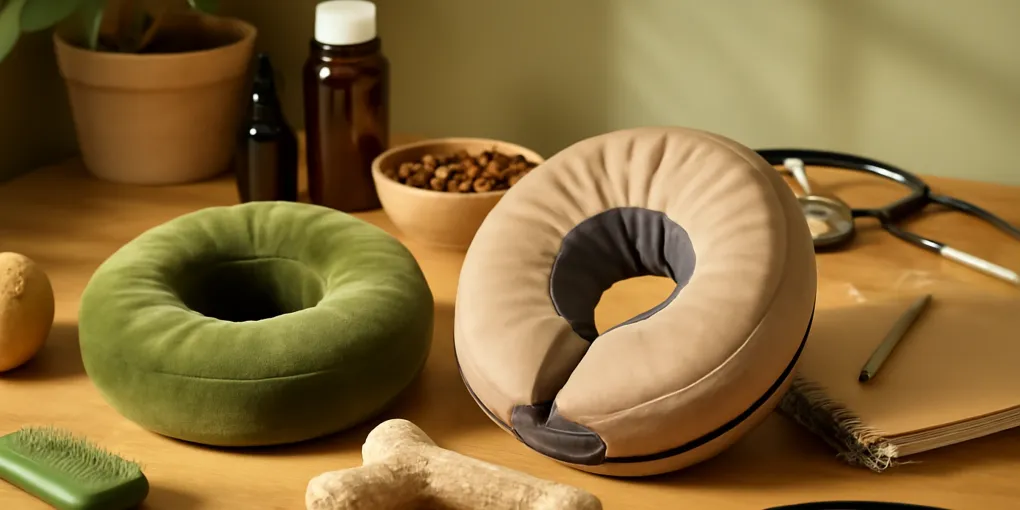
Best Dog Recovery Cones and Alternatives: Fit, Comfort, and Safety
Buyer's GuideComfy Cone soft e-collar
Best flexible coneBest for: Face, ear, paw, and body wounds when the dog still needs a full cone shape
$25–$45
Quick picks
| Product | Key Specs |
|---|---|
| See price on Amazon |
|
| See price on Amazon |
|
| See price on Amazon |
|
Product availability, certifications, and retailer details can change; check the current Amazon page before buying.
Best Dog Recovery Cones and Alternatives: Fit, Comfort, and Safety
The best dog recovery cone is the one that actually prevents licking, chewing, or scratching the exact injury your veterinarian is trying to protect. Comfort matters, but access control comes first. A soft cone that your dog can fold around a paw incision is not a humane upgrade; it is a failed medical barrier.
For most post-surgery dogs, start with the clinic-issued plastic e-collar or a full soft cone that extends past the nose. Switch to an inflatable collar or recovery suit only after checking that the dog cannot reach the incision during normal standing, lying down, and twisting. If your dog had eye surgery, ear surgery, a paw wound, a drain, or a hot spot near the tail, ask your veterinarian before swapping styles.
Quick picks
- Search Amazon for Comfy Cone soft dog e-collar if your dog needs full cone protection but panics less in a padded, flexible collar.
- Search Amazon for BENCMATE inflatable dog collar if the wound is on the torso and you can supervise the first sessions.
- Search Amazon for Suitical Recovery Suit dog if an abdominal incision needs fabric coverage and your veterinarian says airflow and moisture control are acceptable.
For a broader home-prep checklist, pair the cone with supplies from our pet first aid kit guide. If your dog is recovering from orthopedic pain, also review our senior dog mobility plan for traction and ramp ideas.
How to choose the right recovery barrier
A cone or alternative has one job: it must interrupt the mouth, paws, or scratching leg before they touch the wound. Measure from the collar line to the tip of the nose, then choose a cone that extends slightly beyond the nose. For leg and paw wounds, longer is usually safer because dogs can curl around short collars. For flank or belly incisions, an inflatable collar or suit may work, but only if the dog cannot compress the collar or chew fabric.
Fit should be snug enough that the device does not slide off, but loose enough to fit two fingers under the neck band. Check rubbing behind the ears, under the jaw, and at the shoulders. A dog that freezes, refuses water, or crashes into door frames may need a calmer introduction and a clearer path through the home, not immediate removal.
PSR G6 Composite Score for recovery cones
| Factor | Weight | Score | Weighted contribution |
|---|---|---|---|
| Research fit | 30% | 4.1 | 1.23 |
| Evidence quality | 25% | 3.8 | 0.95 |
| Value | 20% | 4.4 | 0.88 |
| User signals | 15% | 4.0 | 0.60 |
| Transparency | 10% | 4.3 | 0.43 |
| Composite | 100% | 4.1/5 |
The score favors products that solve a clear veterinary problem, are easy to size, and have obvious failure checks. Recovery collars are not treatment. They protect treatment long enough for tissue to heal.
Soft cone versus plastic cone
A rigid plastic cone is ugly but reliable. It blocks reach, allows airflow, and makes it obvious when the dog is trying to defeat the barrier. The downsides are noise, door-frame collisions, and sleeping discomfort.
A soft cone is easier to live with when it keeps its shape. Choose one with structure in the panels, a secure neck closure, and enough length. Avoid floppy fabric cones for paw wounds unless the dog is very calm and the cone still reaches past the nose. Test the cone by offering a treat near the protected area; if the dog can bend the cone and touch the spot, choose a longer or firmer barrier.
When inflatable collars work
Inflatable collars are best for calm dogs with torso incisions, short muzzles, and limited flexibility. They let the dog see, drink, and sleep more normally. They are poor choices for paws, tails, long-nosed breeds, and dogs who can fold their body around the donut shape. Loop the inflatable through the dog’s normal collar so it cannot slide off.
Do not assume the first five minutes prove safety. Watch the dog after it settles, lies on a couch, and twists to groom. Many failures happen when the dog relaxes, not when the owner is actively testing.
When a recovery suit is safer
Recovery suits can protect abdominal and flank incisions from casual licking while reducing cone stress. They are useful after some spays, mass removals, and skin procedures when the veterinarian approves fabric coverage. The suit should not rub the incision, trap moisture, block urination, or bunch tightly in the groin.
A suit is not enough for determined chewing. If the dog mouths fabric, soaks the area, or keeps worrying at one seam, add a cone or call the clinic. For infected wounds, drains, or incisions that need airflow, fabric can be the wrong tool.
Fit test before you leave the dog alone
Run a ten-minute barrier test while the dog is awake and mildly interested in the wound. Ask the dog to stand, sit, lie on each side, turn in a small circle, and sniff near the protected area. Watch the mouth, not the product label. If the dog contacts the wound even once, the setup failed.
Repeat the test after a nap and after medication times. Pain relief can make a dog more willing to move, while itch often increases several days into healing. A cone that worked on surgery night may fail on day four.
For paw wounds, test while the dog is lying in a curled position. This is where short cones and inflatable collars fail most often. The dog may not reach the paw while standing, then lick it easily once relaxed on a bed. For tail-base hot spots or rear-leg incisions, watch the dog sitting with one hip dropped. If the mouth can reach around the collar, the barrier needs to be longer or paired with another approved option.
For face, eye, and ear procedures, do not downgrade without veterinary approval. A recovery suit cannot protect an eye, and an inflatable collar may still allow scratching with a back foot. In those cases, the boring plastic cone may be the safest tool even if the dog dislikes it for the first evening.
Breed and body-shape considerations
Long-nosed dogs, deep-chested dogs, and very flexible dogs usually need more cone length than owners expect. Dachshunds, sighthounds, and lean adolescent dogs can curl around short collars. Broad-headed brachycephalic dogs may struggle with some cone shapes and need careful neck fit so breathing is not restricted. Toy breeds need lightweight materials because a heavy collar can make eating and walking harder.
Coat also matters. Thick-coated dogs can hide neck rubbing until the skin is irritated. Short-coated dogs may show pressure marks quickly behind the ears or at the throat. Check twice daily by removing the collar only while you are watching, feeling under the edge, and then replacing it before the dog turns toward the wound.
Comfort upgrades that do not reduce safety
Clear the house path so the cone does not catch on narrow chair legs. Raise water bowls only if the dog can still drink safely and your veterinarian has not restricted posture. Use a washable mat for traction, and hand-feed a few meals if needed during the first day. Remove low toys and chews that encourage the dog to push the cone into the floor.
If the dog panics, call the clinic rather than removing the barrier indefinitely. Some dogs need a different cone length, short supervised breaks, anti-anxiety guidance, or pain-control reassessment. Document the exact failure position so the clinic can recommend a realistic replacement.
Food and water access are worth testing before bedtime. Offer water in the usual bowl and then in a wider, shallower dish if the cone catches. Feed from a plate or low puzzle-free surface during the first day; this is not the moment for a hard enrichment feeder that makes the dog fight the collar. For stairs and slick hallways, use gates or leashes so the dog does not rush while its peripheral vision is limited.
FAQ
Can my dog sleep in a recovery cone?
Usually yes, and many dogs adapt after the first night. Make the bed area wide and low so the cone does not wedge against walls or crate bars. If the dog cannot settle at all, ask the veterinarian about a safer alternate barrier.
Is an inflatable collar enough after a spay?
Sometimes, but not automatically. It must prevent the dog from reaching the abdominal incision in every position. Flexible dogs and long-bodied breeds often need a cone, a suit, or both.
How long should a dog wear a cone?
Follow your veterinarian’s discharge instructions. Many incisions need protection until the recheck or suture removal, and licking for even a few minutes can open tissue or introduce bacteria.
Sources and veterinary references
- VCA Hospitals: Elizabethan collars in dogs, https://vcahospitals.com/know-your-pet/elizabethan-collars-in-dogs
- VCA Hospitals: care of surgical incisions in dogs, https://vcahospitals.com/know-your-pet/care-of-surgical-incisions-in-dogs
- Veterinary Partner (VIN): post-operative care for pets, https://veterinarypartner.vin.com/default.aspx?pid=19239&id=5467568