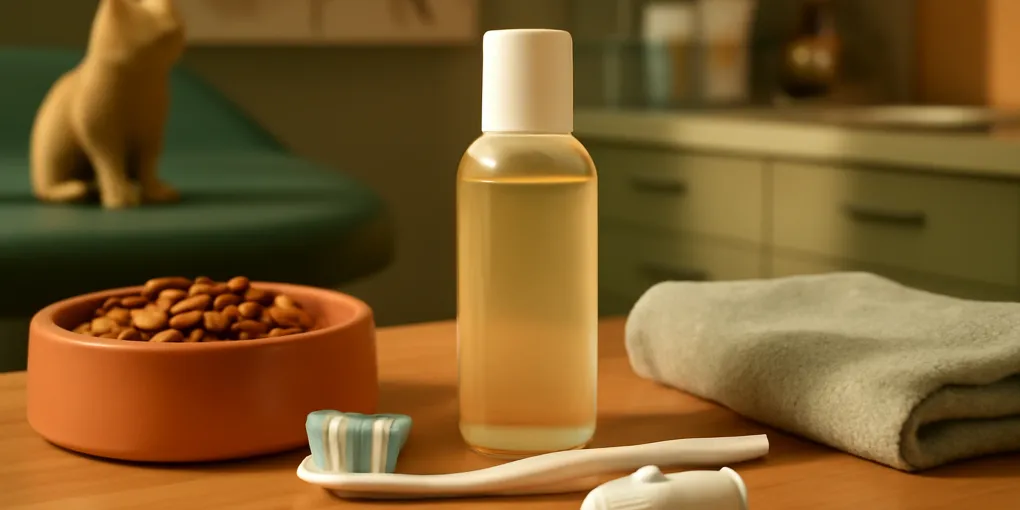
Cat Toothbrushing Starter Kit: What to Buy Before the First Week
Evidence ExplainerQuick picks
Cat-safe enzymatic toothpaste
★ Top pick First purchase- Made for swallowing
- Flavor can help training
- Pairs with brush or gauze
- Flavor preference varies
- Does not remove established tartar by itself
Soft cat toothbrush or finger brush
Best tool choice- Small head
- Better control than human brushes
- Cheap to replace
- Some cats hate finger brushes
- Needs slow introduction
A cat toothbrushing starter kit should be small: cat-safe toothpaste, one soft applicator, high-value rewards, and a plan that starts with taste and touch before brushing. Buying more dental products will not help if the first week teaches your cat that mouth handling is a fight.
This guide is for owners trying to start preventive home care. If your cat has bad breath with drooling, pawing at the mouth, bleeding gums, loose teeth, swelling, weight loss, or suddenly dropping food, schedule a veterinary exam before beginning a brushing program.
Quick picks for a cat toothbrushing starter kit
- Cat-safe enzymatic toothpaste: This is the first purchase because cats swallow toothpaste. Search Amazon for cat enzymatic toothpaste.
- Soft cat toothbrush or finger brush: Choose a small head and soft contact surface. Search Amazon for soft cat toothbrushes.
- Gauze pads: Useful for the first touch sessions if the brush is too much.
- Tiny rewards: Use a treat, lickable food, or part of the cat’s normal meal as the session ending.
Skip human toothpaste, baking soda, hydrogen peroxide, essential oils, dental scraping tools, and anything that asks you to pry the mouth open for a long session.
Why the toothpaste matters more than the brush at first
The Veterinary Oral Health Council explains that accepted dental products are meant to help control plaque or tartar, but home care still depends on using products as directed and matching them to the animal (VOHC accepted products). For brushing, the paste has two jobs: it must be safe to swallow, and it must make the training step pleasant enough to repeat.
Let the cat lick a tiny amount from your finger for several days before trying to brush. If the flavor makes the cat leave, change flavor before changing technique.
What brushing can and cannot do
Brushing helps disrupt plaque before it hardens and before gum inflammation becomes a bigger problem. It cannot remove established tartar below the gumline, diagnose resorptive lesions, or make a painful tooth safe. Cornell’s feline dental disease guidance notes that periodontal disease and tooth resorption are common in cats and need veterinary diagnosis and treatment (Cornell feline dental disease).
That is why a defensive reaction matters. A cat that pulls away mildly may need slower training. A cat that cries, snaps, drools, bleeds, or refuses food may need medical care.
Seven-day starter plan
Day 1 and 2: Put the toothpaste tube near meal time, open it, offer a tiny taste, reward, and stop. Do not touch the teeth yet.
Day 3: Touch the cheek with a finger while the cat licks paste. Reward and stop.
Day 4: Lift the lip for one second on one side. Touch the outside of a canine tooth or premolar with paste on your finger. Reward and stop.
Day 5: Wrap gauze around your finger, add paste, and touch the outer tooth surface for one or two small strokes.
Day 6: Introduce the soft brush without brushing. Let the cat sniff or lick paste from it.
Day 7: Brush two or three outside tooth surfaces with tiny circles or short strokes, then end with food or play. The first week is about consent and pattern, not perfect cleaning.
Brush, finger brush, or gauze?
A small toothbrush gives the best control once the cat accepts it. A finger brush can feel less precise because your finger is large relative to a cat’s mouth, but some cats tolerate the soft silicone feel. Gauze is useful for beginners because it adds texture without a handle.
Whatever tool you choose, work on the outside surfaces first. Do not try to scrub the inside of every tooth during early training. Most cats will not tolerate that, and the outside gumline is the practical starting point.
Where dental treats and water additives fit
Dental treats, dental diets, rinses, and water additives are backup tools, not a replacement for touching the tooth surface. Use the VOHC list to screen any treat or additive, then check the actual label for cat use, daily serving limits, and whether the product targets plaque, tartar, or breath only. VOHC-listed cat examples often include Greenies Feline Dental Treats and Purina DentaLife cat treats, but both still add calories and chewing work; they do not clean the gumline the way a tolerated brush can.
Use a water additive only if it is labeled for cats, lists a clear dose per bowl volume, and does not reduce normal drinking. Our cat water bowl placement protocol can help if a new additive or bowl location changes drinking behavior. Stop the additive if water intake drops, if the cat avoids the bowl, or if the product changes the smell enough to disrupt normal drinking.
Mistakes that make cats hate brushing
Do not start by holding the cat down, opening the mouth wide, and trying to scrub every tooth. Work from the outside cheek side first because that is the surface most cats will allow you to reach. Do not chase the cat with the brush after it leaves, use minty human toothpaste, use baking soda, or scrape visible tartar with metal tools at home.
Bleeding, drooling, one-sided chewing, dropped kibble, pawing at the mouth, or refusal to let you touch one side are exam cues, not training problems to push through. The better starter plan is short repetition: paste, cheek touch, one lip lift, reward, stop. If you can brush the outside of a few teeth most days without conflict, you are ahead of the owner who bought a full kit and created a month-long standoff.
Cat toothbrushing FAQ
How often should I brush my cat’s teeth?
Daily is the useful goal, but several calm sessions per week are better than none. Build frequency after the cat accepts the routine.
Do older cats need a dental exam before brushing?
Yes if there are signs of pain, odor, bleeding, missing teeth, weight loss, or no recent oral exam. Brushing a painful mouth can make the cat avoid care and delay treatment.
Is a dental wipe enough?
A wipe can be a training bridge, but it may not reach the gumline as well as a soft brush. Use it if it helps you build a routine, then move toward brushing if the cat allows it.
Frequently Asked Questions
- No. Human toothpaste is not meant to be swallowed by cats and may contain ingredients that are unsafe for pets. Use toothpaste labeled for cats or pets.
- Often yes, but painful teeth or inflamed gums need a veterinary exam first. Brushing helps prevention and maintenance more than it fixes established disease.
- Start with toothpaste taste training and gauze on a finger. If the cat remains painful or defensive, ask the vet before pushing harder.