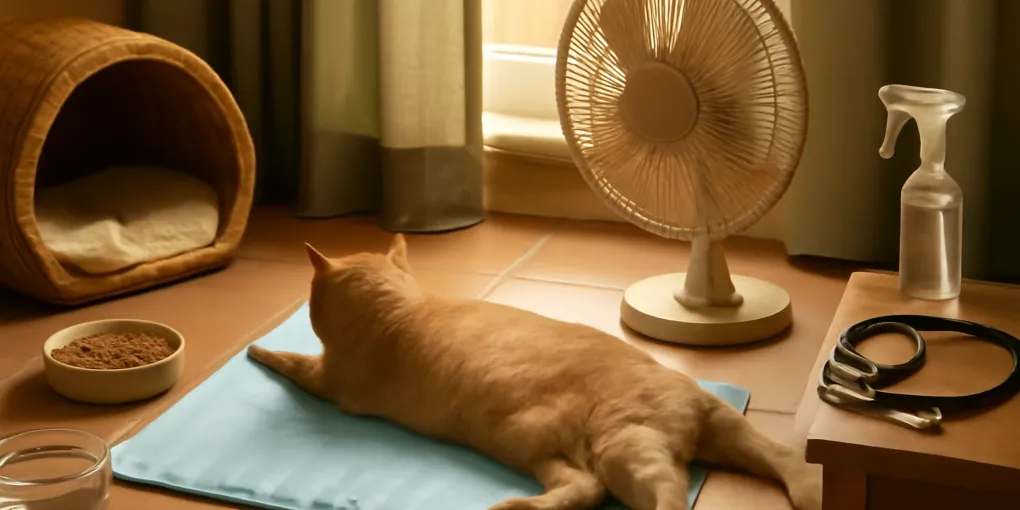
Cat Heatwave Cooling Room Protocol: Safer Indoor Relief Without Stress
ProtocolQuick picks
| Product | Key Specs |
|---|---|
| See price on Amazon |
|
| See price on Amazon |
|
Product availability, certifications, and retailer details can change; check the current Amazon page before buying.
Direct answer
A good cat heatwave cooling room is boring on purpose: shade, stable airflow, several water bowls, a cool surface the cat can choose, and an escape path. The goal is not to chill the cat quickly. The goal is to lower heat load without adding fear, restraint, or sudden temperature swings.
Start with the room, not the gadget. A darkened bedroom on the shaded side of the home often works better than a sunny living room with a fan pointed at a cat bed. Cats also vary: one may stretch on tile, another may hide under a bed, and a third may avoid a gel mat entirely. Your setup should give choices rather than one mandatory cooling spot.
For heat illness signs, stop home tinkering. The AVMA’s warm-weather guidance warns owners to watch for heavy panting, difficulty breathing, increased heart and respiratory rate, drooling, weakness, stupor, collapse, seizures, bloody diarrhea, or vomiting in overheated pets (AVMA). The ASPCA gives similar hot-weather cautions and emphasizes shade, water, and avoiding overheated spaces (ASPCA).
Step 1: pick the lowest-stress cool room
Choose the room that stays coolest after midday sun, then make it cat-friendly. Close curtains or blinds on sun-facing windows. Move a favorite bed, scratcher, or cardboard box into the room so it does not feel like a punishment room. If the cat has a preferred hiding spot, preserve it unless it is trapping heat.
Do not shut a cat into a room unless you are sure the temperature will stay safe and the cat has water, litter access, and ventilation. A closed room can become hotter if afternoon sun moves across the window or if an air conditioner cycles off. If you use a portable AC or fan, secure cords and keep the cat’s tail, whiskers, and bedding away from moving parts.
Step 2: build the water layout
Put water in at least two locations: one near the resting zone and one near the room exit or hallway. Use wide bowls so the cat can drink without whisker pressure. Stainless steel or ceramic bowls are easier to wash than scratched plastic. If the cat already uses a fountain, keep it running, but do not make the fountain the only source; power outages and clogged pumps can happen during hot weather.
Wet food can also increase water intake for many cats, but do not leave it out long in a hot room. Offer a small portion, remove leftovers promptly, and wash the dish. If your cat has kidney disease, heart disease, diabetes, hyperthyroidism, or a fluid-restricted medical plan, ask your veterinarian how heat and water changes should be handled.
Step 3: add airflow without making a wind tunnel
Fans cool people mostly by helping sweat evaporate. Cats do not rely on sweating the same way, so a fan is not magic, but it can reduce stagnant hot air and make a shaded room more tolerable. Aim the fan across the room rather than directly at the cat’s face. Give the cat places inside and outside the airflow.
If windows are open, use secure screens. A hot-weather room is not safer if the cat can push through a loose screen or sit in direct sun on a windowsill. For balcony or patio access, skip unsupervised outdoor time during heat waves; pavement, enclosed patios, and carriers in cars heat quickly.
Step 4: use cooling mats as optional surfaces
A pressure-activated cat cooling mat can help some cats, especially cats that already seek tile or tubs. The mat should be washable, intact, odor-free, and large enough for the cat to shift position. Avoid any mat with leaking gel, torn seams, or chew marks. Do not place the cat on the mat and block the exit.
A towel-wrapped cold pack can be placed near one edge of the room, not under the cat’s whole body. That lets the cat choose partial contact. If the cat avoids it, respect the refusal. Stress raises activity and can make the room less useful.
Step 5: set the emergency rule before the heat arrives
Write down the nearest emergency clinic number before a heat wave, especially if you have a senior cat, flat-faced breed, overweight cat, kitten, or cat with heart or respiratory disease. Heat risk rises when a cat cannot move away from heat, has poor airflow, or is already medically fragile.
Call a veterinarian urgently if you see panting that does not stop quickly in a cool room, open-mouth breathing, drooling, weakness, wobbliness, collapse, vomiting, diarrhea, seizures, or a cat that feels very hot and is not acting normally. Move the cat to a cooler area and offer water, but do not delay the call while trying multiple products.
What to buy, and what to skip
Buy extra bowls before buying specialty cooling gear. A cooling mat is useful only if your cat uses it voluntarily and you inspect it often. For shopping, start with search Amazon for wide stainless steel cat water bowls and add search Amazon for washable cat cooling mats only if your cat already chooses cool floor surfaces. Skip cooling vests for indoor heatwave management unless your veterinarian specifically recommends one; many cats find wearing gear stressful, and evaporative gear is less helpful in humid rooms.
Also skip forced cold baths. Sudden soaking can panic a cat, trigger struggling, and delay veterinary care. A damp towel near the cat or gentle paw dampening may be reasonable while you are getting professional advice, but the room setup is prevention, not treatment.
Cat heatwave cooling room FAQ
Should I shave my cat in summer?
Not as a default heatwave plan. Coat length, matting, skin exposure, and stress all matter. Ask a veterinarian or professional groomer if mats are trapping heat or pulling skin. Do not shave a cat at home during an emergency heat event.
Can I leave a fan on all day for my cat?
Usually yes if the fan is stable, cords are protected, and the cat can leave the airflow. A fan is not a substitute for a safe room temperature, water, and shade. If the room itself is dangerously hot, airflow alone is not enough.
Which cats need the most caution?
Kittens, seniors, overweight cats, flat-faced breeds, cats with heart or breathing disease, and cats recovering from illness have less margin. For those cats, plan earlier: cooler room before the hottest hour, extra water, and a lower threshold for calling the vet.
Internal next step
If your cat drinks poorly in summer, pair this setup with the published cat water bowl placement protocol before buying another fountain. If a dog in the same home also struggles in heat, use species-specific dog guidance rather than copying the cat room setup.
Sources
- AVMA: Warm weather pet safety
- ASPCA: Hot weather safety tips
- Cornell College animal care note: Heat stress
Frequently Asked Questions
- No. Offer a cool surface the cat can leave, or wrap a cold pack under a towel at one edge of the room. Direct forced chilling can be stressful and is not a substitute for veterinary care if the cat shows heat illness signs.
- Panting in cats is a warning sign, especially with drooling, weakness, vomiting, or collapse. Move the cat to a cooler area and contact a veterinarian or emergency clinic.